Chinchon
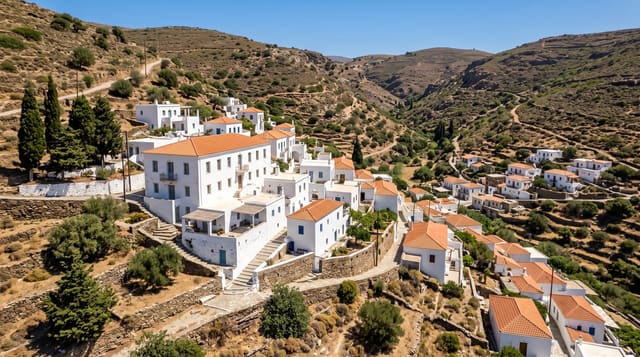
A village near Madrid built around an irregular circular plaza of wooden balconies, used as a bullring and a stage.
Updated 4 September 2026
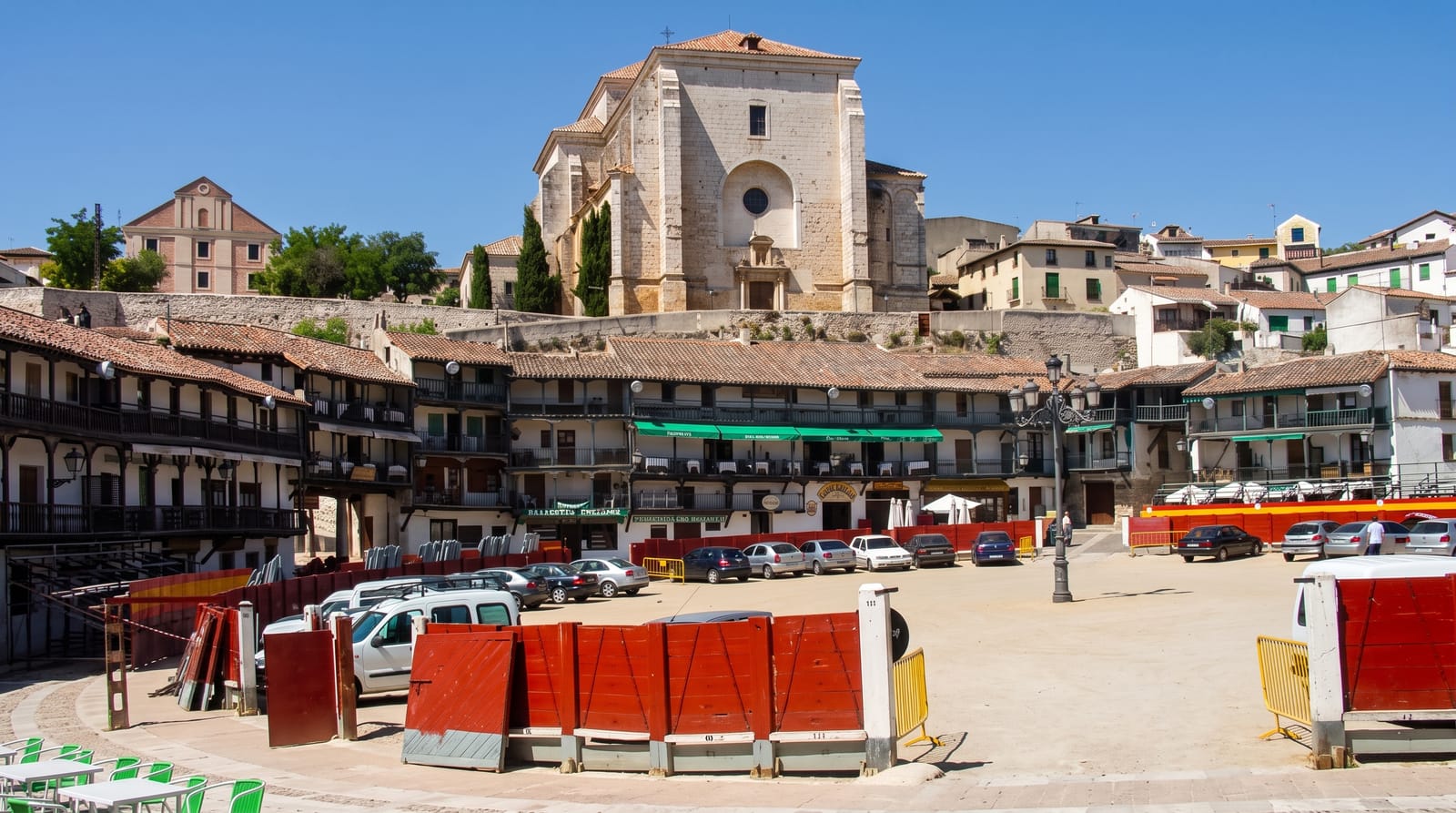
AI illustration
Chinchon's Plaza Mayor took its present form by the seventeenth century: an irregular circle enclosed by three-storey houses with continuous wooden galleries, around 230 balconies in all, painted green, on a sloping cobbled floor. It has never been purely decorative, serving as a market, a theatre, an execution ground and, several times a year, a bullring, when the ground floor is boarded off and the balconies become the stands. Around it the village produces anise liqueur, distilled here since the eighteenth century, and garlic. The church of the Asuncion above the square holds a Goya painting of the Assumption, given by the painter's brother, who was its chaplain. A ruined castle stands on the edge of the village.
Highlights
- The Plaza Mayor - a circular square of around 230 wooden balconies.
- The bullring conversion - the square boarded up for corridas several times a year.
- The Goya painting - an Assumption in the parish church above the square.
- The anise distilleries - liqueur produced in the village since the 1700s.
When to go
April to June and September to November; the square is used for Easter passion plays and for bullfights in summer and at the October fair. Weekends bring Madrid day-trippers and the restaurants fill.
Good to know
The square is ringed with restaurants charging tourist prices, and the village lives largely on Madrid weekend trade. Parking is difficult on Sundays. The bullfights divide opinion and are held in the square itself.
Nearby
Aranjuez lies southwest; Madrid is forty-five kilometres northwest.
Key facts
Source: Wikidata, item Q915395, read on 18 October 2026.
What to pack for Chinchon
Chosen from what this place is for. Tap a kit for the full checklist.
- Comfortable walking shoes - Sightseeing means kilometres of pavement and cobbles daily. Find on Amazon
- A slim anti-theft daypack - Zips that close properly; keep it in front in crowds and on transit. Find on Amazon
- A refillable water bottle - Many cities have public fountains; save money and plastic. Find on Amazon
- A light layer + compact umbrella - For museum air-con and a sudden shower. Find on Amazon
Some links on this page are Amazon affiliate links - if you buy through them we may earn a small commission at no extra cost to you.
All packing kitsPlan your trip
Where to start if Chinchon is going on the list.
Booking links on this page are affiliate links - if you book through them we may earn a small commission at no extra cost to you. It never changes what we write about a place.
Opening times, ticket prices and seasonal closures change - check the official source before you go: official site.