El Retiro
Madrid's central park, once royal grounds, with a boating lake, a glass pavilion and a tree older than the city's park system.
Updated 18 October 2026
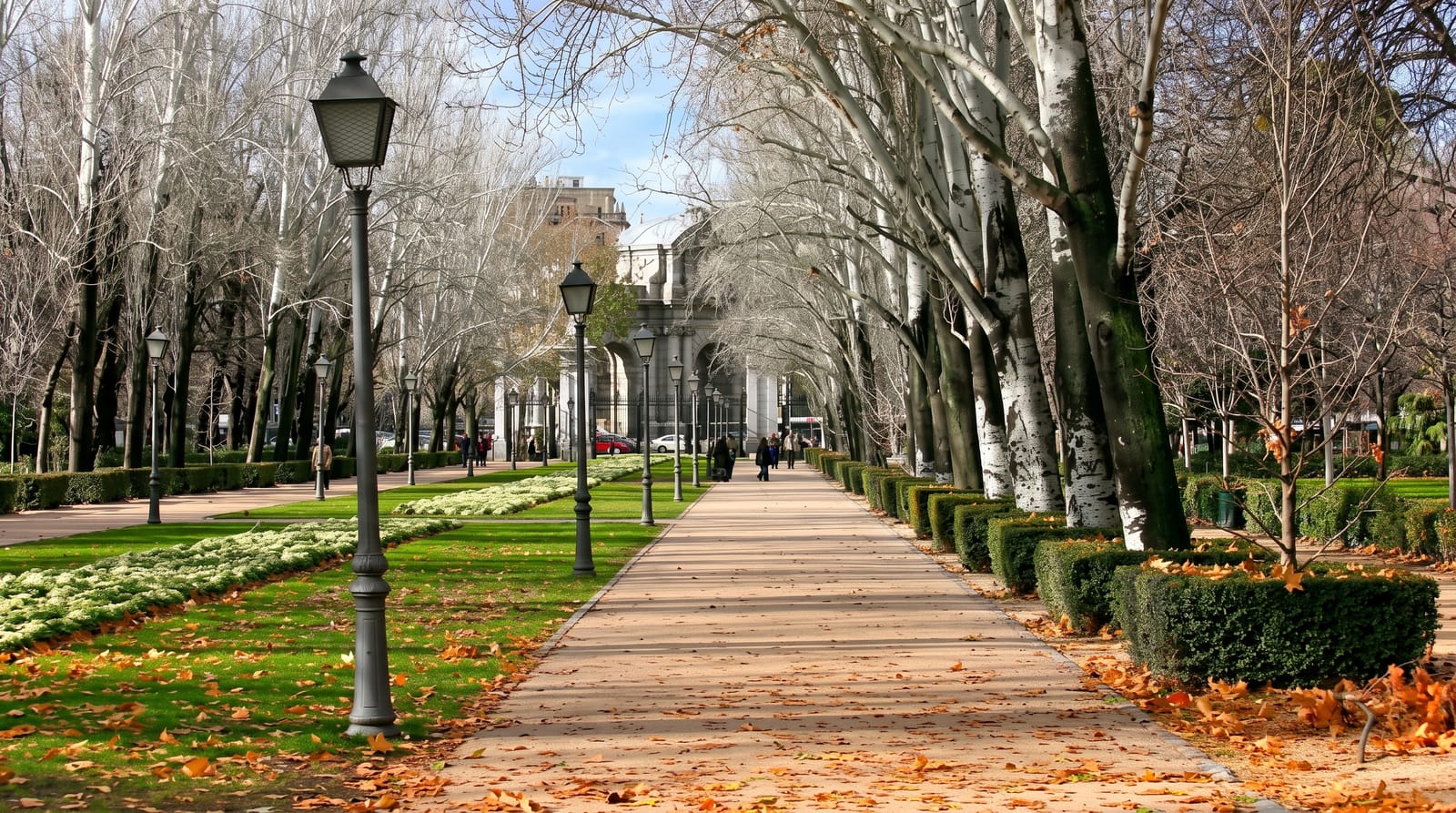
AI illustration
UNESCO World Heritage
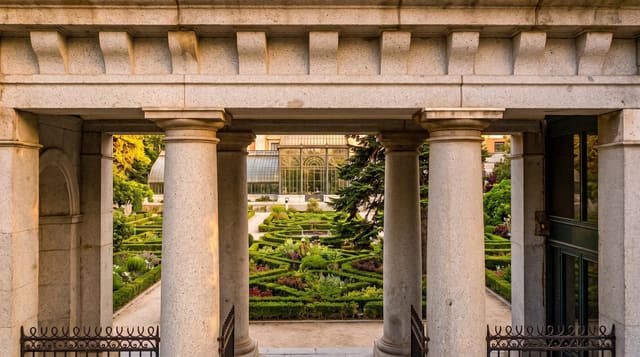
El Retiro was laid out in the 1630s as the grounds of a palace built for Philip IV, opened partially to the public in the eighteenth century and fully after 1868, and it covers between about 118 and 140 hectares in the middle of Madrid, by different measures. It was inscribed by UNESCO in 2021 as part of the Paseo del Prado and Buen Retiro landscape. Its set pieces are the rectangular estanque with rowing boats and the Alfonso XII monument behind it, the Palacio de Cristal of 1887, a glass and iron pavilion built for an exhibition and now used for contemporary art installations, and the Rosaleda rose garden. A Montezuma cypress near the Parterre, planted around 1633, is thought to be the oldest tree in Madrid.
History
In 1505 the Jeronimite monastery moved to a new building at today's church of San Jerónimo el Real, with a royal retreat attached, and after Philip II brought the court to Madrid in 1561 his architect Juan Bautista de Toledo enlarged the grounds and laid out tree-lined avenues. In the 1620s the Count-Duke of Olivares gave the king more land, and in the 1630s Giovanni Battista Crescenzi and Alonso Carbonell built a palace here, of which the Casón del Buen Retiro and the Hall of Realms survive, while Cosimo Lotti, who had worked on the Boboli Gardens, designed gardens around the great pond and canals; Buen Retiro became the centre of Habsburg court life, with plays staged for Philip IV and Charles II. Neglected after 1665 and remade many times since, the park belonged to the crown until 1868, when it became public after the Glorious Revolution, and in 2021 it became part of a World Heritage Site with the Paseo del Prado (Wikipedia, Parque del Buen Retiro).
The landscape
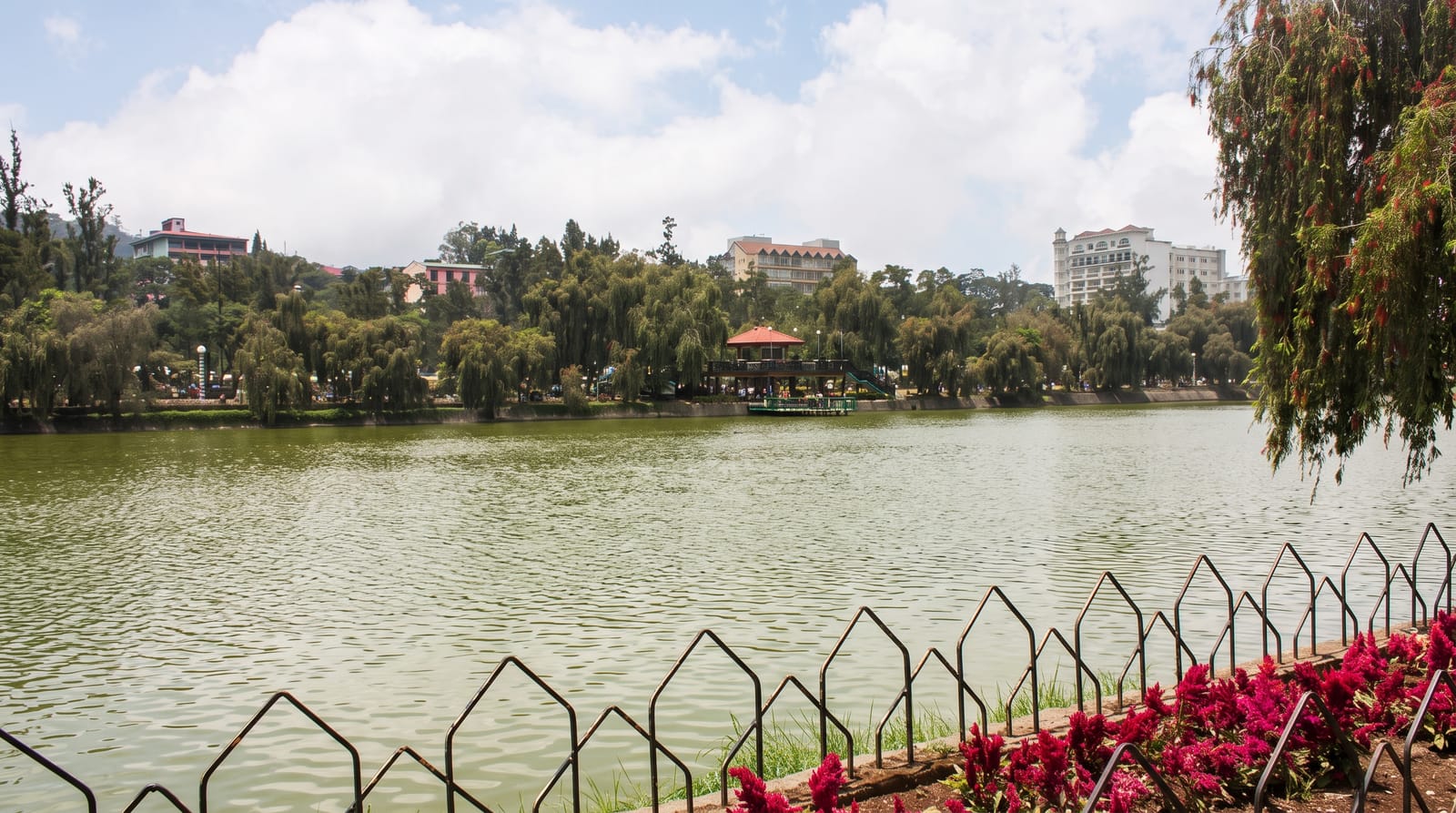
- The estanque - a rectangular lake with rowing boats and a colonnade monument.
- The Palacio de Cristal - an 1887 glass pavilion used for art installations.
- The Rosaleda - a rose garden at its best in May and June.
- The ancient cypress - a tree planted around 1633, Madrid's oldest.
When to go
Spring and autumn; the roses peak in May, and autumn colour is good in November. Sunday afternoons bring drummers, performers and crowds to the lake area. Summer middays are hot even under the trees.
What to expect
The park is crowded at weekends, particularly around the lake. The Palacio de Cristal's installations change and are sometimes closed between shows. Rowing boats queue in season.
Nearby
The Prado and the Reina Sofia are on the western side; Atocha station lies south.
Key facts
Source: Wikidata, item Q1131807, read on 18 October 2026.
What to pack for El Retiro
Chosen from what this place is for. Tap a kit for the full checklist.
- Broken-in walking shoes or boots - Grip and ankle support matter more than looks; never hike in brand-new boots. Find on Amazon
- Modest clothing - Shoulders and knees covered - the single most common requirement. Find on Amazon
- Layers + a waterproof shell - Mountain weather turns fast; a packable rain jacket saves the day. Find on Amazon
- A scarf or shawl - To cover the head or shoulders on entry; women especially at mosques. Find on Amazon
Some links on this page are Amazon affiliate links - if you buy through them we may earn a small commission at no extra cost to you.
All packing kitsPlan your trip
Where to start if El Retiro is going on the list.
Booking links on this page are affiliate links - if you book through them we may earn a small commission at no extra cost to you. It never changes what we write about a place.
Opening times, ticket prices and seasonal closures change - check the official source before you go: official site.