Royal Botanical Garden of Madrid
Terraced planting beside the Prado, laid out on its present site in 1781 and still arranged as a scientific collection rather than a park.
Updated 21 October 2026
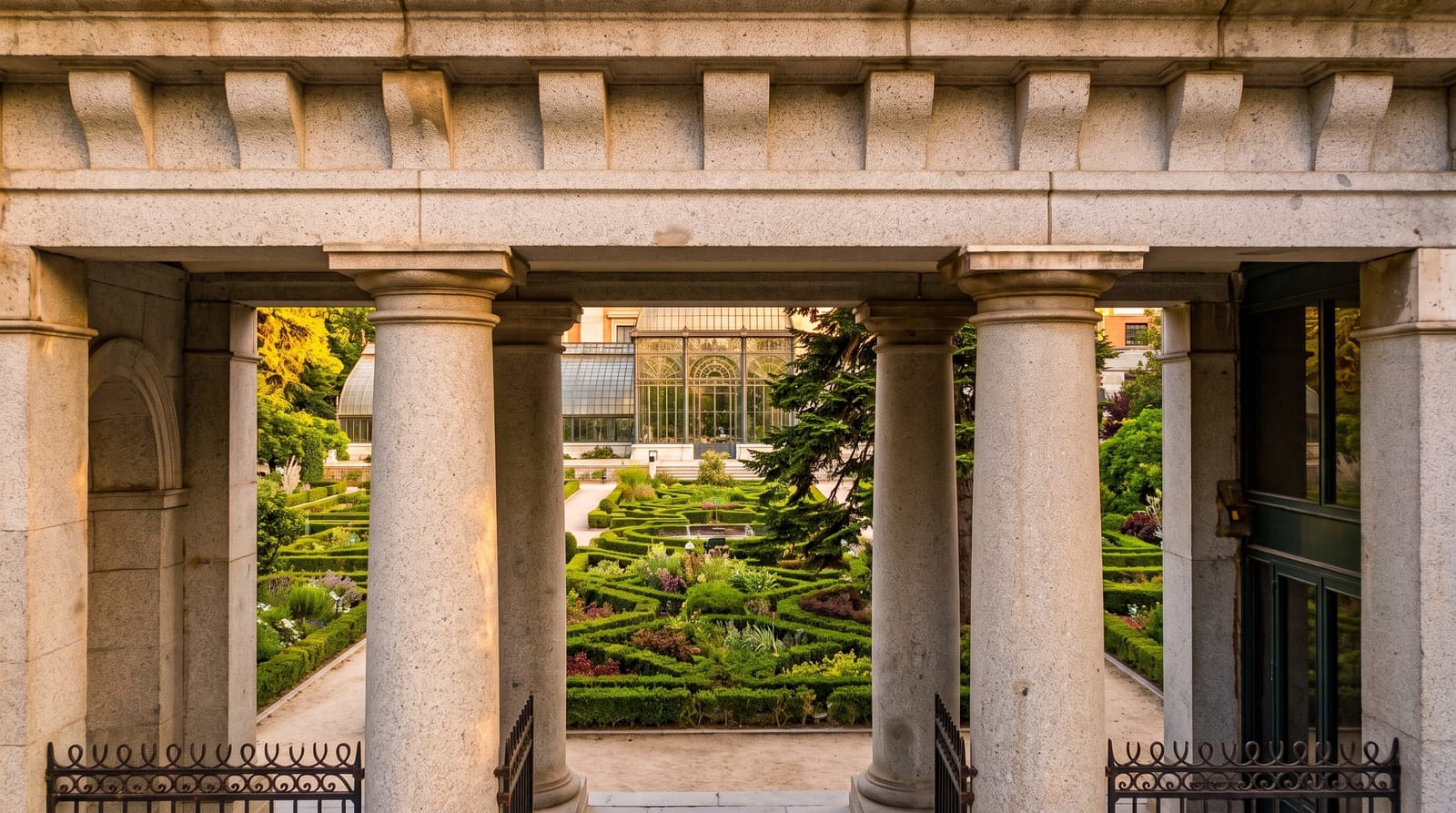
AI illustration
UNESCO World Heritage
The garden was founded in 1755 on the riverbank and moved in 1781 to its present site next to the Prado, laid out on three terraces by Juan de Villanueva and Francesco Sabatini. It has never stopped being a research institution, which shows in the arrangement: beds ordered by plant family rather than by colour, labelled and grouped for study. The lowest terrace holds the systematic collection, the middle one ornamental and medicinal plants, the top a bonsai collection and the glasshouses. It is quiet in a way the Prado next door never is, and it keeps a herbarium and archive from Spanish scientific expeditions.
History
King Ferdinand VI founded the garden on 17 October 1755 in the orchard of Migas Calientes on the Manzanares, with more than 2,000 plants collected by the botanist and surgeon José Quer. In 1774 Charles III ordered it moved to the Paseo del Prado, where it opened in 1781, laid out by Francesco Sabatini and Juan de Villanueva on three terraces with plants arranged by the method of Linnaeus, to teach botany and promote expeditions; Alessandro Malaspina added 10,000 plants in 1794. Abandoned in 1808, it was revived from 1857 by its director Mariano de la Paz Graells with a new greenhouse and a zoo later moved to the Retiro; it lost two hectares to the Ministry of Agriculture in 1882 and 564 trees to a cyclone in 1886, and since 1939 it has belonged to the Spanish National Research Council (Wikipedia, Real Jardín Botánico de Madrid).
What's there
- The three terraces - the layout set out by Villanueva in the 1780s.
- The systematic beds - plants grouped by family for study rather than display.
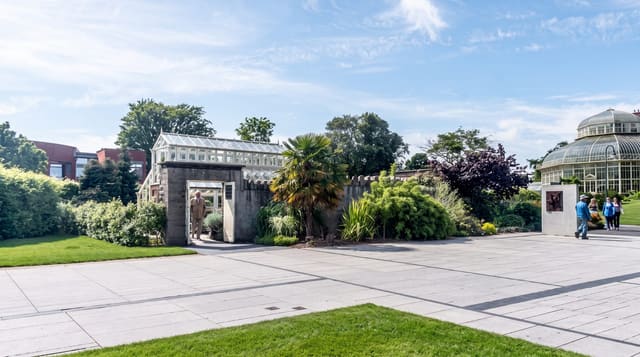
- The glasshouses - tropical and desert collections at the top of the garden.
- The bonsai collection - a large donated collection on the upper terrace.
When to go
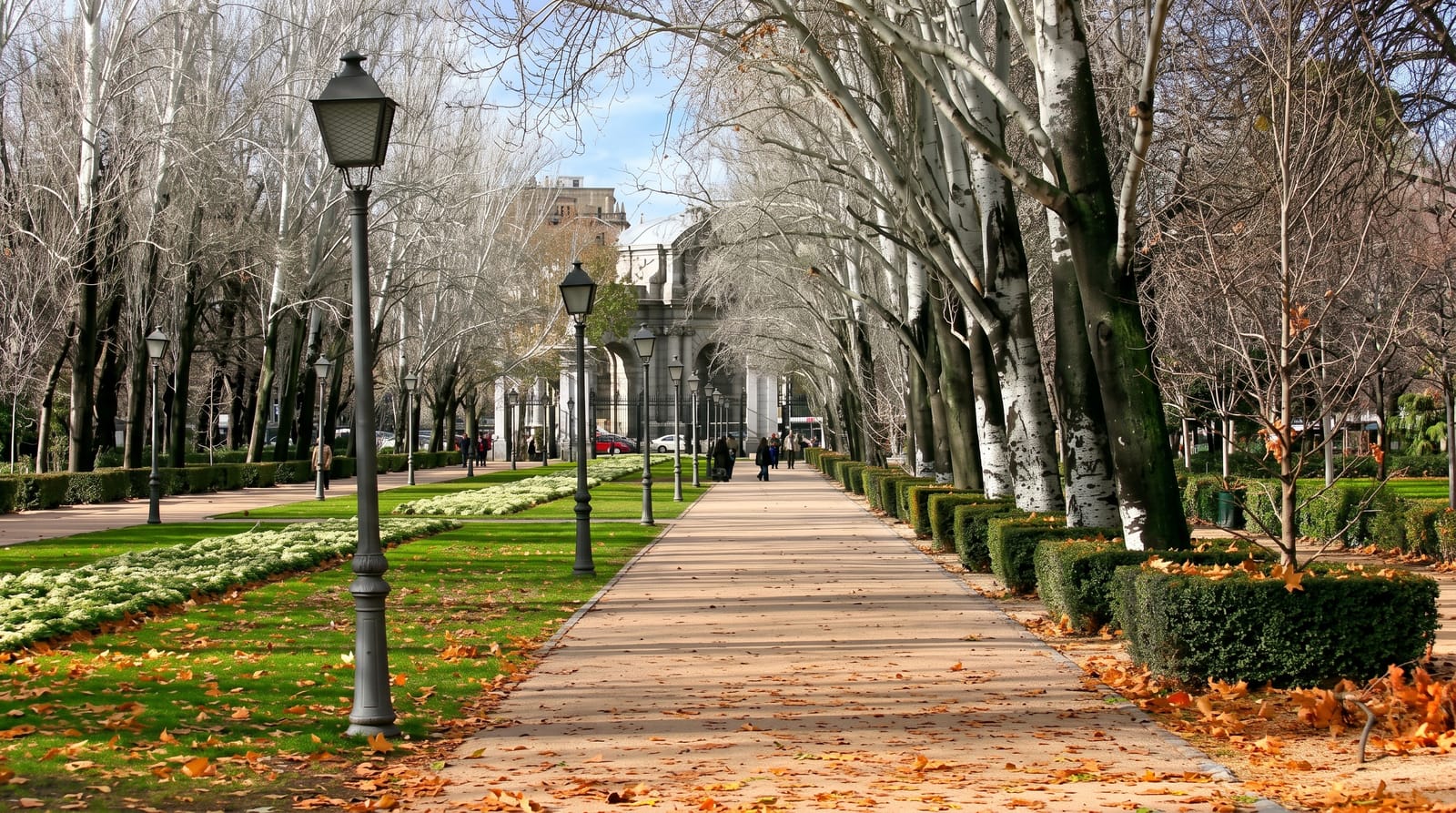
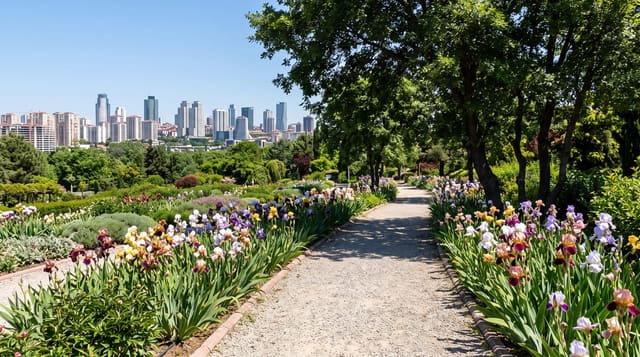
April to June is the fullest planting, with roses and irises through May. Autumn brings tree colour and thin crowds. Winter strips the outdoor beds but the glasshouses stay worthwhile. Closing time is earlier in winter than in summer, and the entrance queue is shortest first thing or in the last hour of the day.
Before you go
It is small and can be walked in under an hour, which makes the ticket feel steep next to the free city parks nearby. Labelling is mostly in Spanish and Latin. Winter removes much of the outdoor interest. Traffic on the Paseo del Prado is audible throughout, and there is little shade on the lower terrace in high summer.
Nearby
The Prado is next door; Retiro park and the Reina Sofia are both a short walk.
Key facts
Source: Wikidata, item Q1794858, read on 18 October 2026.
What to pack for Royal Botanical Garden of Madrid
Chosen from what this place is for. Tap a kit for the full checklist.
- Loose, light, long clothing - Covering up beats bare skin in the desert - and locals dress this way for a reason. Find on Amazon
- Comfortable walking shoes - Sightseeing means kilometres of pavement and cobbles daily. Find on Amazon
- Shelter suited to the place - Tent, tarp or hut booking - match it to the terrain and rules. Find on Amazon
- A wide-brim hat + sunglasses - Shade for your face and eyes where there is none overhead. Find on Amazon
Some links on this page are Amazon affiliate links - if you buy through them we may earn a small commission at no extra cost to you.
All packing kitsPlan your trip
Where to start if Royal Botanical Garden of Madrid is going on the list.
Booking links on this page are affiliate links - if you book through them we may earn a small commission at no extra cost to you. It never changes what we write about a place.
Opening times, ticket prices and seasonal closures change - check the official source before you go: official site.