Oslo Botanical Garden
Norway's oldest botanical garden, free to enter, with a Victorian palm house and a rock garden of alpine species.
Updated 4 September 2026

AI illustration
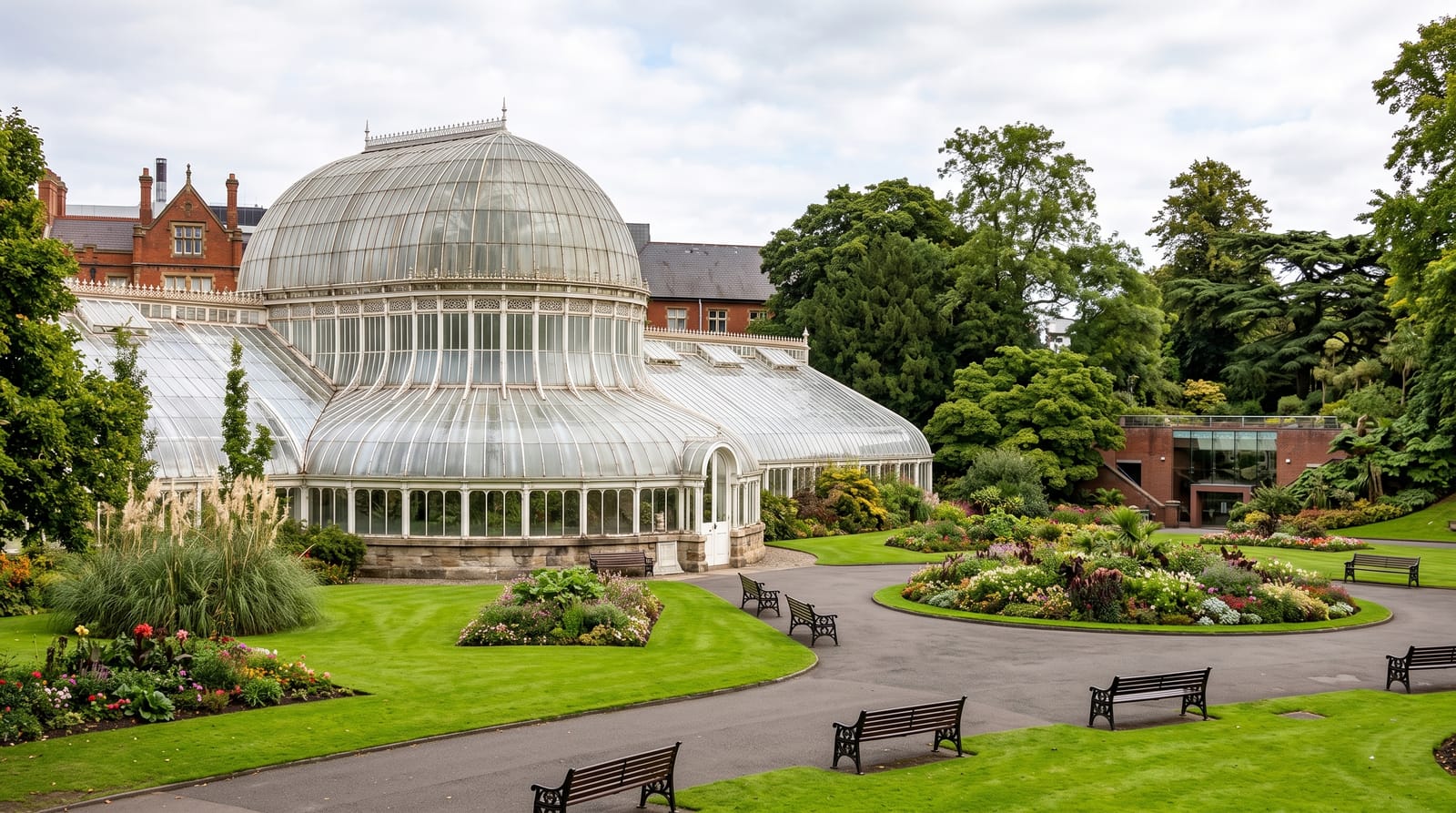
Founded in 1814, the year Norway got its constitution, the garden at Toyen belongs to the University of Oslo and holds around five and a half thousand plant species over fifteen hectares, laid out around the eighteenth-century Toyen manor house. The oldest section is the arboretum with mature trees, and the highlight for many is the rock garden, built from 1917, which gathers alpine and arctic plants from Norway and the world's mountain ranges on artificial slopes and screes. The Palm House of 1868 and the Victoria House, with its giant water lilies and tropical collections, are open with tickets, as are the natural history museums on the same grounds. The whole garden is free and used as a public park.
Highlights
- The rock garden - alpine and arctic species on constructed slopes.
- The Palm House - an 1868 glasshouse with tropical planting.
- The Victoria House - giant water lilies and warm-house collections.
- The arboretum - mature trees around the old manor house.
When to go
May to September for the outdoor collections, with the rock garden best in late spring and the perennial borders in midsummer; the glasshouses are worth a winter visit. The garden opens daily and closes at dusk.
Good to know
The outdoor garden is dormant and bare from November to April. Glasshouses require separate tickets and keep shorter hours. It functions partly as a neighbourhood park, so quiet corners are limited on warm days.
Nearby
The Munch Museum's old building and the Natural History Museum are on the same site; central Oslo is two metro stops away.
Key facts
Source: Wikidata, item Q3116396, read on 18 October 2026.
What to pack for Oslo Botanical Garden
Chosen from what this place is for. Tap a kit for the full checklist.
- Warm base layers - Merino or synthetic against the skin - never cotton, which chills when damp. Find on Amazon
- Comfortable walking shoes - Sightseeing means kilometres of pavement and cobbles daily. Find on Amazon
- An insulated + windproof jacket - A down or synthetic layer under a hard shell handles most cold. Find on Amazon
- A slim anti-theft daypack - Zips that close properly; keep it in front in crowds and on transit. Find on Amazon
Some links on this page are Amazon affiliate links - if you buy through them we may earn a small commission at no extra cost to you.
All packing kitsPlan your trip
Where to start if Oslo Botanical Garden is going on the list.
Booking links on this page are affiliate links - if you book through them we may earn a small commission at no extra cost to you. It never changes what we write about a place.
Opening times, ticket prices and seasonal closures change - check the official source before you go: official site.