Dolavon
A quiet Welsh-founded village on the Chubut irrigation canal, lined with old wooden waterwheels and a working flour mill.
Updated 4 September 2026

AI illustration
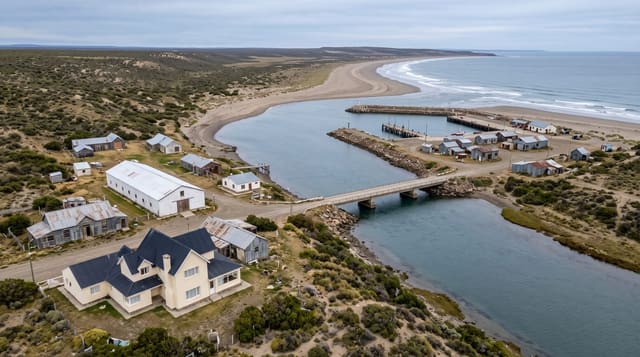
Dolavon means meadow by the river in Welsh, and it is the furthest of the valley settlements founded by the Welsh colony, established in 1919 around the irrigation system that made farming possible in this dry country. The main canal runs along the edge of the village, and beside it stand the wooden waterwheels the settlers built to lift water into the fields, still turning and now the village's emblem. The old flour mill, dating from 1927, has been preserved with its machinery and works as a museum. Poplars line the canal, the streets are quiet and the atmosphere is unhurried; a chapel, a small bakery and a few tea rooms complete a place that has changed slowly.
What you'll find
- The waterwheels - wooden wheels turning on the irrigation canal.
- The old flour mill - preserved 1927 machinery open as a museum.
- The canal and poplars - the green irrigated strip through the village.
- The Welsh chapel - one of the valley's settler churches.
When to go
Year-round; spring and autumn are pleasant and the poplars turn gold in April. Summer is hot and dry. The mill and any tea rooms keep short and irregular hours, so afternoons midweek can find things closed.
Things to know
This is a very small village with little tourist infrastructure, and a visit takes a couple of hours at most. Some waterwheels are decayed or static. Most visitors combine it with Gaiman rather than coming alone.
Nearby
Gaiman lies between here and Trelew; the valley road continues west toward Las Plumas.
Key facts
Source: Wikidata, item Q106043, read on 18 October 2026.
What to pack for Dolavon
Chosen from what this place is for. Tap a kit for the full checklist.
- Comfortable walking shoes - Sightseeing means kilometres of pavement and cobbles daily. Find on Amazon
- A slim anti-theft daypack - Zips that close properly; keep it in front in crowds and on transit. Find on Amazon
- A refillable water bottle - Many cities have public fountains; save money and plastic. Find on Amazon
- A light layer + compact umbrella - For museum air-con and a sudden shower. Find on Amazon
Some links on this page are Amazon affiliate links - if you buy through them we may earn a small commission at no extra cost to you.
All packing kitsPlan your trip
Where to start if Dolavon is going on the list.
Booking links on this page are affiliate links - if you book through them we may earn a small commission at no extra cost to you. It never changes what we write about a place.
Opening times, ticket prices and seasonal closures change - check the official source before you go: official site.