Evoramonte
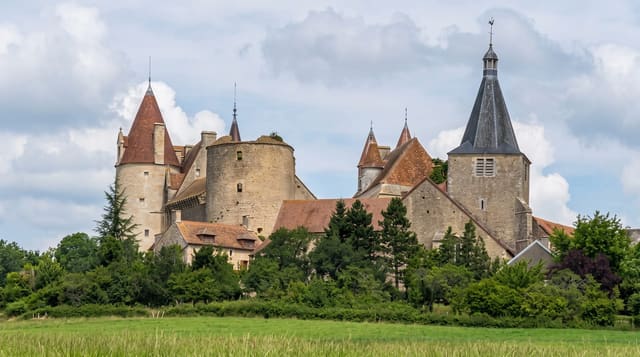
A castle of four round towers carved with a stone rope, on a one-street Alentejo hilltop where a civil war was ended.
Updated 22 October 2026
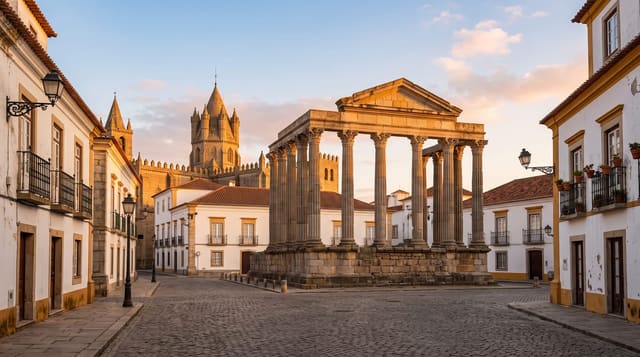
Evoramonte's castle was rebuilt in the 1530s after an earthquake, and it is architecturally odd in a way that repays the detour: a square block with four fat cylindrical towers at the corners, its exterior banded by a carved stone rope with a knot at each tower - the Manueline rope motif, usually a decorative detail on a doorway, here run round an entire fortification. The interior has three vaulted floors on massive central columns. Around it the village is essentially one street of white houses inside a wall, with a few dozen residents. Its other claim is political: the Concession of Evoramonte was signed here in May 1834, ending the Portuguese civil war between the absolutist Miguel and the liberal Pedro, with Miguel going into permanent exile. The document was signed in a house in the village, now marked.
History
The settlement dates its founding to 1160, Afonso III gave it a charter in 1248 with further privileges in 1271, and King Denis had the town fortified in 1306. On 26 May 1834 the Concession of Evoramonte was signed here, ending the Liberal Wars, and the municipality was abolished in the reforms of 1855 (Wikipedia, Evoramonte).
What's there
- The rope banding - a carved Manueline rope with knots running round the whole castle.
- The four towers - fat cylinders at the corners of a square block.
- The vaulted interior - three floors on massive central columns.
- The 1834 concession - the house where the civil war was ended by treaty.
When to go
March to June and September to November; Alentejo summers are extremely hot. One to two hours. The castle closes on some days.
Practical notes
The village is tiny and has almost no services. The castle interior is largely empty. No shade, and the hilltop is exposed. Off the main routes, so a detour by car.
Nearby
Estremoz is north; Évora is south-west.
Key facts
Source: Wikidata, item Q291445, read on 18 October 2026.
What to pack for Evoramonte
Chosen from what this place is for. Tap a kit for the full checklist.
- Comfortable walking shoes - Sightseeing means kilometres of pavement and cobbles daily. Find on Amazon
- A slim anti-theft daypack - Zips that close properly; keep it in front in crowds and on transit. Find on Amazon
- A refillable water bottle - Many cities have public fountains; save money and plastic. Find on Amazon
- A light layer + compact umbrella - For museum air-con and a sudden shower. Find on Amazon
Some links on this page are Amazon affiliate links - if you buy through them we may earn a small commission at no extra cost to you.
All packing kitsPlan your trip
Where to start if Evoramonte is going on the list.
Booking links on this page are affiliate links - if you book through them we may earn a small commission at no extra cost to you. It never changes what we write about a place.
Opening times, ticket prices and seasonal closures change - check the official source before you go: official site.