Estremoz
A marble town in the central Alentejo with a royal keep, a Saturday market and clay figures with UNESCO status.
Updated 22 October 2026
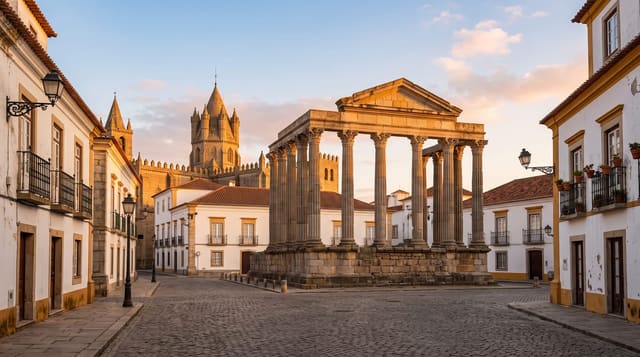
Estremoz sits on marble - the quarries around it, with Borba and Vila Viçosa, form one of the largest white marble deposits in the world, worked since Roman times - and the town uses it as ordinary building material, so pavements, doorsteps, window frames and kerbs that would be granite elsewhere are marble here. The upper town is walled, with the Torre das Três Coroas, a thirteenth-century keep of marble, and a palace where Dinis's queen Isabel died in 1336, now a pousada. Below, the Rossio holds a large Saturday market of produce, livestock goods, antiques and bric-a-brac that draws people from across the region. The town's clay figures - the bonecos de Estremoz, small painted figures made since the seventeenth century in a distinctive local idiom - were inscribed on the UNESCO intangible heritage list in 2017, and a museum shows them.
History
Gerald the Fearless took Estremoz in the 12th century, but it was soon lost again and recovered only in the mid-13th century under Sancho II. Afonso III gave it a charter in 1258, King Denis rebuilt the castle as a royal palace, and his widow, Queen Elizabeth, died there on 4 July 1336, shortly after mediating a peace treaty (Wikipedia, Estremoz).
What to look for
- The marble - used for pavements, kerbs and door frames throughout the town.
- The keep - the thirteenth-century Torre das Três Coroas above the walled upper town.
- The Saturday market - produce, antiques and bric-a-brac filling the Rossio.
- The bonecos - UNESCO-listed painted clay figures made here since the 1600s.
When to go
March to June and September to November. Saturday for the market, which is the main event. Half a day.
What to expect
Summers are extremely hot on the Alentejo plain. The market is Saturday only and the town is much quieter otherwise. The palace is a pousada, so access is limited to guests and the restaurant. Museum hours are restricted.
Nearby
Vila Viçosa and its ducal palace are south-east; Évora is west.
Key facts
Source: Wikidata, item Q625157, read on 18 October 2026.
What to pack for Estremoz
Chosen from what this place is for. Tap a kit for the full checklist.
- Comfortable walking shoes - Sightseeing means kilometres of pavement and cobbles daily. Find on Amazon
- A slim anti-theft daypack - Zips that close properly; keep it in front in crowds and on transit. Find on Amazon
- A refillable water bottle - Many cities have public fountains; save money and plastic. Find on Amazon
- A light layer + compact umbrella - For museum air-con and a sudden shower. Find on Amazon
Some links on this page are Amazon affiliate links - if you buy through them we may earn a small commission at no extra cost to you.
All packing kitsPlan your trip
Where to start if Estremoz is going on the list.
Booking links on this page are affiliate links - if you book through them we may earn a small commission at no extra cost to you. It never changes what we write about a place.
Opening times, ticket prices and seasonal closures change - check the official source before you go: official site.