Evora
The Alentejo's museum city - a Roman temple, a chapel of bones and whitewashed lanes inside intact walls on the golden plain.
Updated 18 October 2026
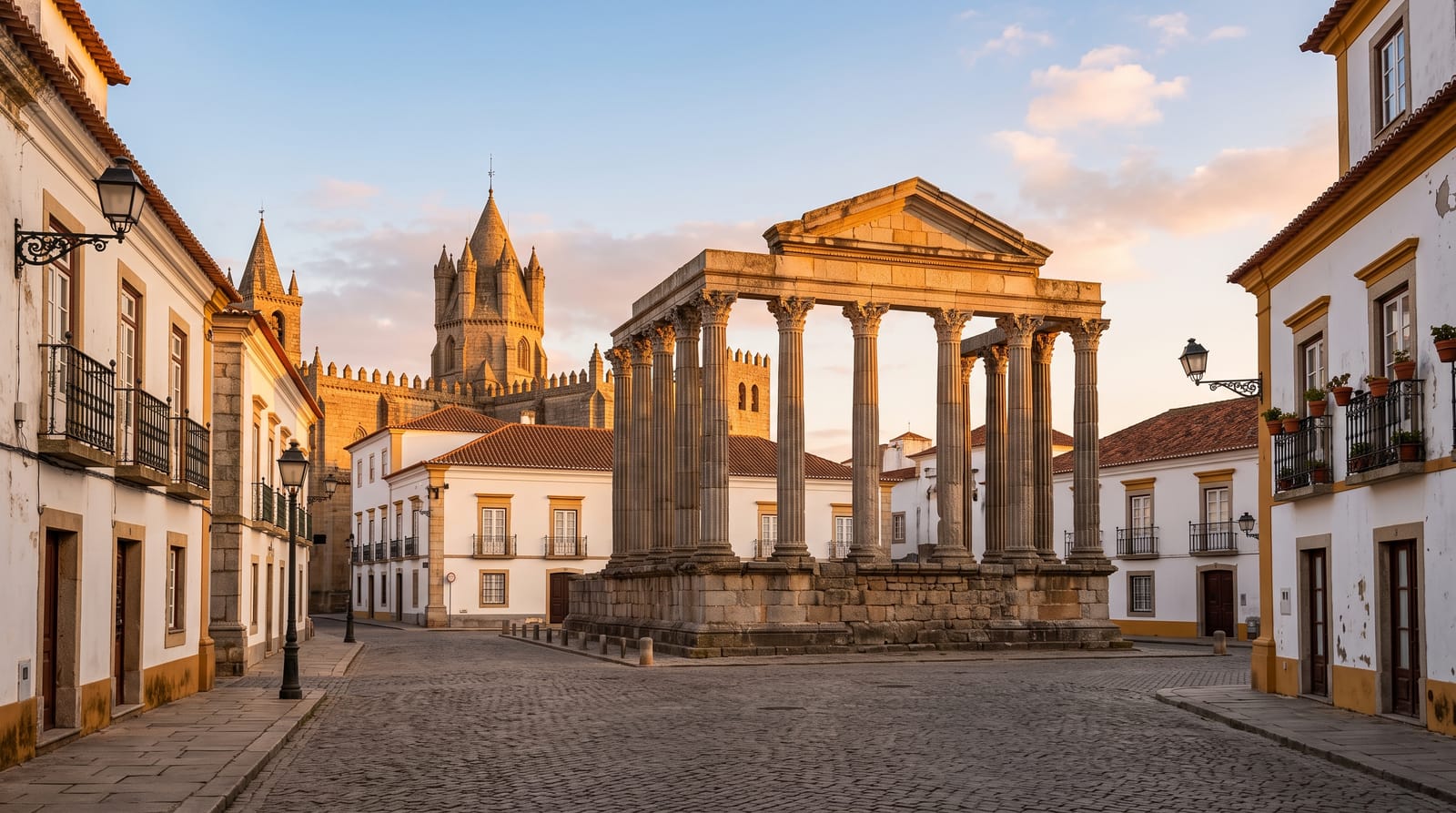
AI illustration
UNESCO World Heritage
Evora concentrates two thousand years inside one wall circuit on the Alentejo plain - a UNESCO World Heritage city where the Roman temple's granite columns, raised in the first century and long miscalled the Temple of Diana, stand a lane away from a Gothic cathedral and the arcaded Giraldo square. The famous shudder is the Capela dos Ossos, the 16th-century Chapel of Bones, its walls and pillars faced entirely with monks' skulls and femurs beneath the greeting 'We bones that are here, for yours we wait' - a memento mori that outdraws everything else in town. Around these set pieces spreads the true pleasure: whitewashed lanes trimmed in ochre, a university founded in 1559 and revived in 1973 after two centuries of silence, and the wine and slow food of Portugal's emptiest, most golden province.
History
Évora's history goes back more than five thousand years; the Celtici made Ebora their regional capital, a name probably from the Celtic word for yew trees and related to the Roman name of York. The Romans took it in 57 BC and walled it, Pliny the Elder called it Ebora Cerealis for its wheat fields, its Corinthian temple dates from the 1st century and was probably raised in honour of Augustus, and by the 4th century it had a bishop, Quintianus. The Visigothic king Leovigild took it in 584, Arab forces under Tariq ibn Ziyad in 715, after which, as Yāburah, it slowly grew into a farming centre with a fortress and a mosque, and in September 1165 Gerald the Fearless seized it in a surprise attack, bringing it under Afonso I the next year; its old centre, still partly inside medieval walls, has been a World Heritage Site since 1986 (Wikipedia, Évora).
Highlights
- The Roman temple - first-century columns at the city's crown.
- The Chapel of Bones - walls faced with skulls and their greeting.
- Giraldo square - arcades and fountains at the whitewashed heart.
- The cathedral rooftop - granite towers and views over the plain.
When to go
Spring and autumn are the Alentejo's gift - wildflowers or grape harvest with walkable temperatures. High summer regularly passes forty degrees; do as locals do and surrender the afternoon.
Before you go
Summer heat is not a detail - it dictates the whole day's shape. Day trips from Lisbon shortchange the city; an evening here, after the coaches leave, is when Evora breathes. The bone chapel is genuinely macabre and not for every visitor.
Nearby
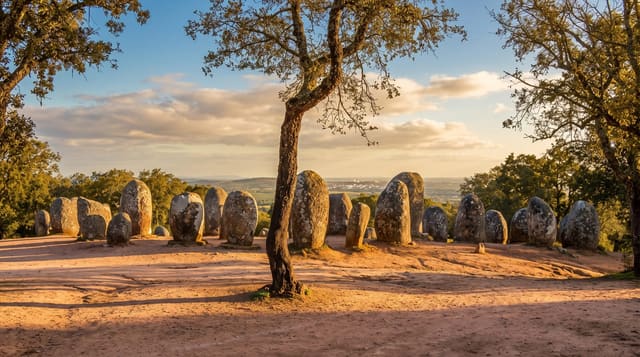
The Almendres Cromlech megaliths, Monsaraz village and the Alentejo wine estates.
Key facts
Source: Wikidata, item Q179948, read on 18 October 2026.
What to pack for Evora
Chosen from what this place is for. Tap a kit for the full checklist.
- Comfortable walking shoes - Sightseeing means kilometres of pavement and cobbles daily. Find on Amazon
- Modest clothing - Shoulders and knees covered - the single most common requirement. Find on Amazon
- A slim anti-theft daypack - Zips that close properly; keep it in front in crowds and on transit. Find on Amazon
- A scarf or shawl - To cover the head or shoulders on entry; women especially at mosques. Find on Amazon
Some links on this page are Amazon affiliate links - if you buy through them we may earn a small commission at no extra cost to you.
All packing kitsPlan your trip
Where to start if Evora is going on the list.
Booking links on this page are affiliate links - if you book through them we may earn a small commission at no extra cost to you. It never changes what we write about a place.
Opening times, ticket prices and seasonal closures change - check the official source before you go: official site.