Água de Prata Aqueduct
A sixteenth-century aqueduct striding into Évora, with houses and shops built into its arches over four centuries.
Updated 21 October 2026
UNESCO World Heritage
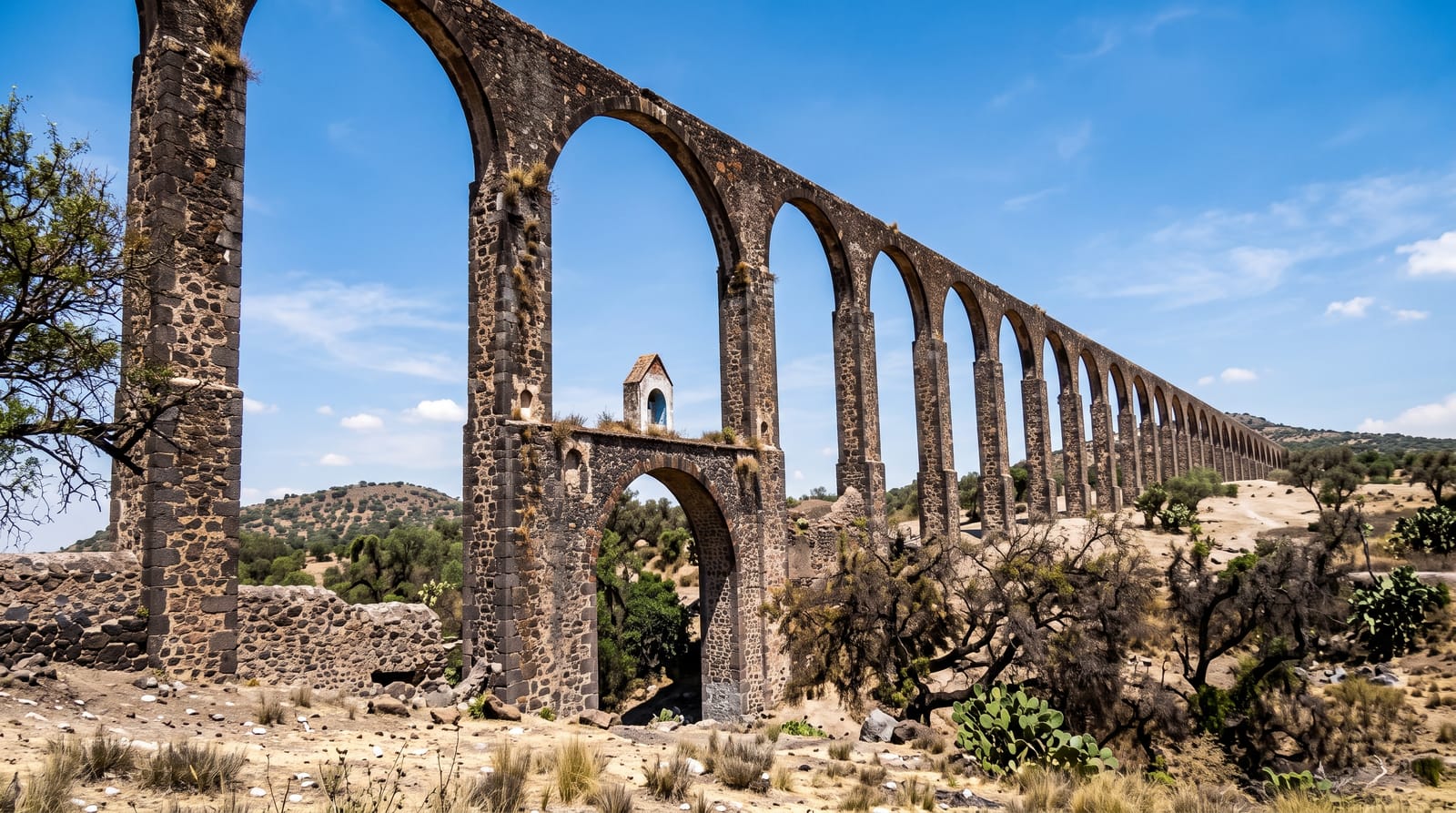
The Aqueduto da Água de Prata was built between 1531 and 1537 on the order of João III to bring water about eighteen kilometres from Graça do Divor into Évora, designed by Francisco de Arruda, who had also built the Belém tower. It enters the city on tall arches and runs down what is now Rua do Cano, and what makes it worth walking is what happened next: people built into it. Houses, shops and workshops were fitted between and under the arches over the following centuries, so the aqueduct is not a monument standing apart from the town but part of its fabric, with front doors and windows set in the piers and washing hung across them. Camões mentions it in Os Lusíadas. Outside the walls the arcade runs across open country and can be followed on foot, and the fountain that terminated it stands in the Praça do Giraldo.
History
Building began in 1531-1532 on the orders of King John III, directed by the royal architect Francisco de Arruda, and it followed and in places overlaid Roman waterworks; it took about six years, and the coming of the water was marked with a ceremony in the Praça do Giraldo. The aqueduct, some 18 kilometres long, has been repaired several times, heavily in the 17th century and more lightly in the 19th and 20th, without changing its design, and it has been a national monument since 1910 (Wikipedia, Água de Prata Aqueduct).
What you'll find
- The built-in arches - houses and shops fitted into the piers along Rua do Cano.
- The country arcade - the aqueduct running across open ground outside the walls.
- The 1530s engineering - eighteen kilometres of channel by the architect of the Belém tower.
- The terminal fountain - the outlet in Praça do Giraldo at the city centre.
When to go
Year-round; spring and autumn for walking the outer stretch. One to two hours. Évora is very hot in July and August.
What to expect
The dwellings in the arches are private homes - look, do not intrude. The outer stretch has no shade and Alentejo summer heat is severe. Rua do Cano is narrow with traffic. There is no interpretation on site.
Nearby
Praça do Giraldo is at the terminus; the Capela dos Ossos and Roman temple are in the centre.
Key facts
Source: Wikidata, item Q8187810, read on 18 October 2026.
What to pack for Água de Prata Aqueduct
Chosen from what this place is for. Tap a kit for the full checklist.
- Comfortable walking shoes - Sightseeing means kilometres of pavement and cobbles daily. Find on Amazon
- Modest clothing - Shoulders and knees covered - the single most common requirement. Find on Amazon
- A slim anti-theft daypack - Zips that close properly; keep it in front in crowds and on transit. Find on Amazon
- A scarf or shawl - To cover the head or shoulders on entry; women especially at mosques. Find on Amazon
Some links on this page are Amazon affiliate links - if you buy through them we may earn a small commission at no extra cost to you.
All packing kitsPlan your trip
Where to start if Água de Prata Aqueduct is going on the list.
Booking links on this page are affiliate links - if you book through them we may earn a small commission at no extra cost to you. It never changes what we write about a place.
Opening times, ticket prices and seasonal closures change - check the official source before you go: official site.