Lapa Arches
A colonial aqueduct of forty-two arches in central Rio, carrying trams to Santa Teresa since 1896.
Updated 19 October 2026
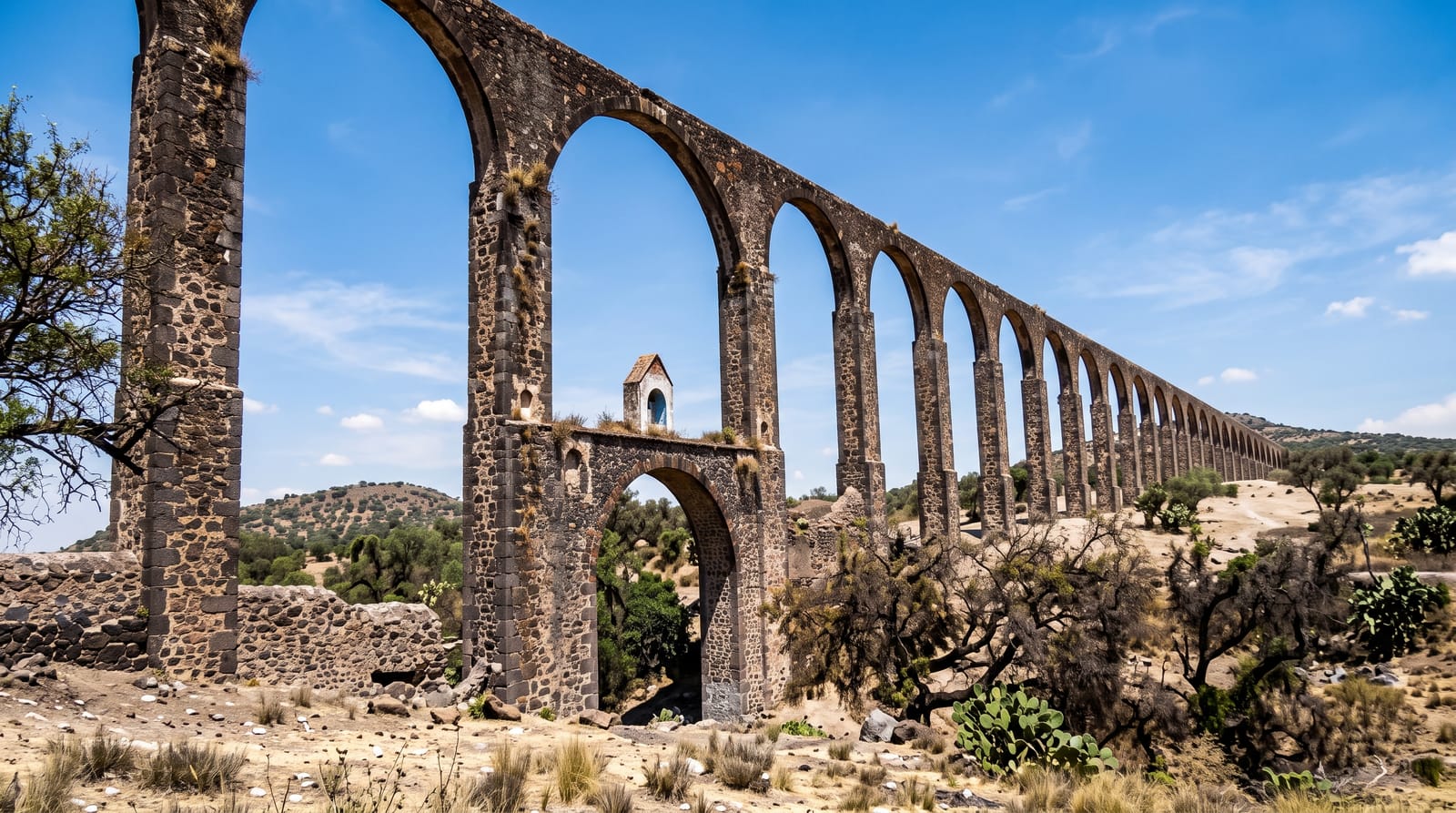
The Arcos da Lapa were finished in 1750 to bring water from the Carioca River in Santa Teresa down to a public fountain in the city, two tiers of forty-two arches in whitewashed stone crossing the valley at Lapa - the largest surviving colonial engineering work in Rio. When the aqueduct was retired in the 1890s the deck was converted to carry a tram line up to Santa Teresa, which it still does; the bondinho crosses the arches on its way up the hill. The service was suspended after a fatal derailment in August 2011; limited service returned with new cars in July 2015, and the full route to Dois Irmãos was restored only in January 2019. Below the arches is the centre of Lapa nightlife, with the samba bars and street parties that fill the area from Thursday to Sunday.
History
Early Rio was ringed by swamps, and from at least 1602 there were plans to bring water from the Carioca river on Santa Teresa hill; the first aqueduct, finished in 1723, fed a Baroque fountain in Santo Antônio square, but by 1744 it was in poor shape, and Governor Gomes Freire de Andrade had the engineer José Fernandes Pinto Alpoim build a larger one, inspired by the Águas Livres aqueduct in Lisbon. Inaugurated in 1750, it crosses between the hills of Santa Teresa and Santo Antônio on 270 metres of two-tiered arches, 42 in all and up to 17.6 metres high, and since the end of the 19th century it has carried the Santa Teresa tram (Wikipedia, Carioca Aqueduct).
What's there
- Forty-two arches in two tiers - a 1750 aqueduct across the Lapa valley.
- Trams on the deck - the bondinho crossing on its way to Santa Teresa.
- Colonial engineering at scale - the largest surviving work of its kind in Rio.
- The nightlife below - the samba bars that fill the arches area at weekends.
When to go
All year. An hour, or an evening if you stay for the bars.
Things to know
The tram queues at Carioca station, especially at weekends. Lapa at night is busy and requires normal city caution - carry little. The arches themselves are seen in a few minutes; the tram ride is the reason to allow more time.
Nearby
The Selaron steps are a few minutes away; Santa Teresa is at the top of the line.
Key facts
Source: Wikidata, item Q1579892, read on 18 October 2026.
What to pack for Lapa Arches
Chosen from what this place is for. Tap a kit for the full checklist.
- Comfortable walking shoes - Sightseeing means kilometres of pavement and cobbles daily. Find on Amazon
- A slim anti-theft daypack - Zips that close properly; keep it in front in crowds and on transit. Find on Amazon
- A refillable water bottle - Many cities have public fountains; save money and plastic. Find on Amazon
- A light layer + compact umbrella - For museum air-con and a sudden shower. Find on Amazon
Some links on this page are Amazon affiliate links - if you buy through them we may earn a small commission at no extra cost to you.
All packing kitsPlan your trip
Where to start if Lapa Arches is going on the list.
Booking links on this page are affiliate links - if you book through them we may earn a small commission at no extra cost to you. It never changes what we write about a place.
Opening times, ticket prices and seasonal closures change - check the official source before you go: official site.