Banbhore
A ruined port city on the old Indus delta, often identified with Debal and holding one of the earliest mosques in South Asia.
Updated 21 October 2026
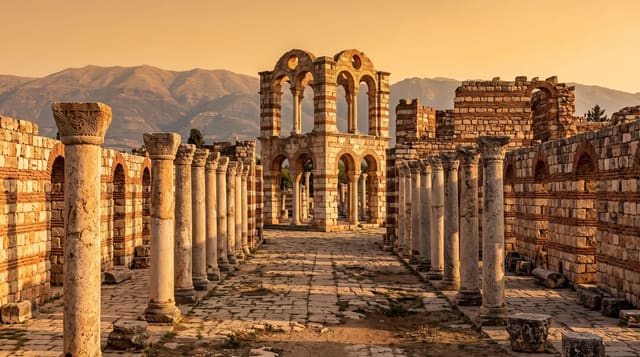
Banbhore stands on a low mound above a creek that was once a navigable arm of the Indus, and excavation has shown continuous occupation from around the first century BC to the thirteenth century AD, through Scytho-Parthian, Hindu-Buddhist and Islamic phases. It is often identified with Debal, the port taken by an Arab expedition in 711-712, though this has not been confirmed, and the site holds the foundations of a mosque with an inscription dated to 727, among the earliest mosque remains anywhere in South Asia. Visible today are the stone city wall with semicircular bastions, gateways, street lines, the mosque platform, and industrial areas where glass, ivory and shell were worked; finds include coins, pottery and glass from as far as the Mediterranean and China. A small museum on site holds the material. The creek beside the ruins is now silted and quiet, which makes the scale of the trading city hard to imagine.
History
The site shows three periods: Scytho-Parthian from the 1st century BC to the 2nd century AD, Buddhist from the 2nd to the 8th, and early Islamic from the 8th to the 13th, after which the city was slowly deserted as the Indus changed course. It is often linked with Debal, taken by Muhammad bin Qasim in 711-712, though the identification is unconfirmed; Ramesh Chandra Majumdar made the first excavations in 1928, Leslie Alcock followed in 1951, and a major programme began in 1958 (Wikipedia, Banbhore).
What's there
- The city wall - stone defences with bastions and gates on the mound.
- The early mosque - foundations of the eighth-century congregational mosque.
- Workshop areas - remains of glass, shell and ivory working quarters.
- The site museum - coins, pottery and imported goods from the excavations.
When to go
November to February; the site is open and hot the rest of the year. Mornings are best. The museum keeps limited hours and may close on public holidays. It combines naturally with Thatta and Makli on the same road.
Things to know
The remains are foundations and low walls rather than standing buildings, and the site needs some background to be rewarding. Interpretation on the ground is minimal and the museum is small and dated. Excavation trenches are fenced in places. There is no shade.
Nearby
Thatta with the Shah Jahan Mosque and Makli is east; Karachi is west.
Key facts
Source: Wikidata, item Q491993, read on 18 October 2026.
What to pack for Banbhore
Chosen from what this place is for. Tap a kit for the full checklist.
- Comfortable walking shoes - Sightseeing means kilometres of pavement and cobbles daily. Find on Amazon
- Modest clothing - Shoulders and knees covered - the single most common requirement. Find on Amazon
- Shelter suited to the place - Tent, tarp or hut booking - match it to the terrain and rules. Find on Amazon
- A slim anti-theft daypack - Zips that close properly; keep it in front in crowds and on transit. Find on Amazon
Some links on this page are Amazon affiliate links - if you buy through them we may earn a small commission at no extra cost to you.
All packing kitsPlan your trip
Where to start if Banbhore is going on the list.
Booking links on this page are affiliate links - if you book through them we may earn a small commission at no extra cost to you. It never changes what we write about a place.
Opening times, ticket prices and seasonal closures change - check the official source before you go: official site.