Angono Petroglyphs
A rock shelter east of Manila carved with over a hundred stick figures, the oldest known artwork in the Philippines.
Updated 21 October 2026
AI illustration
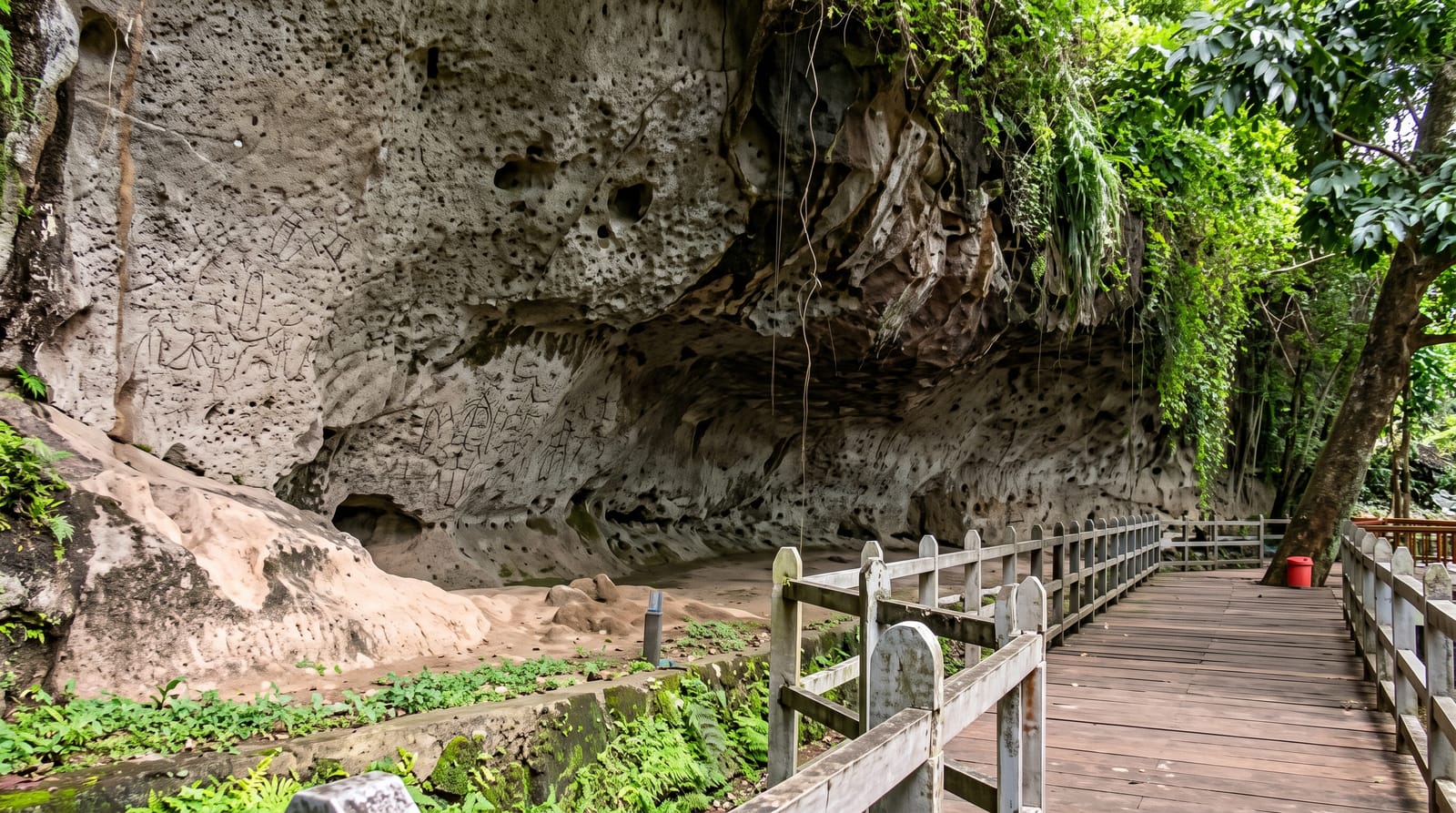
A shallow shelter in soft volcanic tuff, its back wall covered with more than a hundred incised figures: heads on stick bodies, some with arms out, a few animal shapes, cut with stone tools in the late Neolithic. They were noticed in 1965 by the painter Carlos Francisco while he was on a scouting trip with a group of children, which is a mundane origin for the oldest known art in the country. Access now runs through a short pedestrian tunnel cut into the ridge, opening onto a walkway in front of the shelter. A small site museum explains the dating and displays casts, because the originals are fenced off and fading.
History
The National Artist Carlos V. Francisco reported the rock shelter to the National Museum in March 1965, after a field trip with boy scouts on the borders of Angono, Binangonan and Antipolo. It was declared a National Cultural Treasure in 1973, entered the World Inventory of Rock Art in 1985, and in 1996 the World Monuments Fund paid for drainage and a caretaker (Wikipedia, Angono-Binangonan Petroglyphs).
What you'll find
- The carved wall - rows of shallow stick figures across the tuff, faint and easy to miss at first.
- The access tunnel - a lit pedestrian bore through the ridge, ending at the shelter.
- The site museum - casts, dating evidence and reproductions of the clearest figures.
- The shelter overhang - the eroding soft rock that both preserved and threatens the carvings.
When to go
Dry season, and on a weekday. The site keeps daytime hours and closes on some public holidays, so it is worth confirming before making the drive out from Manila. Mornings are cooler and the low angled light picks out the shallow carvings better than the flat glare of midday.
Practical notes
The carvings are extremely faint, weathered by decades of exposure and vandalism, and photographs almost never show what your eye can barely see. It is a fifteen-minute look at a wall. Getting here from Manila takes one to two hours in traffic each way for that. Come only if the antiquity of the thing genuinely interests you, and treat the museum as half the visit.
Nearby
Angono town is known for its painters' galleries and its November giant-puppet parade; Laguna de Bay is below.
Key facts
Source: Wikidata, item Q1637448, read on 18 October 2026.
What to pack for Angono Petroglyphs
Chosen from what this place is for. Tap a kit for the full checklist.
- Comfortable walking shoes - Sightseeing means kilometres of pavement and cobbles daily. Find on Amazon
- A slim anti-theft daypack - Zips that close properly; keep it in front in crowds and on transit. Find on Amazon
- A refillable water bottle - Many cities have public fountains; save money and plastic. Find on Amazon
- A light layer + compact umbrella - For museum air-con and a sudden shower. Find on Amazon
Some links on this page are Amazon affiliate links - if you buy through them we may earn a small commission at no extra cost to you.
All packing kitsPlan your trip
Where to start if Angono Petroglyphs is going on the list.
Booking links on this page are affiliate links - if you book through them we may earn a small commission at no extra cost to you. It never changes what we write about a place.
Opening times, ticket prices and seasonal closures change - check the official source before you go: official site.