Angkor Wat
The largest religious monument in the world - the magnificent temple-mountain of the Khmer empire rising in five soaring towers, glorious at sunrise, the soul of Cambodia and a UNESCO wonder.
Updated 18 October 2026
AI illustration
UNESCO World Heritage
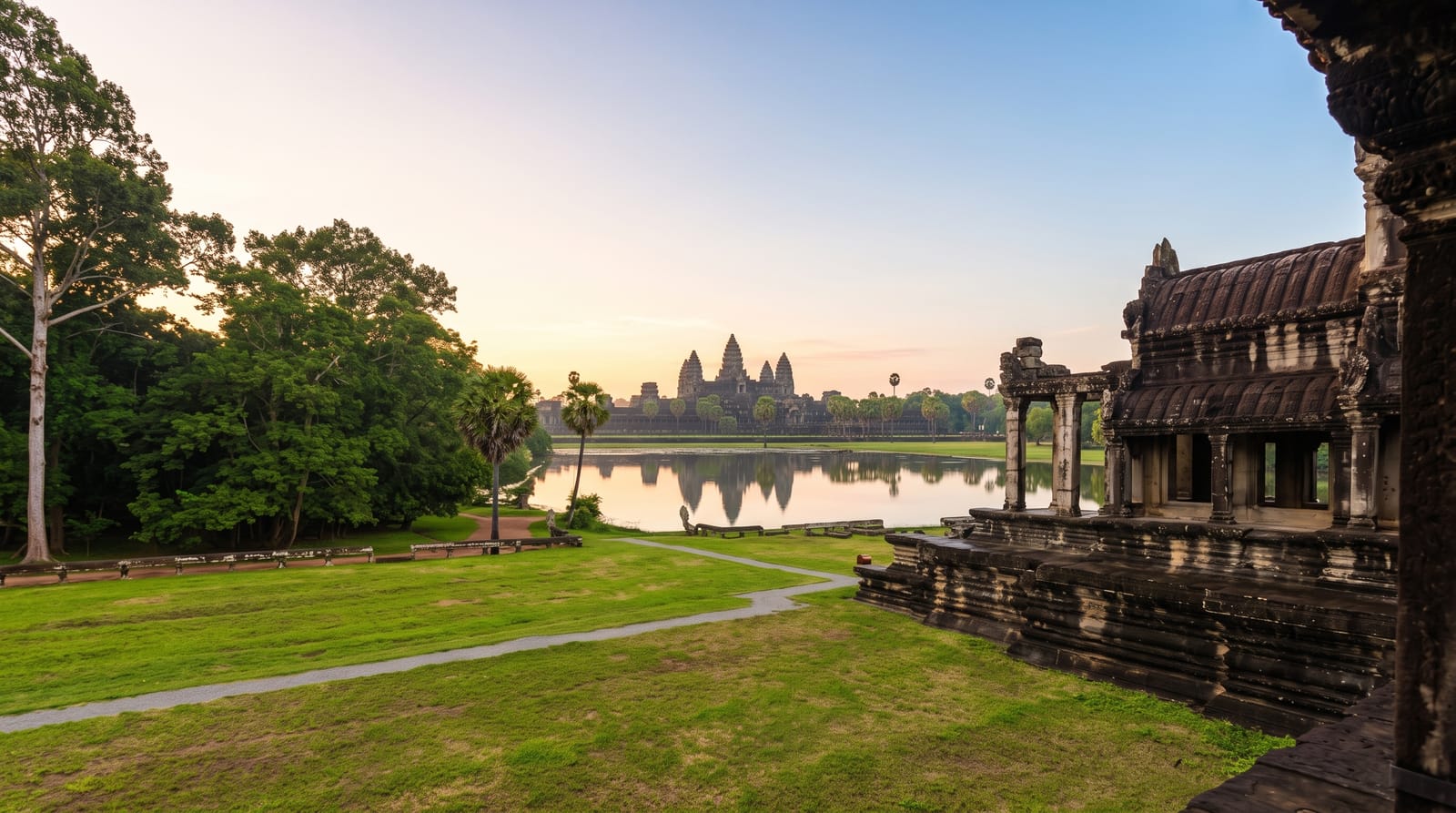
Angkor Wat is the largest religious monument in the world and the crowning glory of the ancient Khmer empire, a magnificent temple-mountain built in the twelfth century in what is now Cambodia. Surrounded by a vast moat and rising in a series of galleries to five soaring, lotus-bud towers, adorned with kilometres of exquisite bas-reliefs, it is a masterpiece of architecture, the soul of the nation, appearing even on its flag, and a UNESCO wonder unforgettable at sunrise.
History
King Suryavarman II commissioned the temple as his state temple, dedicated to Vishnu, in the capital Yaśodharapura; construction began in 1122 and ended in 1150, and work stopped after his death, leaving some of the bas-reliefs unfinished. In 1178 the Chams sacked Angkor, and Jayavarman VII, who restored the empire and built a new capital at Angkor Thom, turned to Buddhism, after which Angkor Wat was gradually converted into a Buddhist site, as it has remained. Although it was largely neglected after the 16th century, it was never completely abandoned, and fourteen inscriptions of the 17th century record Japanese Buddhist pilgrims who settled alongside the Khmer (Wikipedia, Angkor Wat).
Highlights
- The five towers - the soaring lotus-bud towers of the temple-mountain.
- The sunrise - the temple reflected in the moat at dawn.
- The bas-reliefs - the kilometres of exquisite carved galleries.
- The moat and causeway - the vast moat and the grand stone approach.
When to go
November to February, the cool, dry season, is the most comfortable; the famous sunrise, when the towers are reflected in the moat, is the classic experience, so arrive before dawn. It is fiercely hot much of the year, so start early and rest at midday.
Practical notes
The famous sunrise is magical but extremely crowded, with hundreds jostling for the reflection shot; it is worth it, but manage expectations. It is very hot, so start early, bring water and cover shoulders and knees, as a modest dress code is enforced at the temples. It is one temple in a vast complex, so allow more days for the others.
Nearby
Angkor Thom, the Bayon and Ta Prohm are within the Angkor complex; Siem Reap is the base town.
Key facts
Source: Wikidata, item Q43473, read on 18 October 2026.
What to pack for Angkor Wat
Chosen from what this place is for. Tap a kit for the full checklist.
- Comfortable walking shoes - Sightseeing means kilometres of pavement and cobbles daily. Find on Amazon
- Modest clothing - Shoulders and knees covered - the single most common requirement. Find on Amazon
- A slim anti-theft daypack - Zips that close properly; keep it in front in crowds and on transit. Find on Amazon
- A scarf or shawl - To cover the head or shoulders on entry; women especially at mosques. Find on Amazon
Some links on this page are Amazon affiliate links - if you buy through them we may earn a small commission at no extra cost to you.
All packing kitsPlan your trip
Where to start if Angkor Wat is going on the list.
Booking links on this page are affiliate links - if you book through them we may earn a small commission at no extra cost to you. It never changes what we write about a place.
Opening times, ticket prices and seasonal closures change - check the official source before you go: official site.