Banteay Kdei
A rambling monastic temple facing the Srah Srang basin, quieter than its neighbours and pleasantly unrestored.
Updated 18 October 2026
UNESCO World Heritage
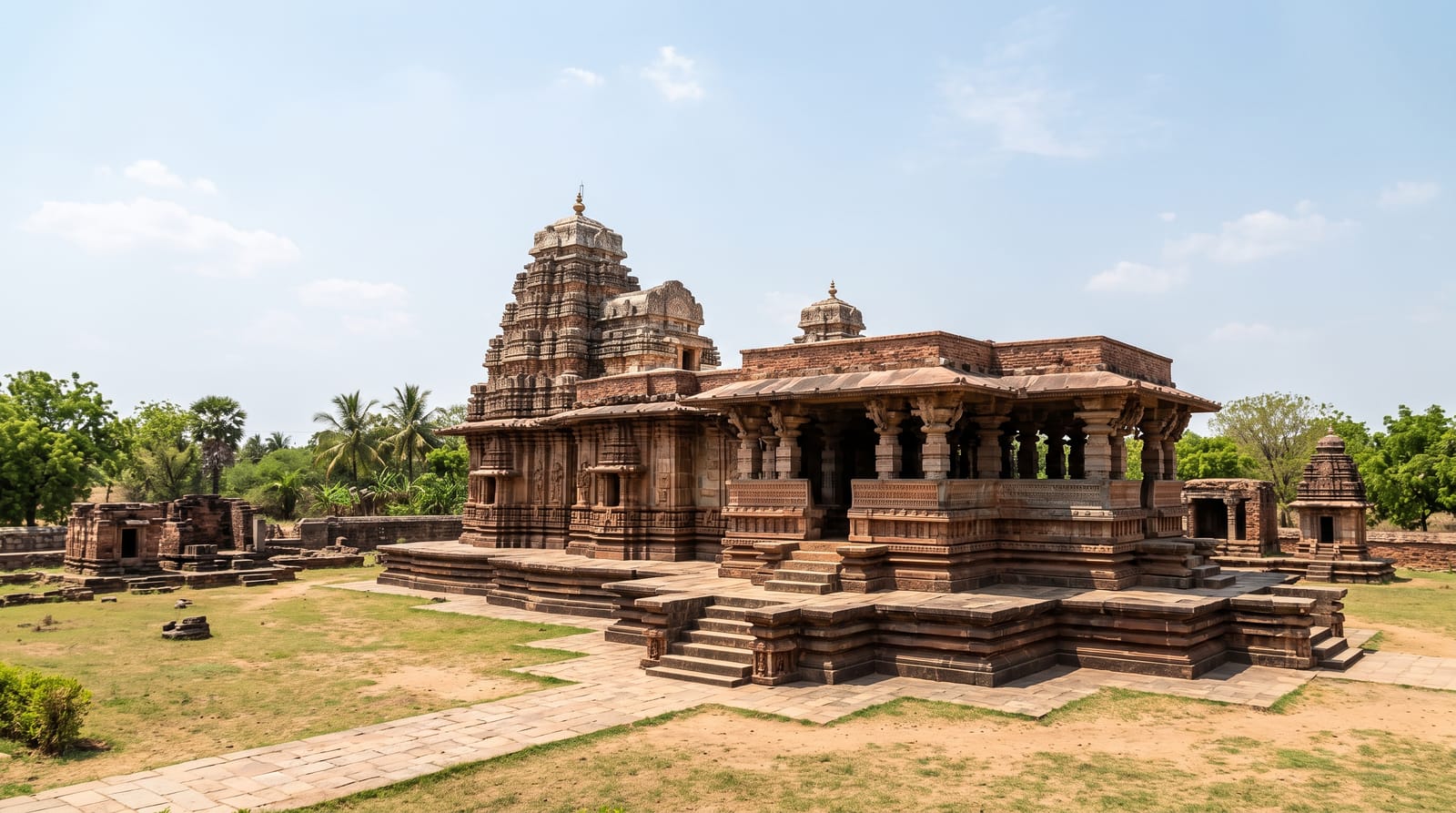
Banteay Kdei was built by Jayavarman VII on the site of an earlier foundation, a Buddhist monastic complex of galleries, courtyards and towers laid out on a long east-west axis, and it has been left in a middling state: partly collapsed, partly propped, with grass in the courtyards and trees on the walls, which gives it much of the atmosphere people go to Ta Prohm for without the crowds. Poor-quality sandstone means the carving has weathered badly in places, though dancers and devatas survive on some walls. In 2001 a large cache of buried Buddha images was excavated here, hidden presumably during a period of religious reaction. Across the road is Srah Srang, a bathing basin with a stone landing stage.
History
The name goes back to Kuti, an estate that the stele of Sdok Kak Thom says Jayavarman II gave to the family of his royal chaplain, and the Buddhist monastic complex was built by Jayavarman VII and his royal architect Kavindrarimathana on the site of a 10th-century temple of Rajendravarman; it is reported to be the first temple Jayavarman VII built, in 1181, opposite the Srah Srang reservoir. After centuries of neglect under vegetation it was cleared in 1920-1922 under Henri Marchal, monks lived in parts of it until the 1960s, and during ten years of research by the Sophia University mission of Japan, fragments of 274 sandstone Buddhist statues were unearthed here in 2001 (Wikipedia, Banteay Kdei).
The main sights
- Rambling galleries - collapsed and propped courtyards with grass and trees.
- Devatas and dancers - carved figures surviving on the better stone.
- The eastern gate - a face tower in the Bayon manner.
- Srah Srang opposite - the basin and its stone landing terrace.
When to go
November to March. Sunrise over Srah Srang from the landing stage is a quieter alternative to the Angkor Wat crowd. The temple itself is calmest early and late.
What to expect
The stone is poor and much of the carving is badly eroded. Sections are fenced off as unsafe. It gets group traffic in the middle of the day since it sits on the small circuit. Footing over rubble is uneven.
Nearby
Srah Srang is across the road; Ta Prohm lies west.
Key facts
Source: Wikidata, item Q601605, read on 18 October 2026.
What to pack for Banteay Kdei
Chosen from what this place is for. Tap a kit for the full checklist.
- Comfortable walking shoes - Sightseeing means kilometres of pavement and cobbles daily. Find on Amazon
- Modest clothing - Shoulders and knees covered - the single most common requirement. Find on Amazon
- A slim anti-theft daypack - Zips that close properly; keep it in front in crowds and on transit. Find on Amazon
- A scarf or shawl - To cover the head or shoulders on entry; women especially at mosques. Find on Amazon
Some links on this page are Amazon affiliate links - if you buy through them we may earn a small commission at no extra cost to you.
All packing kitsPlan your trip
Where to start if Banteay Kdei is going on the list.
Booking links on this page are affiliate links - if you book through them we may earn a small commission at no extra cost to you. It never changes what we write about a place.
Opening times, ticket prices and seasonal closures change - check the official source before you go: official site.