Ramappa Temple
A thirteenth-century temple built with bricks light enough to float, on a foundation designed to absorb earthquakes.
Updated 18 October 2026
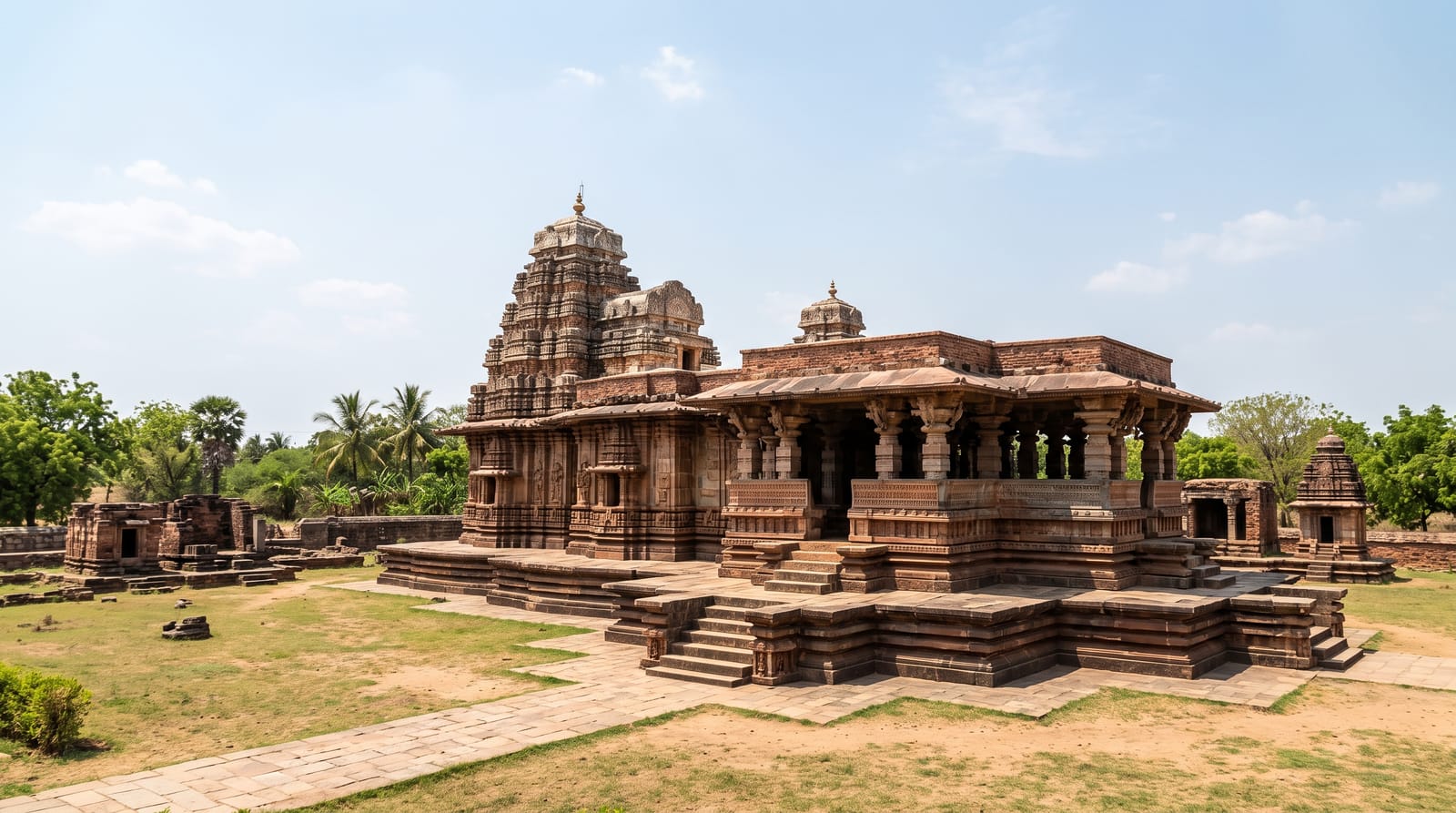
AI illustration
UNESCO World Heritage
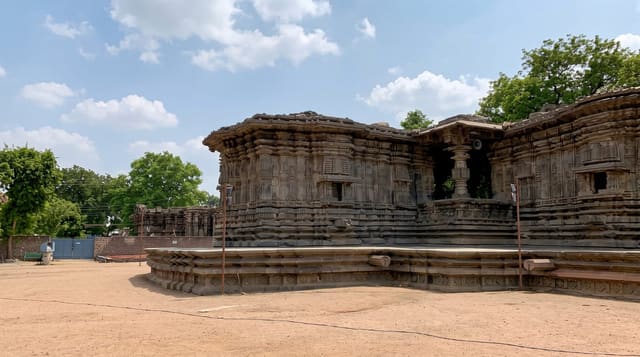
The Rudreshwara temple at Palampet, begun in 1213 under the Kakatiyas and inscribed by UNESCO in 2021, is named for its sculptor Ramappa, which is unusual in itself. Its tower is built of bricks so light they float in water, a porous fired brick that reduced the load on the structure. Beneath it is a sandbox foundation, a pit filled with sand mixed with other material that allows the building to move under seismic stress rather than crack, and the temple has survived earthquakes and centuries of neglect. Black basalt brackets at the eaves carry figures of dancers and musicians polished to a mirror finish.
History
In 1199 the Kakatiya ruler Mahadeva was killed in battle with Jaitugi of the Seuna dynasty, who took his nephew Ganapati prisoner; Mahadeva's commander Recherla Rudra ran the kingdom until Ganapati was released and installed as ruler, and then led his armies as the kingdom reached its greatest extent. In gratitude Ganapati granted Rudra the town of Palampet, where he dug the reservoir of Ramappa Lake and in 1213 began a temple complex to Shiva, as an inscription on a basalt pillar records; it took 40 years to build, and the forested site near the lake was chosen to set the temple in nature. It is named after Ramappa, the sculptor who built it, the only temple in India named after its craftsman. It suffered minor damage when Malik Kafur invaded Warangal in 1310 and decayed after the fall of the Kakatiyas, and on 25 July 2021 it became a World Heritage Site (Wikipedia, Ramappa Temple).
Highlights
- The floating bricks - a porous brick tower light enough to float.
- The sandbox foundation - a seismic-absorbing base under the structure.
- The basalt brackets - polished dancer figures at the eaves.
- The Nandi mandapa - the bull pavilion facing the sanctum.
When to go
October to March; Telangana summers are severe. Mornings light the bracket figures best. The site is quiet and rarely crowded despite the UNESCO listing.
Good to know
The temple is remote from Warangal with limited transport. Some brackets are damaged or missing. Facilities on site are minimal and interpretation modest for a world heritage site.
Nearby
Warangal fort lies southwest; the Thousand Pillar Temple is at Hanamkonda.
Key facts
Source: Wikidata, item Q3380656, read on 18 October 2026.
What to pack for Ramappa Temple
Chosen from what this place is for. Tap a kit for the full checklist.
- Comfortable walking shoes - Sightseeing means kilometres of pavement and cobbles daily. Find on Amazon
- Modest clothing - Shoulders and knees covered - the single most common requirement. Find on Amazon
- A slim anti-theft daypack - Zips that close properly; keep it in front in crowds and on transit. Find on Amazon
- A scarf or shawl - To cover the head or shoulders on entry; women especially at mosques. Find on Amazon
Some links on this page are Amazon affiliate links - if you buy through them we may earn a small commission at no extra cost to you.
All packing kitsPlan your trip
Where to start if Ramappa Temple is going on the list.
Booking links on this page are affiliate links - if you book through them we may earn a small commission at no extra cost to you. It never changes what we write about a place.
Opening times, ticket prices and seasonal closures change - check the official source before you go: official site.