Warangal Fort
Four carved stone gateways standing alone in a field, all that is left standing of a Kakatiya capital.
Updated 19 October 2026

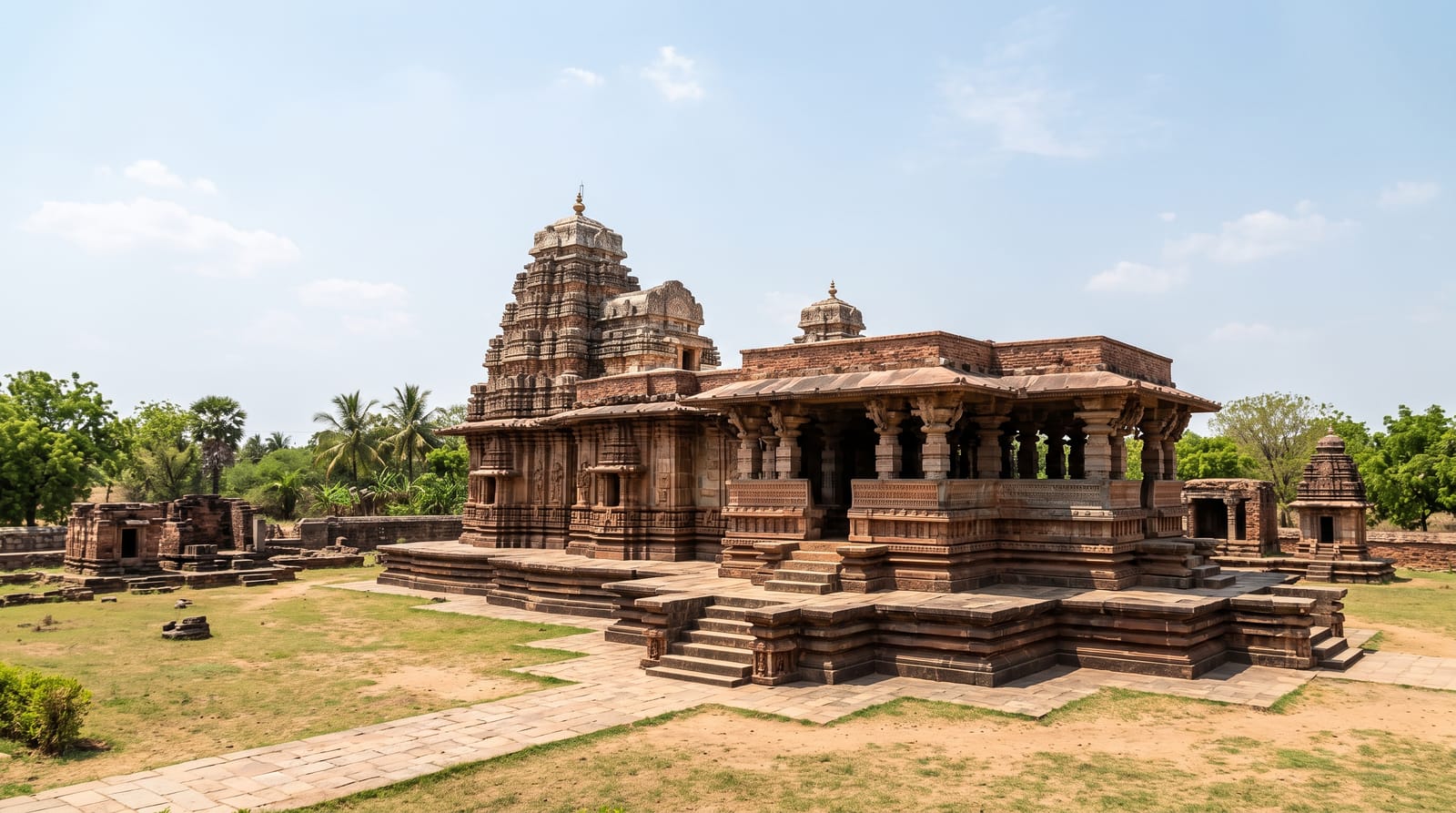
AI illustration
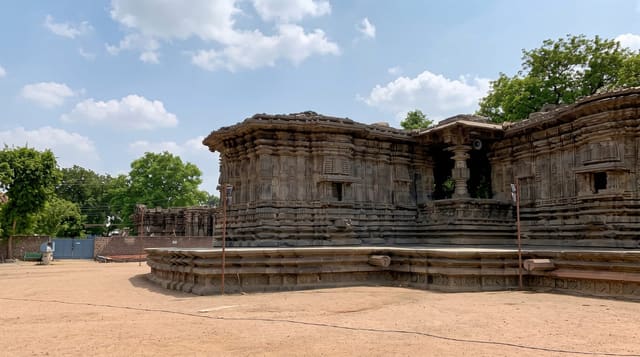
Warangal was the Kakatiya capital from the twelfth century, defended by three concentric walls with an earthen outer rampart, a stone middle wall and a moat, and at its centre stood a great Shiva temple. The Delhi Sultanate took the city in 1323 and it was destroyed; what remains of the temple are four monumental stone gateways, the kirti toranas, standing free in the open with nothing between them, carved with lotus, makara and geometric work. They became the emblem of Telangana state. Around them lie scattered carved blocks, broken lingams and pillar bases across the field where the temple stood.
History
Warangal was ruled by the Rashtrakutas in the 8th century and the Western Chalukyas in the 10th, and in the 12th century it became the capital of the Kakatiya dynasty; an earlier brick wall was replaced with stone by Ganapatideva, who reigned from 1199 to 1262, and completed by his daughter Rudrama Devi. In 1309 Malik Kafur, general of Alauddin Khalji, besieged the fort for several months, a siege described by Amir Khusrow, and after further sieges it was taken by the Delhi Sultanate; its four ornamental gateways, the Kakatiya Kala Thoranam, are now part of the emblem of Telangana (Wikipedia, Warangal Fort).
What you'll find
- The four toranas - carved stone gateways standing alone in the field.
- The scattered carving - broken pillars, lingams and blocks across the ground.
- The wall circuits - traces of the concentric fortifications around the city.
- The Khush Mahal - a later sultanate hall within the fort area.
When to go
October to March; Telangana summers are severe and the site is open ground with no shade. Mornings and late afternoon give the best light on the gateways.
Before you go
The site is a field of ruins rather than a fort with buildings, which surprises visitors. There is no shade and minimal interpretation. The city has grown around and into the fort area.
Nearby
The Thousand Pillar Temple lies at Hanamkonda; Ramappa is northeast.
Key facts
Source: Wikidata, item Q7968796, read on 18 October 2026.
What to pack for Warangal Fort
Chosen from what this place is for. Tap a kit for the full checklist.
- Comfortable walking shoes - Sightseeing means kilometres of pavement and cobbles daily. Find on Amazon
- Modest clothing - Shoulders and knees covered - the single most common requirement. Find on Amazon
- A slim anti-theft daypack - Zips that close properly; keep it in front in crowds and on transit. Find on Amazon
- A scarf or shawl - To cover the head or shoulders on entry; women especially at mosques. Find on Amazon
Some links on this page are Amazon affiliate links - if you buy through them we may earn a small commission at no extra cost to you.
All packing kitsPlan your trip
Where to start if Warangal Fort is going on the list.
Booking links on this page are affiliate links - if you book through them we may earn a small commission at no extra cost to you. It never changes what we write about a place.
Opening times, ticket prices and seasonal closures change - check the official source before you go: official site.