Pre Rup
A tenth-century temple-mountain of warm brick and laterite, long the favourite spot for sunset at Angkor.
Updated 18 October 2026
UNESCO World Heritage
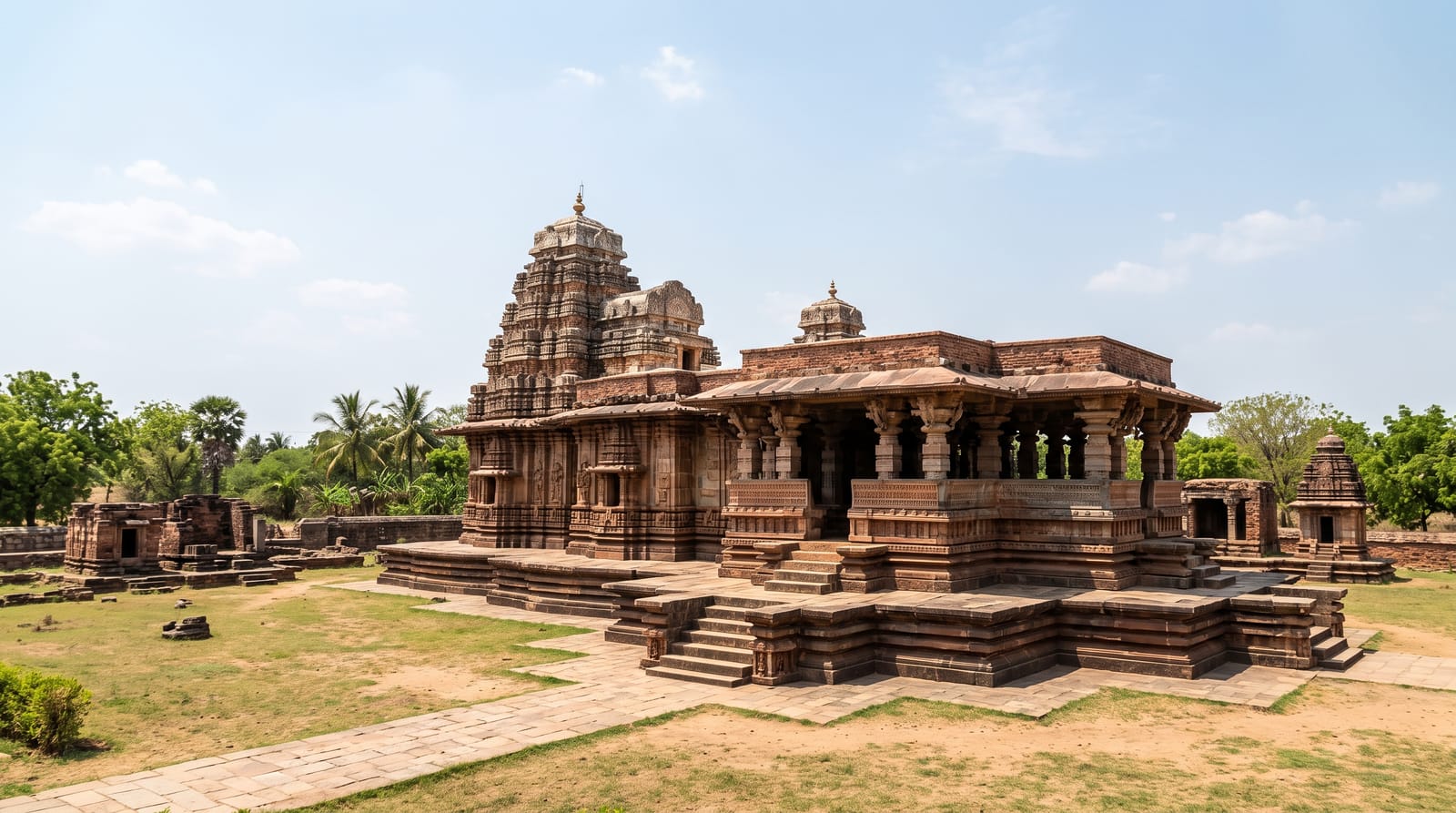
Pre Rup was dedicated in 961 under Rajendravarman, a temple-mountain of three tiers carrying five brick towers, built largely of brick and laterite rather than the sandstone of the later monuments, which gives it a warm reddish colour that deepens in low sun. That colour is why it became the standard sunset temple: the western steps fill in the late afternoon with people waiting for the light, looking out over rice fields and forest toward the Angkor Wat towers. The name means turning the body, from a cremation ritual said to have been performed here, and a stone cistern at the eastern base is traditionally connected with it. The stairways are steep and original in places.
History
Pre Rup was built as the state temple of King Rajendravarman and dedicated to Shiva in 961 or early 962, probably on the site of an earlier Shaivite ashram founded by Yasovarman I. The archaeologist Philippe Stern suggested that it stood at the centre of a new capital bounded to the north by the southern dike of the East Baray, but no dwellings have survived and the idea has never been confirmed by excavation. Its modern name, meaning turn the body, reflects a common Cambodian belief that funerals were held here, with the ashes of the dead turned in different directions during the rite (Wikipedia, Pre Rup).
The main sights
- Warm brick towers - five shrines on a three-tier pyramid.
- The sunset terrace - the upper level filling in late afternoon.
- The plain below - rice fields and forest toward Angkor Wat.
- The cremation cistern - the stone trough at the eastern foot.
When to go
November to March. Late afternoon for the colour and the sunset, though that is also the most crowded hour; mid-morning is nearly empty and the brick still looks good. The temple closes at dusk.
Good to know
Sunset here is crowded, with the upper terrace packed and numbers now limited at some Angkor sunset spots. The stairs are steep, worn and without handrails in places. There is no shade on the upper levels.
Nearby
East Mebon lies north; Banteay Kdei is west.
Key facts
Source: Wikidata, item Q1075826, read on 18 October 2026.
What to pack for Pre Rup
Chosen from what this place is for. Tap a kit for the full checklist.
- Comfortable walking shoes - Sightseeing means kilometres of pavement and cobbles daily. Find on Amazon
- Modest clothing - Shoulders and knees covered - the single most common requirement. Find on Amazon
- A slim anti-theft daypack - Zips that close properly; keep it in front in crowds and on transit. Find on Amazon
- A scarf or shawl - To cover the head or shoulders on entry; women especially at mosques. Find on Amazon
Some links on this page are Amazon affiliate links - if you buy through them we may earn a small commission at no extra cost to you.
All packing kitsPlan your trip
Where to start if Pre Rup is going on the list.
Booking links on this page are affiliate links - if you book through them we may earn a small commission at no extra cost to you. It never changes what we write about a place.
Opening times, ticket prices and seasonal closures change - check the official source before you go: official site.