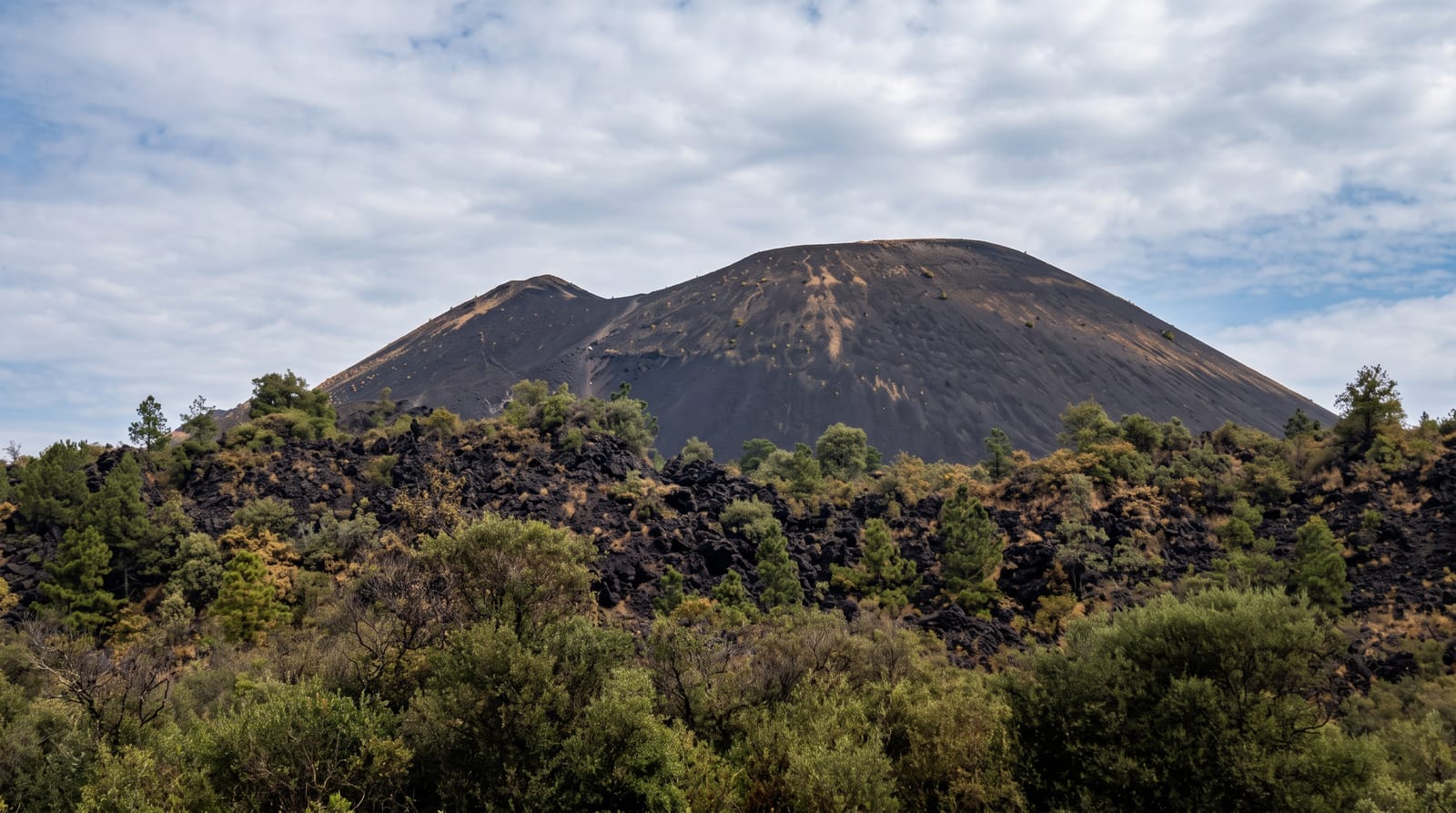
Mount Vesuvius
The only active volcano on mainland Europe, with about three million people living around its base.
Updated 19 October 2026
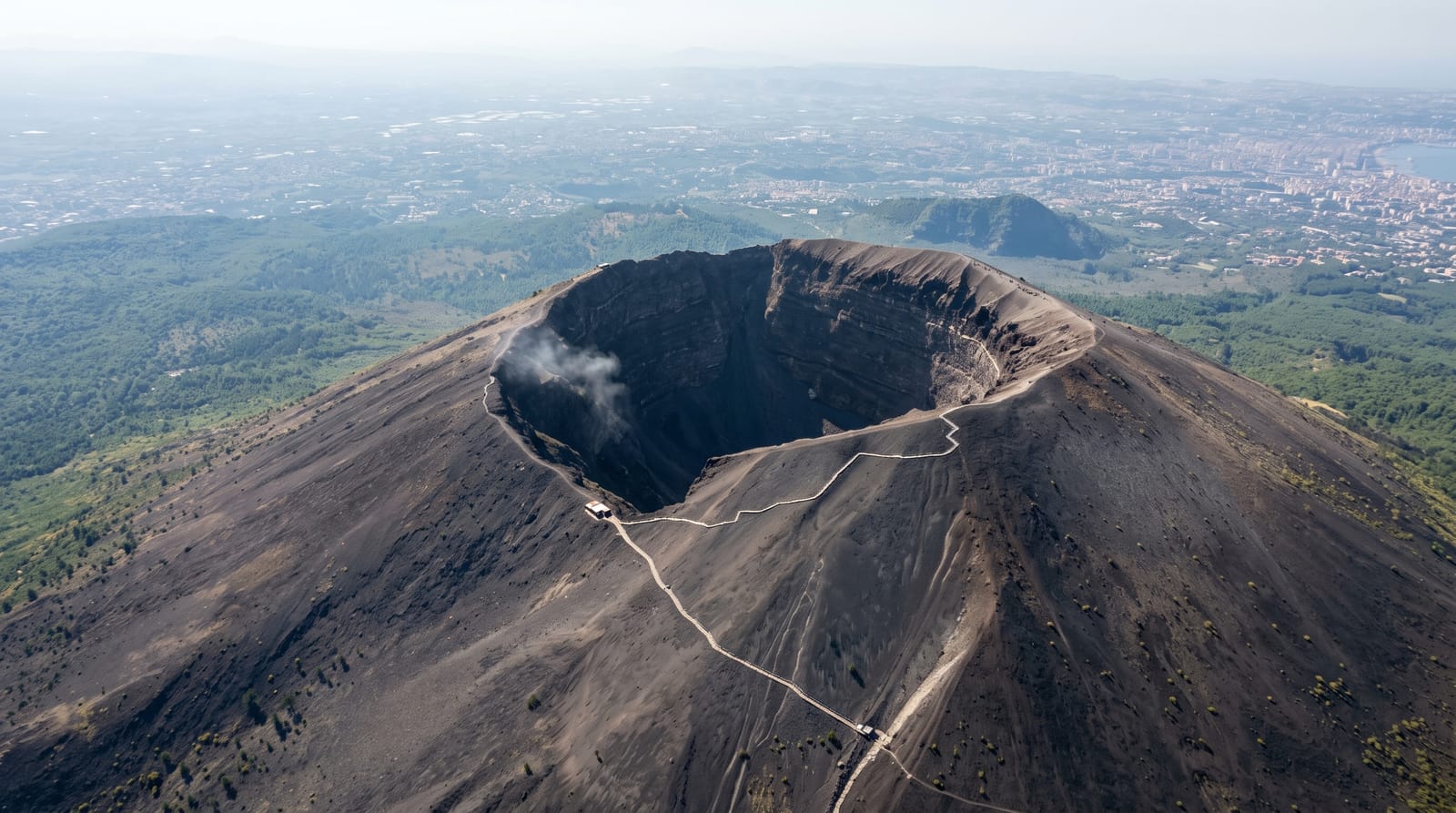
AI illustration
Vesuvius is a cone growing inside the remains of an older, larger volcano called Monte Somma, whose crescent rim still stands to one side. The eruption of AD 79 buried Pompeii and Herculaneum, and Pliny the Younger's letters describing it gave the term Plinian eruption to that violent column-forming type. The last eruption was in March 1944, filmed by Allied airmen stationed nearby. The crater rim path climbs from the car park in around thirty minutes on loose ash and cinder to about a thousand metres, looking into a crater roughly three hundred metres deep with fumaroles still venting.
History
The eruption of 79 AD buried the Roman cities of Pompeii, Herculaneum, Oplontis and Stabiae, throwing a cloud of stones, ash and gases 33 km high, and more than 1,000 people are thought to have died. The name was in frequent use among writers of the late Roman Republic and the early Empire, alongside forms such as Vesaevus, Vesevus and Vesbius (Wikipedia, Mount Vesuvius).
What you'll find
- The crater - a bowl about 300 metres deep with venting fumaroles.
- The Somma rim - the crescent of the older volcano beside the cone.
- The Bay of Naples view - the coast and islands from the rim path.
- The 1944 flows - lava fields from the most recent eruption.
When to go
April to June and September to October; the summit path closes in bad weather and high wind. Booking a timed slot is required and the site closes if cloud obscures it.
Good to know
The path is loose ash and cinder, steep and dusty, unsuitable for poor footwear. Closures for weather happen at short notice. Only the rim is accessible.
Nearby
Pompeii and Herculaneum lie below; Naples is west.
Key facts
Source: Wikidata, item Q524, read on 18 October 2026.
What to pack for Mount Vesuvius
Chosen from what this place is for. Tap a kit for the full checklist.
- Broken-in walking shoes or boots - Grip and ankle support matter more than looks; never hike in brand-new boots. Find on Amazon
- Layers + a waterproof shell - Mountain weather turns fast; a packable rain jacket saves the day. Find on Amazon
- Daypack with rain cover - 20-30 litres holds water, snacks, layers and a first-aid kit. Find on Amazon
- Offline maps + a power bank - Download the trail before you lose signal; carry backup charge. Find on Amazon
Some links on this page are Amazon affiliate links - if you buy through them we may earn a small commission at no extra cost to you.
All packing kitsPlan your trip
Where to start if Mount Vesuvius is going on the list.
Booking links on this page are affiliate links - if you book through them we may earn a small commission at no extra cost to you. It never changes what we write about a place.
Opening times, ticket prices and seasonal closures change - check the official source before you go: official site.