Kythira
A large, thinly populated island of gorges, waterfalls and Venetian castles, adrift between the Peloponnese and Crete.
Updated 19 October 2026
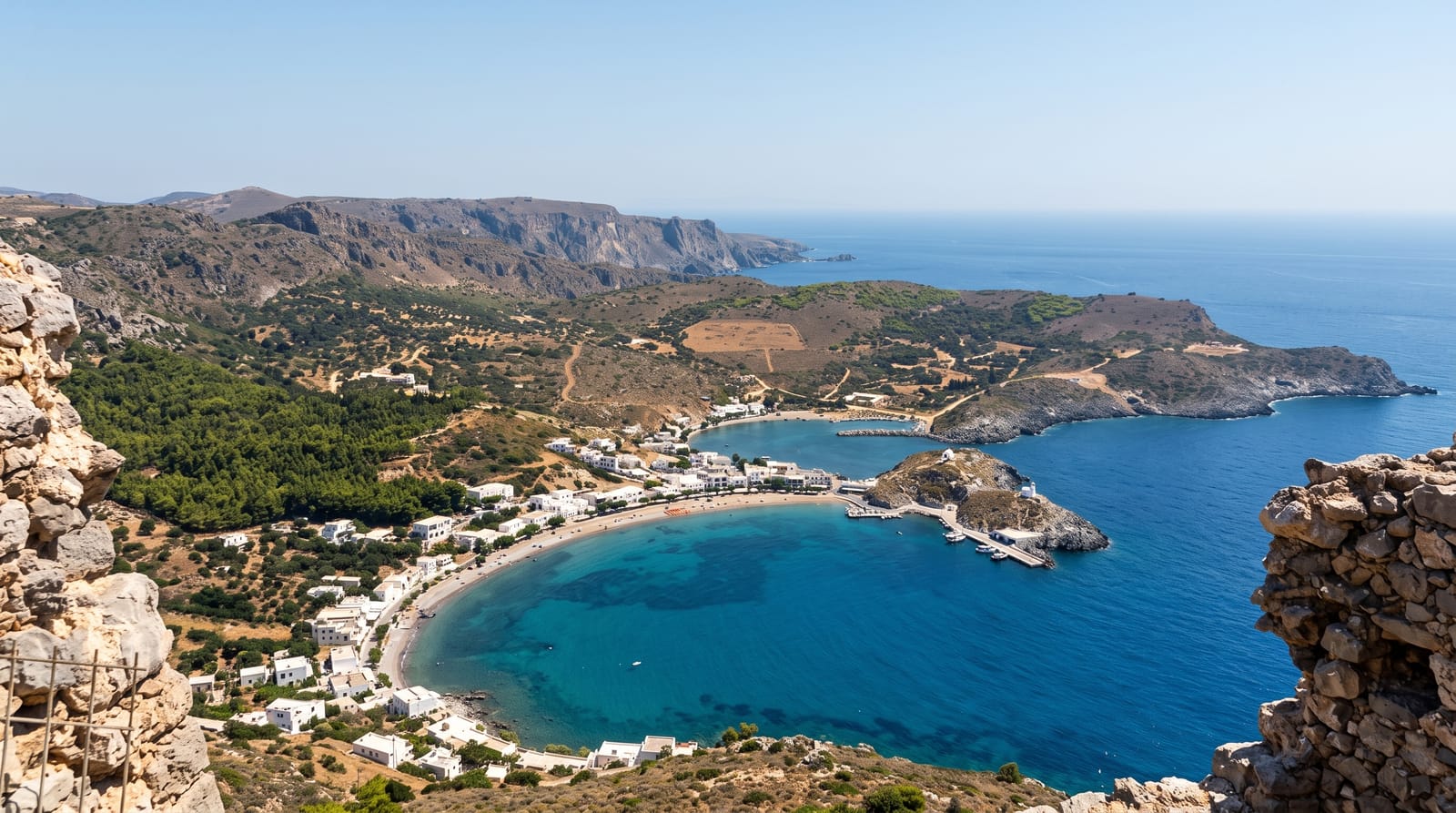
AI illustration
Kythira sits off the southern tip of the Peloponnese where three seas meet, administered with the Ionian islands though nowhere near them, and its long Venetian and British periods left castles, stone bridges and a distinctive architecture of flat roofs and dovecotes. The island is big, about 280 square kilometres, and empty enough that villages of twenty people are normal. Its landscape surprises visitors: the Neraida waterfall drops into a green pool at Mylopotamos beside a village of abandoned watermills, the Kakia Skala gorge cuts down to the sea, and the Venetian castle above Chora looks out over an immense blue emptiness. Beaches are scattered and often reached down dirt tracks, Kaladi with its rock arch, Melidoni, Fyri Ammos. Honey, thyme and sea daffodils are the local produce.
History
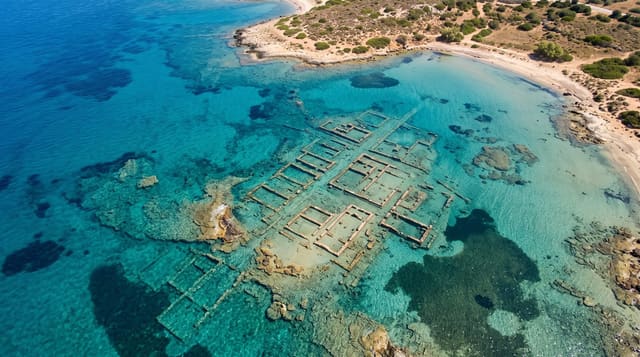
Lying between the mainland and Crete, Kythira was a crossroads of merchants, sailors and conquerors from antiquity until the mid-19th century. There are remains from the Helladic period, contemporary with the Minoans, with evidence of trade as far as Egypt and Mesopotamia, and in the early archaic age a Phoenician colony was drawn by the sea-snail that produces Tyrian purple; Xenophon mentions a Phoenician Bay, probably Avlemonas, and the archaic Greek city stood at Scandea. Sparta took the island from Argos early in the sixth century BC and governed it through a "judge of Kythira", and Athens occupied it three times in its wars with Sparta, the first in 456 BC (Wikipedia, Kythira).
What you'll find
- The Chora castle - a Venetian fortress on the cliff above the old town.
- Neraida waterfall - a fall into a pool below the mill village of Mylopotamos.
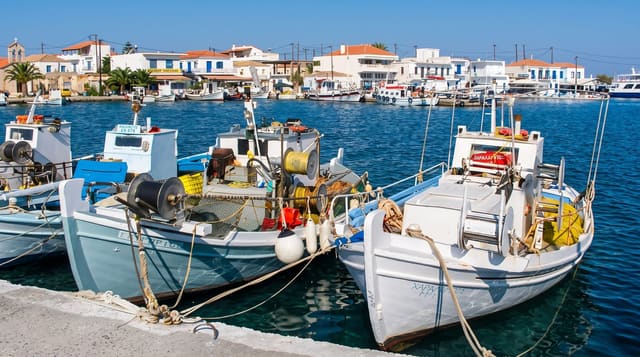
- Avlemonas and Kaladi - a stone harbour hamlet and a beach under cliffs.
- The abandoned watermills - stone ruins along the streams at Mylopotamos.
When to go
May, June and September for warm sea, wildflowers or clear autumn air. July and August fill with Greek and Australian visitors, as Kythira has a huge diaspora in Australia. Winter is windswept and many services close.
Practical notes
Distances are real and roads are slow, so a car is not optional. Ferries are weather-dependent and can be cancelled; the airport connection is small. Facilities are spread thin, and several of the best beaches need careful driving on unsurfaced tracks.
Nearby
Antikythera lies to the south on the Crete route; the Peloponnese and Neapoli are the mainland gateway.
Key facts
Source: Wikidata, item Q207239, read on 18 October 2026.
What to pack for Kythira
Chosen from what this place is for. Tap a kit for the full checklist.
- Reef-safe sunscreen - High SPF that will not bleach the coral you are swimming over. Find on Amazon
- Quick-dry towel - A microfibre towel packs small and dries in minutes. Find on Amazon
- Water shoes - Protect your feet on rocky entries, hot sand and sea-urchin spines. Find on Amazon
- Dry bag - Keeps phone, cash and keys safe while you are in the water. Find on Amazon
Some links on this page are Amazon affiliate links - if you buy through them we may earn a small commission at no extra cost to you.
All packing kitsPlan your trip
Where to start if Kythira is going on the list.
Booking links on this page are affiliate links - if you book through them we may earn a small commission at no extra cost to you. It never changes what we write about a place.
Opening times, ticket prices and seasonal closures change - check the official source before you go: official site.