Elafonisos
A small island off Laconia with a double-bay beach of white sand and water that reads Caribbean in photographs.
Updated 19 October 2026
AI illustration
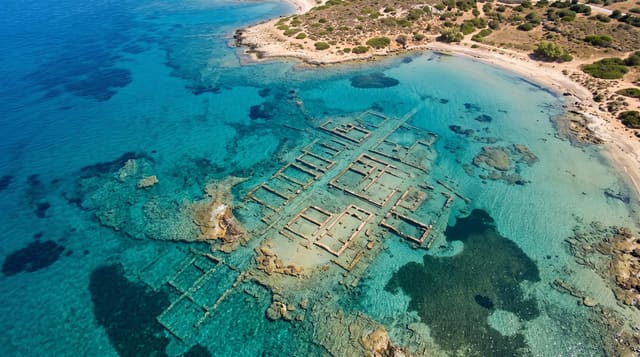
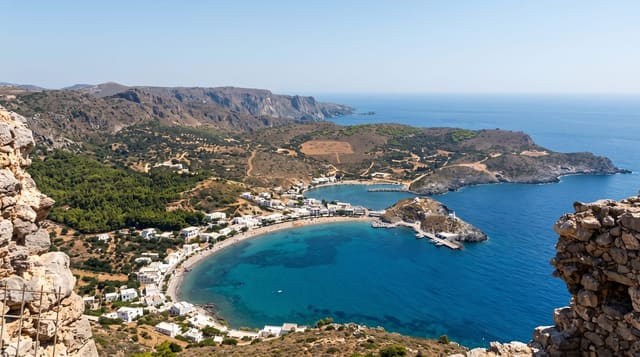
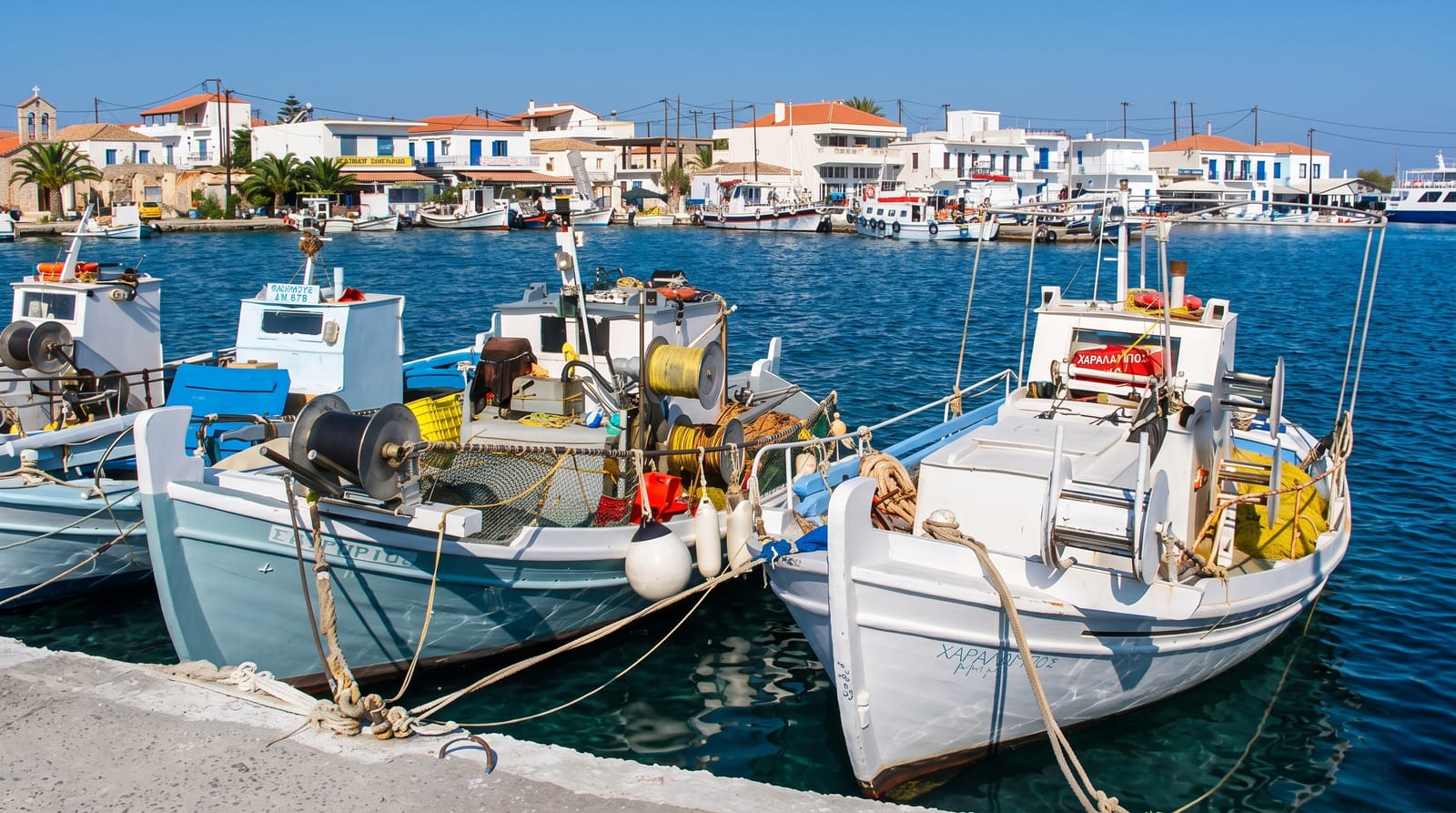
Elafonisos is nineteen square kilometres of low scrub and dunes separated from the Peloponnese by a strait only 570 metres wide, and it built its reputation on Simos, a double beach where two crescents of fine white sand meet at a sandy isthmus with juniper-covered dunes behind. The water is shallow, pale turquoise over white sand, and unusually clear even by Greek standards. The island's single village has a working fishing harbour and a row of tavernas, and the population of a few hundred multiplies in August. Other beaches, Panagia, Lefki, Kalogeras, are emptier. The dunes are protected habitat, and the wreck-strewn seabed off the north coast includes the submerged prehistoric settlement of Pavlopetri, visible from the mainland shore.
History
In antiquity Elafonisos was not an island but a peninsula, called by Pausanias Onou Gnathos, "donkey's jawbone". Just off its coast lies Pavlopetri, a sunken town dating to the early 3rd millennium BC, thought to have been taken by the sea around 1000 BC (Wikipedia, Elafonisos).
What's there
- Simos beach - twin crescents of white sand meeting at an isthmus.
- The juniper dunes - protected dune habitat behind the beaches.
- The fishing harbour - the village port and its tavernas.
- The quiet beaches - Panagia and Lefki on the far side of the island.
When to go
June and September for warm water and space; August is genuinely crowded, with camping pressure on the dunes and a queue for the ferry. Spring is beautiful but the water is cold and services limited.
Before you go
The island is flat, dry and short on shade; bring an umbrella. Facilities are basic and cash is useful. Dune camping is restricted to protect the habitat, and the authorities enforce it. Ferry queues in August can be long for cars.
Nearby
Pavlopetri lies just off the mainland shore opposite; Neapoli and the road to Monemvasia are north.
Key facts
Source: Wikidata, item Q96408, read on 18 October 2026.
What to pack for Elafonisos
Chosen from what this place is for. Tap a kit for the full checklist.
- Travel rod + reel - A packable multi-piece rod fits in a case and covers most holiday fishing. Find on Amazon
- Reef-safe sunscreen - High SPF that will not bleach the coral you are swimming over. Find on Amazon
- Loose, light, long clothing - Covering up beats bare skin in the desert - and locals dress this way for a reason. Find on Amazon
- Shelter suited to the place - Tent, tarp or hut booking - match it to the terrain and rules. Find on Amazon
Some links on this page are Amazon affiliate links - if you buy through them we may earn a small commission at no extra cost to you.
All packing kitsPlan your trip
Where to start if Elafonisos is going on the list.
Booking links on this page are affiliate links - if you book through them we may earn a small commission at no extra cost to you. It never changes what we write about a place.
Opening times, ticket prices and seasonal closures change - check the official source before you go: official site.