Vaison-la-Romaine
Two towns facing each other across a Roman bridge that survived a flood which destroyed everything else.
Updated 19 October 2026
AI illustration
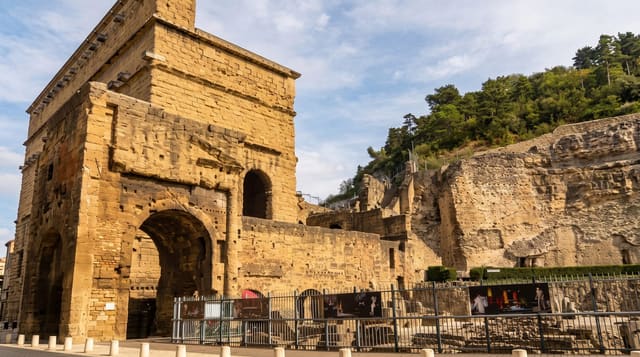
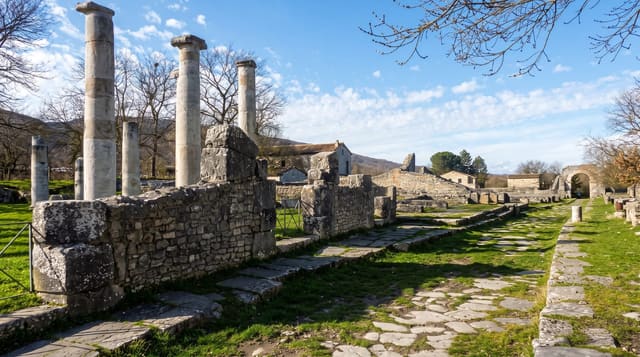
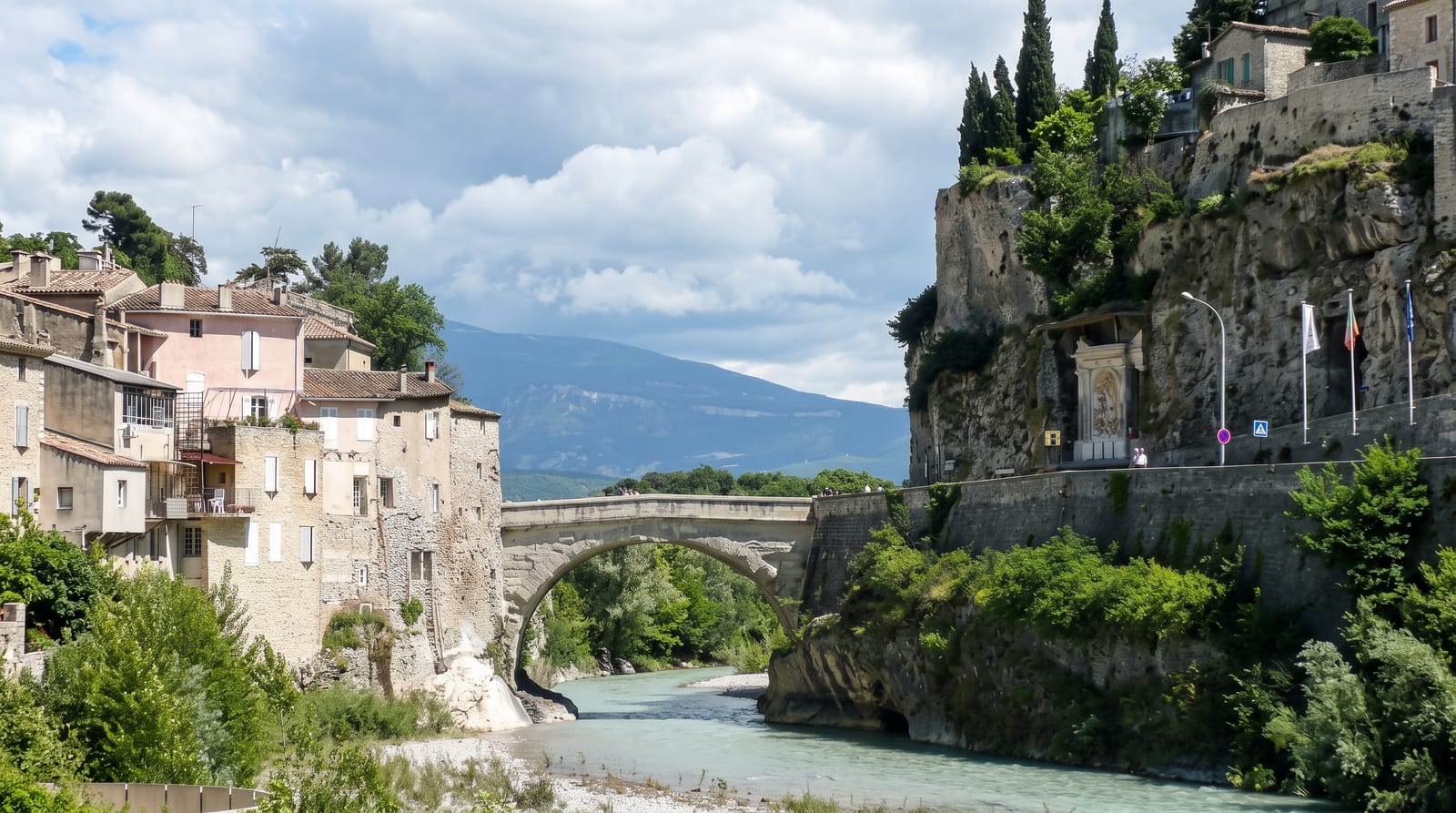
Vaison splits in two across the Ouveze: on the north bank the modern town sits over the Roman city, with two excavated quarters of houses, streets, shops and a theatre open to walk through, plus a Romanesque cathedral; on the south bank the medieval haute ville climbs to a ruined castle, reached over a Roman bridge built in the first century. In September 1992 a flash flood raised the Ouveze more than fifteen metres, destroyed a modern bridge, wrecked buildings and killed dozens; the Roman bridge held, with only its parapet lost, and is still the crossing.
History
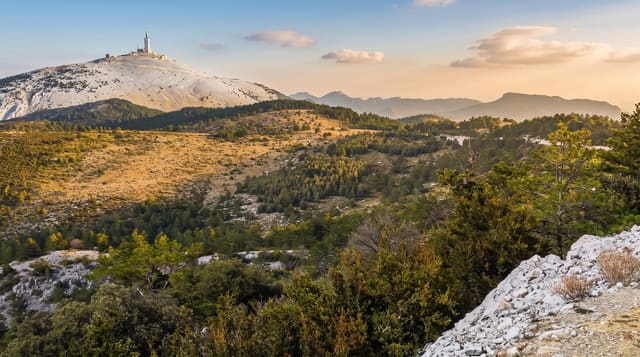
The area was inhabited in the Bronze Age, and at the end of the 4th century BC Vaison became a capital of the Celtic Vocontii, centred on the oppidum of the upper town; after the Roman conquest of 125-118 BC they kept some autonomy, and the town, as Vasio Julia Vocontiorum, grew down by the river on a Roman street grid. Its theatre, bridge, aqueducts and baths were begun in the second half of the 1st century, one aqueduct drawing on the Groseau spring on Mont Ventoux 10 kilometres away, and at its height in the 2nd century the city covered up to 75 hectares and was one of the richest in Gallia Narbonensis; the statue known as the Vaison Diadumenos, found in the theatre in the 19th century, is now in the British Museum. A bishopric from the 4th century, Vaison hosted church councils in 442 and 529, was ruined by the Burgundians in the 5th century, and in the Middle Ages its people moved up to the walled hill on the left bank of the Ouvèze under a strong castle, until the counts of Provence and the bishops, who each held half the town, settled their disputes by a treaty of 1251; from the 18th century most people moved back down to the plain. Pope Sixtus IV authorised its market in 1483, which now has nearly 500 traders in summer, and the flood of 22 September 1992 was the worst since 1632 (Wikipedia, Vaison-la-Romaine).
What you'll find
- The Roman bridge - a first-century span that survived the 1992 flood.
- The excavated quarters - Puymin and La Villasse with houses and streets.
- The Roman theatre - a bowl still used for a summer festival.
- The haute ville - a medieval upper town under a ruined castle.
When to go
April to October; the Tuesday market is one of the largest in Provence. Summer heat on the excavations is heavy with no shade. The upper town climb is steep.
Good to know
The excavations are foundations and low walls rather than standing buildings. The two Roman quarters and the upper town are separate walks. Market day makes parking difficult.
Nearby
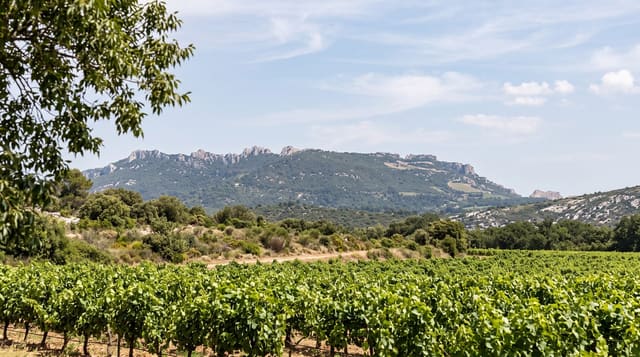
The Dentelles de Montmirail lie south; Orange is southwest.
Key facts
Source: Wikidata, item Q504887, read on 18 October 2026.
What to pack for Vaison-la-Romaine
Chosen from what this place is for. Tap a kit for the full checklist.
- Comfortable walking shoes - Sightseeing means kilometres of pavement and cobbles daily. Find on Amazon
- Modest clothing - Shoulders and knees covered - the single most common requirement. Find on Amazon
- A slim anti-theft daypack - Zips that close properly; keep it in front in crowds and on transit. Find on Amazon
- A scarf or shawl - To cover the head or shoulders on entry; women especially at mosques. Find on Amazon
Some links on this page are Amazon affiliate links - if you buy through them we may earn a small commission at no extra cost to you.
All packing kitsPlan your trip
Where to start if Vaison-la-Romaine is going on the list.
Booking links on this page are affiliate links - if you book through them we may earn a small commission at no extra cost to you. It never changes what we write about a place.
Opening times, ticket prices and seasonal closures change - check the official source before you go: official site.