Aosta
A Roman colony laid out on a grid in 25 BC, its walls and gates still standing among the Alps.
Updated 19 October 2026
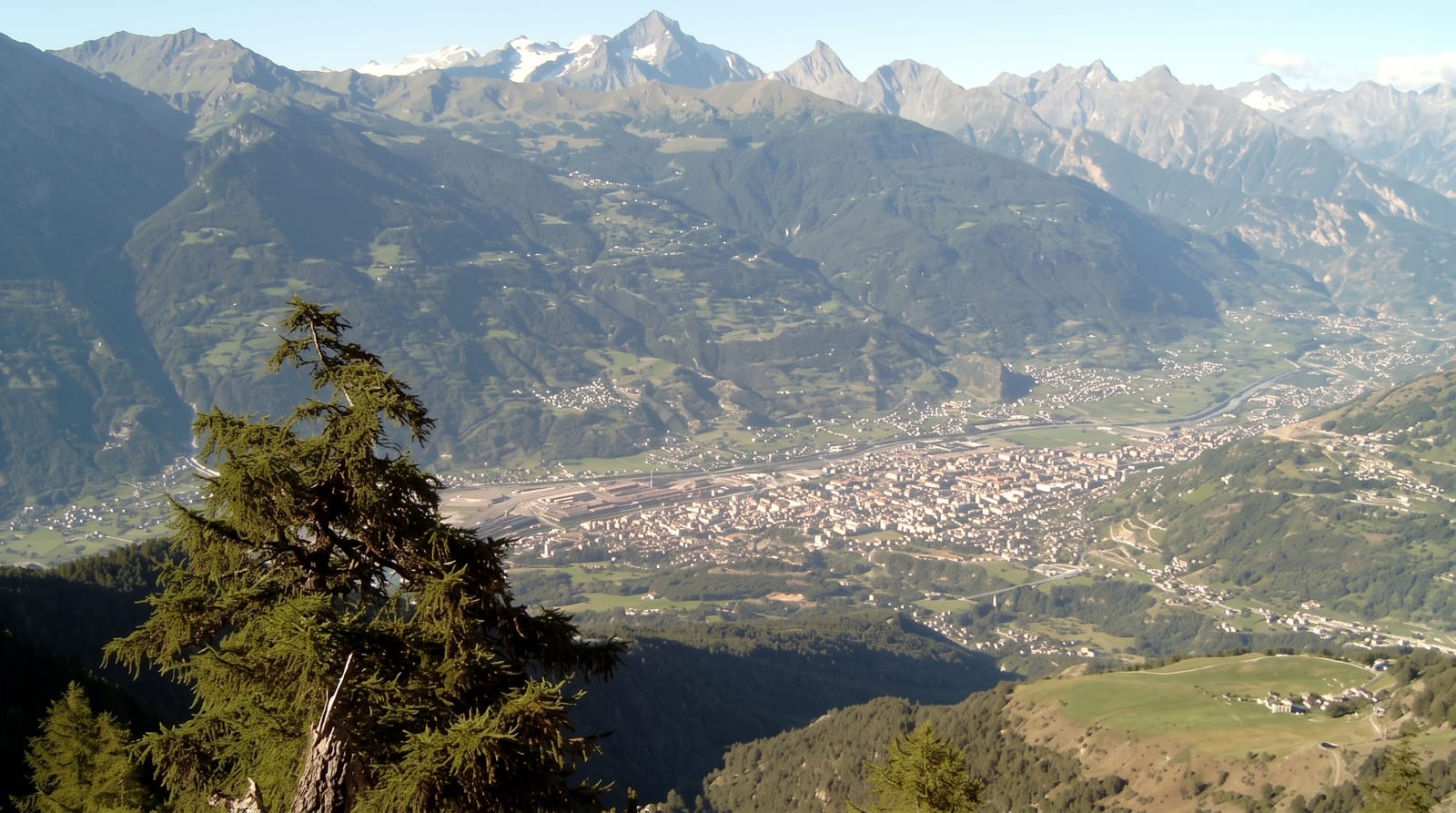
AI illustration
Augusta Praetoria was founded in 25 BC by Terentius Varro, after his campaign against the Salassi, on a rectangular grid at the junction of the roads to the two great St Bernard passes, and the plan survives: the walls still enclose the centre with towers at intervals, the Porta Praetoria stands as a triple gate with its inner and outer arches, and the theatre's facade rises over twenty metres. The Arch of Augustus stands at the eastern approach. The cathedral and Sant'Orso hold Ottonian frescoes above their vaults and a carved Romanesque cloister. The town is bilingual, Italian and French, and the valley keeps a Franco-Provençal dialect.
History
The area was a centre of the Salassi until 25 BC, when a Roman campaign led by Terentius Varro killed or enslaved many of them and Varro founded the Roman colony. After the fall of the Western Empire the city passed in turn to the Burgundians, the Ostrogoths and the Byzantines, and then to the Lombards, who were driven out by the Franks (Wikipedia, Aosta).
Highlights
- The Porta Praetoria - a triple Roman gate still spanning the street.
- The theatre facade - a wall over twenty metres high near the walls.
- The Arch of Augustus - the triumphal arch at the eastern entrance.
- The Sant'Orso cloister - carved Romanesque capitals beside the church.
When to go
May to October; the Sant'Orso craft fair fills the streets on 30 and 31 January, in deep winter. Summer is mild at altitude. Sites keep midday closures.
Things to know
The Roman remains are scattered through a modern town rather than concentrated. Several sites keep separate tickets and hours. The theatre interior is partly excavated.
Nearby
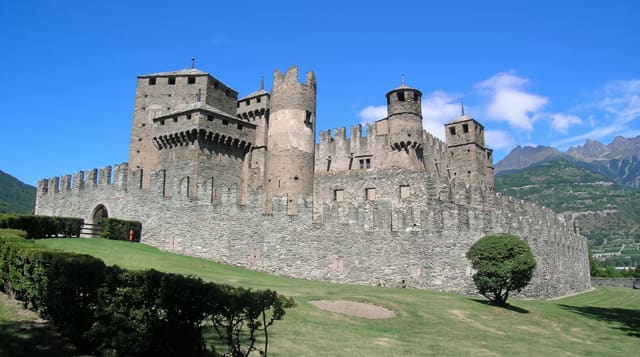
Fenis castle lies east; the Great St Bernard road runs north.
Key facts
Source: Wikidata, item Q3367, read on 18 October 2026.
What to pack for Aosta
Chosen from what this place is for. Tap a kit for the full checklist.
- Warm base layers - Merino or synthetic against the skin - never cotton, which chills when damp. Find on Amazon
- Comfortable walking shoes - Sightseeing means kilometres of pavement and cobbles daily. Find on Amazon
- Modest clothing - Shoulders and knees covered - the single most common requirement. Find on Amazon
- An insulated + windproof jacket - A down or synthetic layer under a hard shell handles most cold. Find on Amazon
Some links on this page are Amazon affiliate links - if you buy through them we may earn a small commission at no extra cost to you.
All packing kitsPlan your trip
Where to start if Aosta is going on the list.
Booking links on this page are affiliate links - if you book through them we may earn a small commission at no extra cost to you. It never changes what we write about a place.
Opening times, ticket prices and seasonal closures change - check the official source before you go: official site.