Orange Roman Theatre
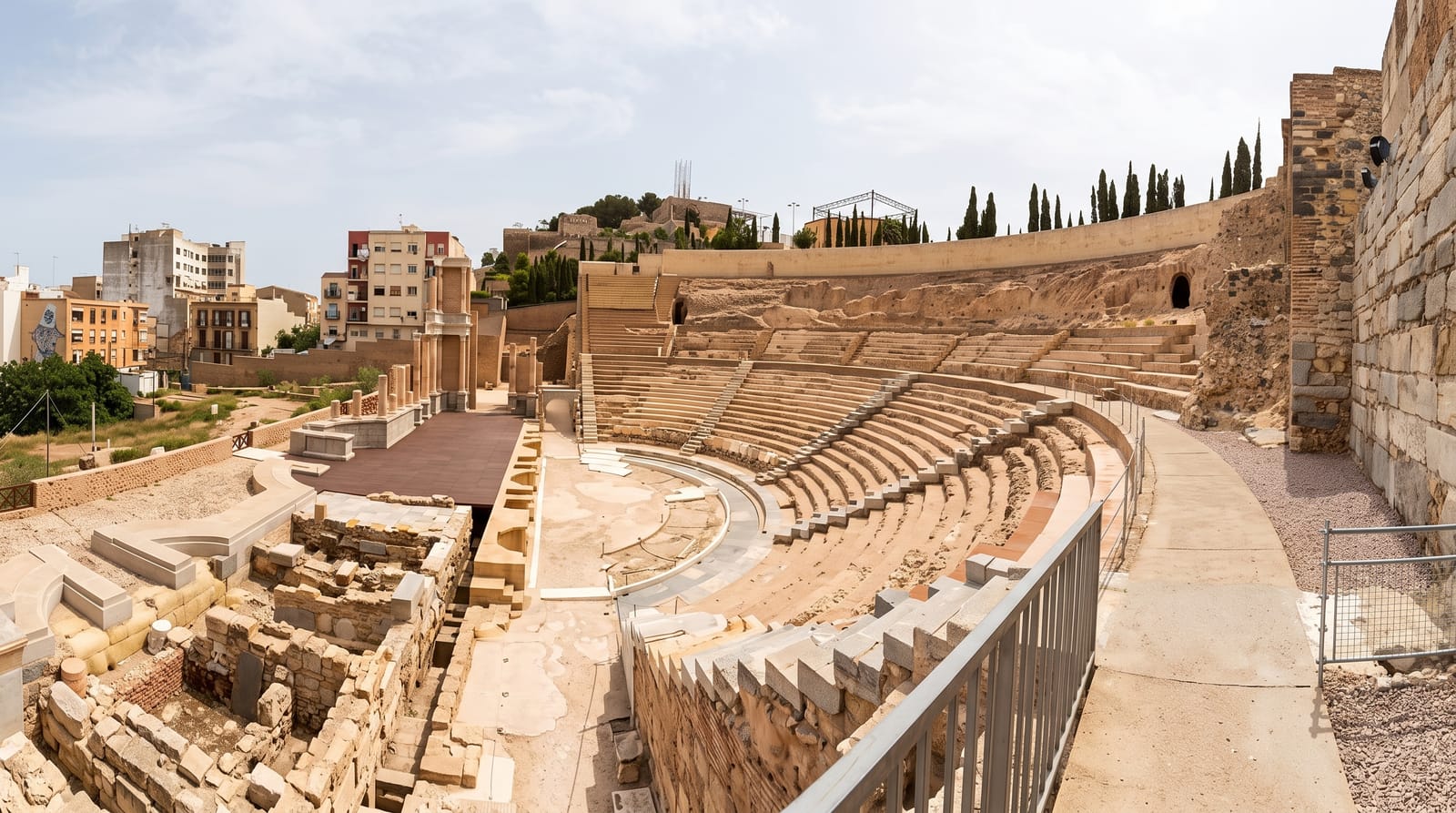
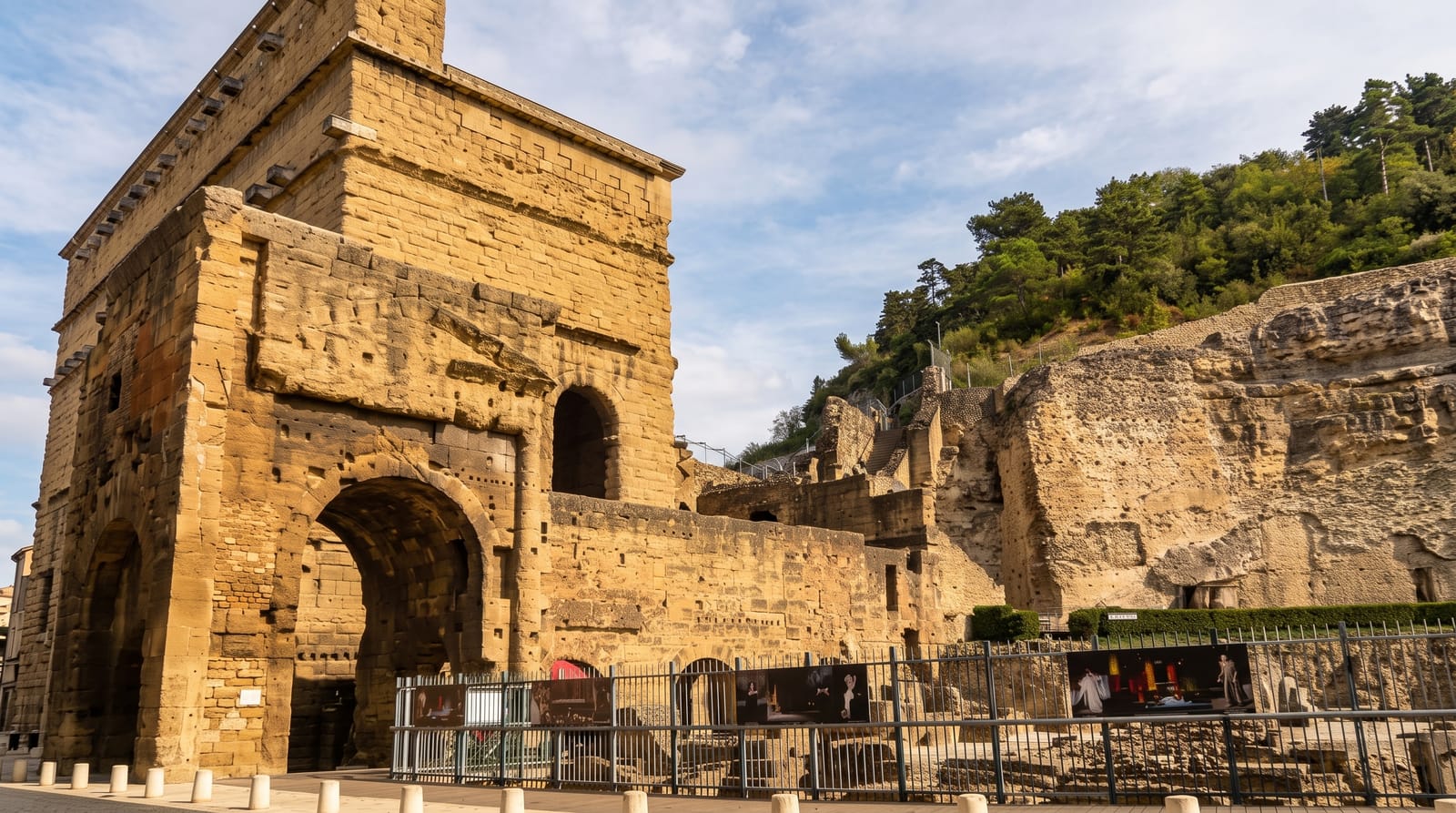
A Roman theatre with its stage wall still standing, a hundred and three metres long and thirty-seven high.
Updated 18 October 2026
AI illustration
UNESCO World Heritage
Almost every Roman theatre lost its scaenae frons, the wall behind the stage, to stone robbing; Orange kept its. The wall is about one hundred and three metres long and thirty-seven high, and Louis XIV is said to have called it the finest wall in his kingdom. A statue of Augustus, three and a half metres tall, stands in the central niche, reassembled from fragments. The acoustics still work, which is why the Chorégies d'Orange, an opera festival running since 1869, uses the theatre each summer. A triumphal arch of the first century stands at the north edge of town, and both are UNESCO listed.
History
The theatre was built early in the 1st century AD, under Augustus, for the Roman colony of Arausio, founded in 40 BC by veterans of the second legion, and it is believed to be one of the first of its kind in this part of Gaul, where mime, pantomime, poetry readings and farces filled whole days. Its facade is 103 metres long and 37 metres high, a wooden roof once covered it until, as marks on the walls show, it burned, and it seated between 5,800 and 7,300 people; the 3.5-metre statue of Augustus in the central niche of the stage wall is most likely a restoration of an original statue of Apollo. The theatre is owned by the town of Orange and is home to the summer opera festival, the Chorégies d'Orange (Wikipedia, Roman Theatre of Orange).
What to look for
- The stage wall - a 103-metre Roman facade still standing full height.
- The Augustus statue - a three-and-a-half-metre emperor in the central niche.
- The seating bowl - tiers cut into the hillside, still used for opera.
- The triumphal arch - a first-century arch north of the centre.
When to go
April to October; the theatre closes to visitors during festival preparation and performances in July and August, so check dates. Summer heat in the bowl is severe.
What to expect
Closures for festival rigging can block visits for stretches of summer. Modern staging equipment is often in place. The town around is ordinary and the arch is on a busy road.
Nearby
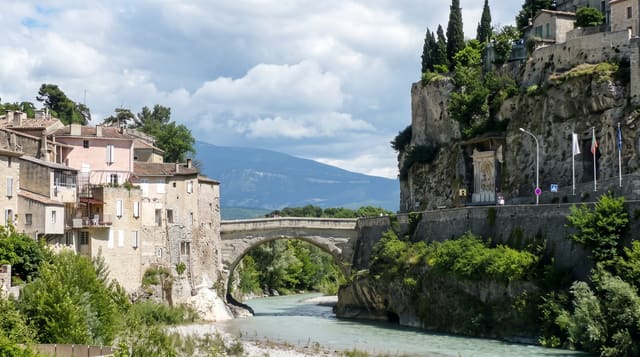
Vaison-la-Romaine lies northeast; Chateauneuf-du-Pape is south.
Key facts
Source: Wikidata, item Q958961, read on 18 October 2026.
What to pack for Orange Roman Theatre
Chosen from what this place is for. Tap a kit for the full checklist.
- Comfortable walking shoes - Sightseeing means kilometres of pavement and cobbles daily. Find on Amazon
- A slim anti-theft daypack - Zips that close properly; keep it in front in crowds and on transit. Find on Amazon
- A refillable water bottle - Many cities have public fountains; save money and plastic. Find on Amazon
- A light layer + compact umbrella - For museum air-con and a sudden shower. Find on Amazon
Some links on this page are Amazon affiliate links - if you buy through them we may earn a small commission at no extra cost to you.
All packing kitsPlan your trip
Where to start if Orange Roman Theatre is going on the list.
Booking links on this page are affiliate links - if you book through them we may earn a small commission at no extra cost to you. It never changes what we write about a place.
Opening times, ticket prices and seasonal closures change - check the official source before you go: official site.