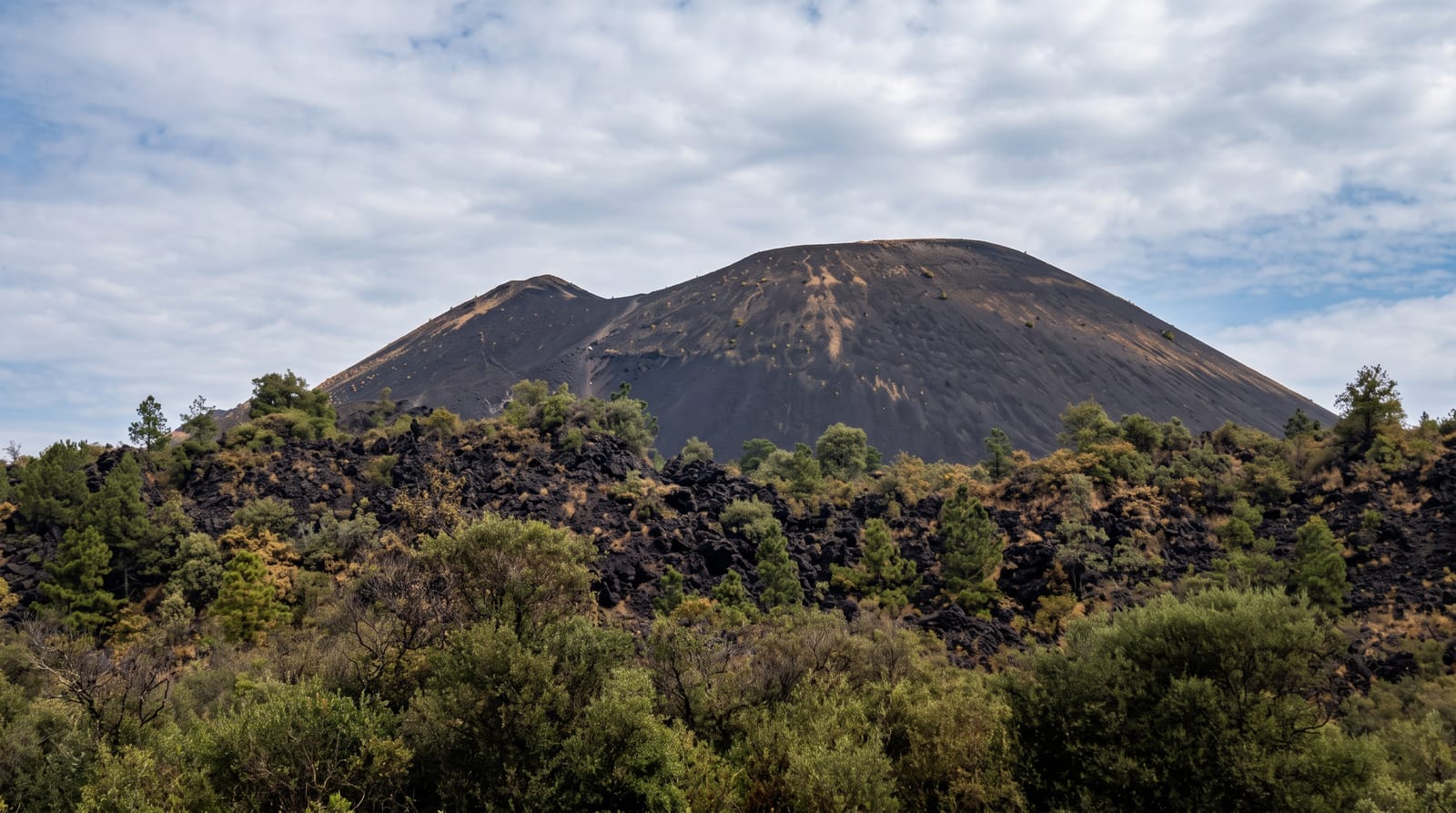
Izalco Volcano
A young black cone that erupted almost continuously for two centuries, climbed from Cerro Verde on loose scree.
Updated 1 September 2026
Izalco began erupting in 1770 from a vent in a field and built a cone of around 650 metres above the surrounding ground over the following two centuries, erupting more or less continuously and glowing at night, which is why ships used it as a navigation mark and it acquired the name Lighthouse of the Pacific. The activity stopped in 1966. What remains is a young, almost unvegetated cone of black scoria and lava. It is climbed from Cerro Verde: the route drops several hundred metres from the park to the saddle and then climbs the cone on loose scree, which is hard work up and fast down, with the crater and a view over the group from the top.
What's there
- The black cone - the bare scoria slopes of the young volcano.
- The crater - the summit vent, now inactive.
- The scree climb - the loose ascent from the saddle.
- The volcano group - Santa Ana and Cerro Verde from the summit.
When to go
November to April for firm footing and clear views. Ascents leave Cerro Verde at a fixed morning time with a guide. Cloud can cover the cone from mid-morning. Start early.
Practical notes
The climb involves losing height first and regaining it on the way back, so the return is harder than the outward leg. The scree is loose and tiring, and footwear matters. Guided departure is at one fixed time. There is no shade or water on the cone.
Nearby
Cerro Verde is the trailhead; Santa Ana volcano is the other ascent.
Key facts
Source: Wikidata, item Q1049619, read on 18 October 2026.
What to pack for Izalco Volcano
Chosen from what this place is for. Tap a kit for the full checklist.
- Broken-in walking shoes or boots - Grip and ankle support matter more than looks; never hike in brand-new boots. Find on Amazon
- Layers + a waterproof shell - Mountain weather turns fast; a packable rain jacket saves the day. Find on Amazon
- Daypack with rain cover - 20-30 litres holds water, snacks, layers and a first-aid kit. Find on Amazon
- Offline maps + a power bank - Download the trail before you lose signal; carry backup charge. Find on Amazon
Some links on this page are Amazon affiliate links - if you buy through them we may earn a small commission at no extra cost to you.
All packing kitsPlan your trip
Where to start if Izalco Volcano is going on the list.
Booking links on this page are affiliate links - if you book through them we may earn a small commission at no extra cost to you. It never changes what we write about a place.
Opening times, ticket prices and seasonal closures change - check the official source before you go: official site.