San Pedro de la Roca Castle
A seventeenth-century fortress on a cliff at the mouth of Santiago bay, the most complete Spanish coastal defence work in the Caribbean.
Updated 18 October 2026
UNESCO World Heritage
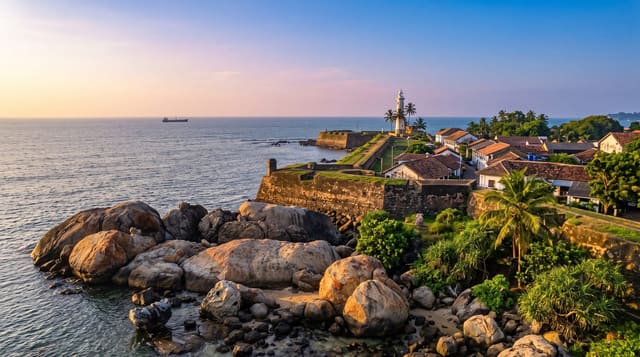
San Pedro de la Roca, usually called El Morro, was begun in 1638 to Giovanni Battista Antonelli's design on a headland where the cliff drops straight to the harbour entrance, and it was rebuilt and extended over the following century and a half. It was inscribed in 1997 as the most complete surviving example of Spanish-American military engineering adapted to Renaissance principles. The terraces, batteries, magazines and drawbridges step down the cliff, and a piracy museum occupies part of the interior.
History
A ravelin and battery were built on the headland between 1590 and 1610 to protect Santiago de Cuba, and a larger fort was designed in the early 1600s by Juan Battista Antonelli, of a Milanese family of military engineers, for the governor Pedro de la Roca de Borja, set on terraces down the steep promontory with four main levels and three large bulwarks. Work on the citadel ran, on and off, from 1638 to 1700; in 1662, while it was still unfinished, English freebooters under Christopher Myngs held Santiago for two weeks and wrecked part of the fortress, which was repaired in 1663-1669 and fought off French attacks in 1678 and 1680. Earthquakes between 1675 and 1692 and again in 1757-1766 forced further rebuilding, from 1775 parts of the fortress served as a prison, and in 1997 it was declared a World Heritage Site as the best-preserved and most complete example of Spanish-American military architecture (Wikipedia, Castillo de San Pedro de la Roca).
The main sights
- The stepped terraces - batteries and platforms descending the cliff face in stages.
- The bay entrance - the narrow channel into Santiago harbour directly below the walls.
- The interior - magazines, barracks and a drawbridge, with a museum of Caribbean piracy.
- The cannon firing - a ceremonial evening firing performed in period dress.
When to go
November to April is drier and cooler. Late afternoon is best for light on the walls and the bay, and the sunset cannon ceremony runs then. Midday is very hot on exposed stone.
Good to know
The site is stepped and steep with a great many stairs, which rules it out for some visitors. There is little shade. The cannon ceremony is a tourist performance rather than a historical reconstruction and is priced accordingly.
Nearby
Santiago de Cuba is twenty minutes northeast, and the Basilica of El Cobre is northwest of the city.
Key facts
Source: Wikidata, item Q910189, read on 18 October 2026.
What to pack for San Pedro de la Roca Castle
Chosen from what this place is for. Tap a kit for the full checklist.
- Comfortable walking shoes - Sightseeing means kilometres of pavement and cobbles daily. Find on Amazon
- Modest clothing - Shoulders and knees covered - the single most common requirement. Find on Amazon
- A slim anti-theft daypack - Zips that close properly; keep it in front in crowds and on transit. Find on Amazon
- A scarf or shawl - To cover the head or shoulders on entry; women especially at mosques. Find on Amazon
Some links on this page are Amazon affiliate links - if you buy through them we may earn a small commission at no extra cost to you.
All packing kitsPlan your trip
Where to start if San Pedro de la Roca Castle is going on the list.
Booking links on this page are affiliate links - if you book through them we may earn a small commission at no extra cost to you. It never changes what we write about a place.
Opening times, ticket prices and seasonal closures change - check the official source before you go: official site.