Galle Fort
A perfectly preserved colonial gem - a Dutch-built walled town jutting into the Indian Ocean, a UNESCO maze of ramparts, churches and old merchant houses turned boutique cafes and shops.
Updated 18 October 2026
AI illustration
UNESCO World Heritage
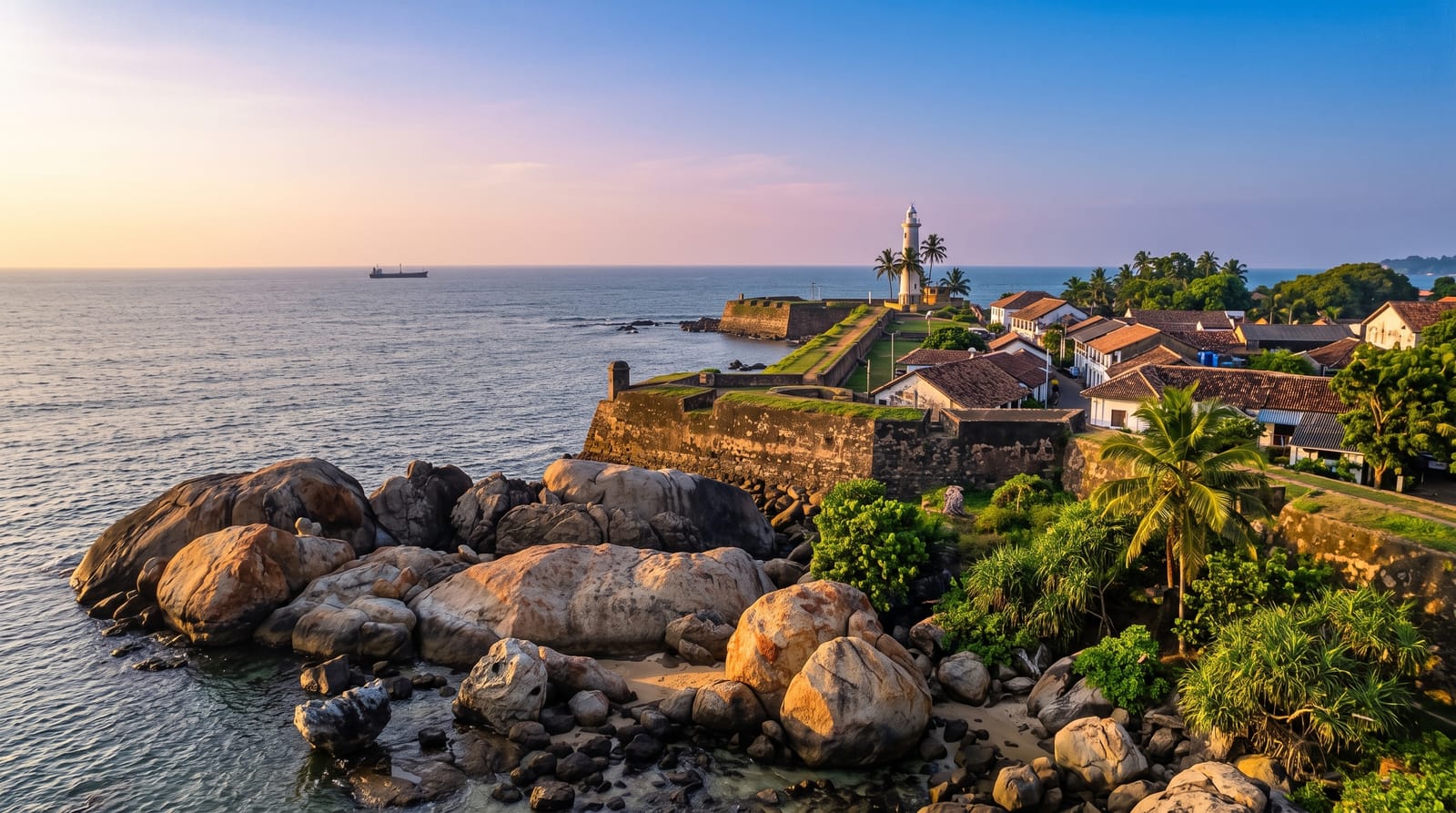
Galle Fort is a beautifully preserved colonial town on the south coast, a UNESCO gem built by the Dutch in the seventeenth century on a rocky peninsula jutting into the Indian Ocean. Encircled by sturdy ramparts made for sunset strolls, its charming grid of streets is lined with old churches, mosques, a lighthouse and gracious merchant houses, many now transformed into stylish boutique hotels, cafes, galleries and shops, a laid-back and atmospheric fusion of history and modern chic.
History
Galle's history is traced to Ptolemy's map of the 2nd century, when it was a busy port, and Ibn Battuta stopped here; the Portuguese under Lourenço de Almeida first landed on the island at its harbour in 1505, built a Franciscan chapel in 1541, and after an attack by King Raja Singha I of Sitawaka in 1588 returned from Colombo and built a small fort of palm trunks and mud, Santa Cruz, later extended with a watchtower and three bastions. In 1640 the Dutch, allied with King Rajasinghe II, took it with some 2,500 men, and from 1649 they fortified it extensively, adding works into the early 18th century along with administrative buildings, warehouses, merchants' houses and homes. Restored by Sri Lanka's Archaeological Department, the fort is a World Heritage Site as an urban ensemble showing the interaction of European architecture and South Asian traditions from the 16th to the 19th century (Wikipedia, Galle Fort).
What's there
- The ramparts - the walk around the sea walls, lovely at sunset.
- The old streets - the colonial churches, houses and lighthouse.
- The boutiques and cafes - the stylish shops and hotels in old houses.
- The lighthouse and bastions - the seafront defences and views.
When to go
December to April, the dry season on the south coast, for the best weather; the ramparts are magical at sunset. It is an easy trip from Colombo and pairs well with the beaches of the south coast nearby.
Things to know
It has become quite touristy and gentrified, with boutique prices to match, so it is more a charming, chic day out than a raw historic site; that fusion is its appeal. It is compact, seen in a day. It is hot, so the shaded lanes and a sunset rampart stroll are the pleasant times. It pairs well with the nearby beaches.
Nearby
The beaches of Unawatuna, Mirissa and the south coast, and the whale-watching, are close.
Key facts
Source: Wikidata, item Q2507050, read on 18 October 2026.
What to pack for Galle Fort
Chosen from what this place is for. Tap a kit for the full checklist.
- Reef-safe sunscreen - High SPF that will not bleach the coral you are swimming over. Find on Amazon
- Binoculars - The single best wildlife tool - even a compact pair transforms a sighting. Find on Amazon
- Comfortable walking shoes - Sightseeing means kilometres of pavement and cobbles daily. Find on Amazon
- Modest clothing - Shoulders and knees covered - the single most common requirement. Find on Amazon
Some links on this page are Amazon affiliate links - if you buy through them we may earn a small commission at no extra cost to you.
All packing kitsPlan your trip
Where to start if Galle Fort is going on the list.
Booking links on this page are affiliate links - if you book through them we may earn a small commission at no extra cost to you. It never changes what we write about a place.
Opening times, ticket prices and seasonal closures change - check the official source before you go: official site.