Santiago de Cuba
The second city, in the hot mountainous east, where Cuban son took shape and where the July carnival is the biggest in the country.
Updated 19 October 2026
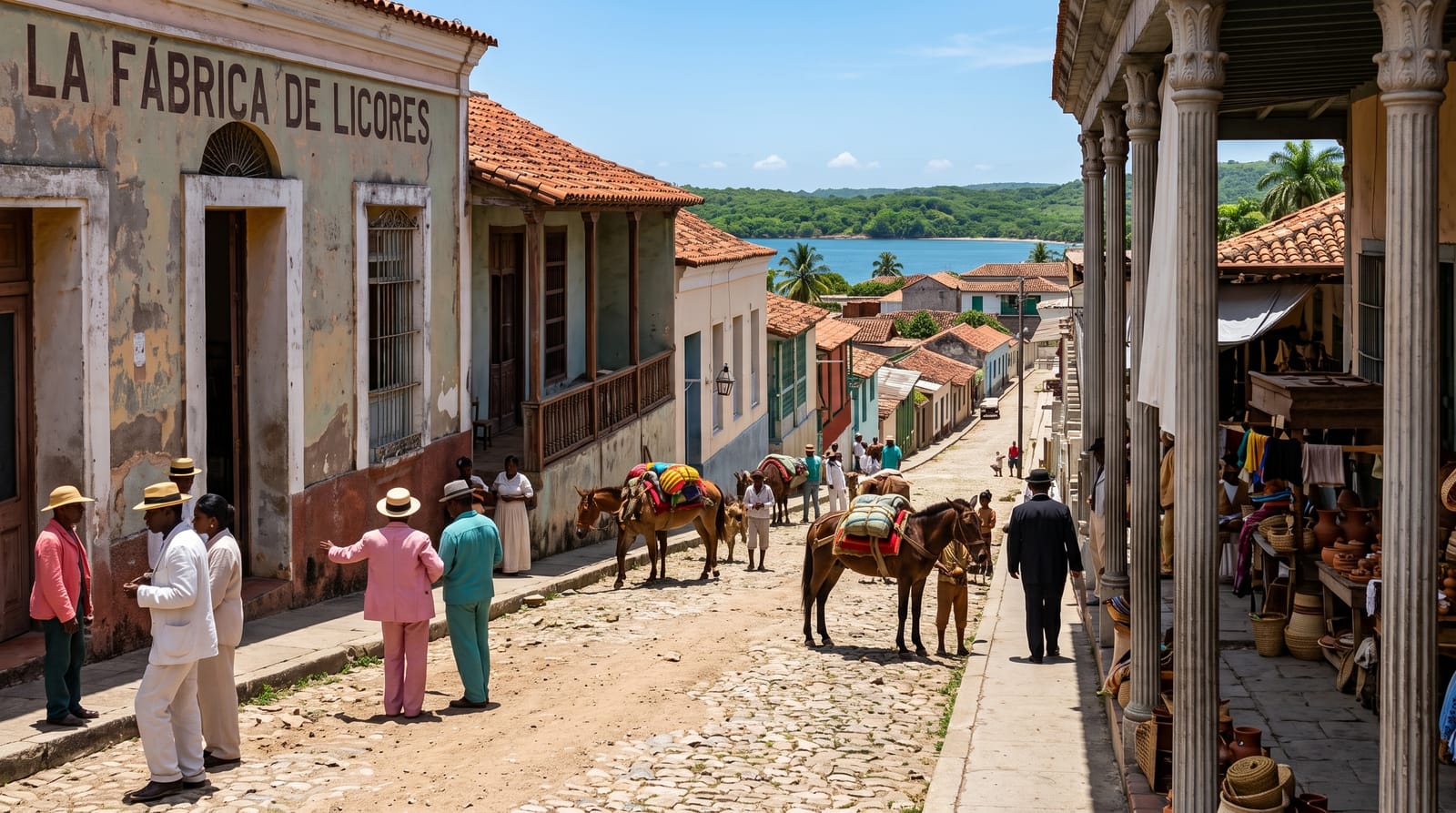
AI illustration
Santiago sits in a bowl of hills at the head of a deep bay in the far east of the island, closer to Haiti than to Havana and different from it in almost every respect: hotter, hillier, more Caribbean and with much deeper Afro-Cuban and Haitian-descended roots. It is where son developed and where the trova tradition is still strongest, and the July carnival is the largest and least tourist-shaped in the country. The Castillo San Pedro de la Roca guards the bay mouth and carries the city's World Heritage listing.
History
Santiago was the seventh town founded by Diego Velázquez de Cuéllar, on 25 July 1515; it burned in 1516 and was rebuilt at once. It was the starting point of Juan de Grijalva's and Hernán Cortés's voyages to Mexico in 1518 and of Hernando de Soto's expedition to Florida in 1538, its first cathedral was built in 1528, and from 1522 until 1589 it was the capital of the Spanish colony. The French plundered it in 1553 and the English in 1603, and Christopher Myngs raided it again in 1662. In the late 18th and early 19th centuries many French settlers arrived - about eighteen thousand people from Saint-Domingue landed in the summer of 1803 alone, white French and free people of colour, adding their culture to the city's Spanish and African mix; in 1809, after Napoleon invaded Spain, the French were ordered out of Cuba, and thousands went on to New Orleans (Wikipedia, Santiago de Cuba).
The main sights
- Parque Cespedes - the central square with the cathedral and the oldest house in Cuba on it.
- The Tumba Francesa - a Haitian-descended music and dance tradition maintained by a society in the city.
- Casa de la Trova - the venue where the city's song tradition is played nightly.
- The July carnival - drums, congas and street parades, the biggest in the country.
When to go
November to April is the dry season and the most bearable; the east is hotter and more humid than Havana. The carnival falls in the last week of July, in the worst of the heat, and is worth timing for anyway. Hurricane season runs from June to November.
What to expect
It is a long way from Havana, meaning a flight or the best part of a day on the road, which is why short trips skip it. The city is steep, hot and harder work than the western towns. Practical shortages and persistent hustlers are the same as elsewhere in the country.
Nearby
El Cobre is half an hour northwest, La Gran Piedra and Baconao are east, and the Sierra Maestra rises west.
Key facts
Source: Wikidata, item Q117040, read on 18 October 2026.
What to pack for Santiago de Cuba
Chosen from what this place is for. Tap a kit for the full checklist.
- Strong insect repellent - DEET or picaridin; the jungle is where bites and disease risk are highest. Find on Amazon
- Comfortable walking shoes - Sightseeing means kilometres of pavement and cobbles daily. Find on Amazon
- Modest clothing - Shoulders and knees covered - the single most common requirement. Find on Amazon
- Shelter suited to the place - Tent, tarp or hut booking - match it to the terrain and rules. Find on Amazon
Some links on this page are Amazon affiliate links - if you buy through them we may earn a small commission at no extra cost to you.
All packing kitsPlan your trip
Where to start if Santiago de Cuba is going on the list.
Booking links on this page are affiliate links - if you book through them we may earn a small commission at no extra cost to you. It never changes what we write about a place.
Opening times, ticket prices and seasonal closures change - check the official source before you go: official site.