Pingtan Island
An island of stone villages and wind-scoured coast where the sea glows blue at night in spring from bioluminescent plankton.
Updated 4 September 2026
AI illustration
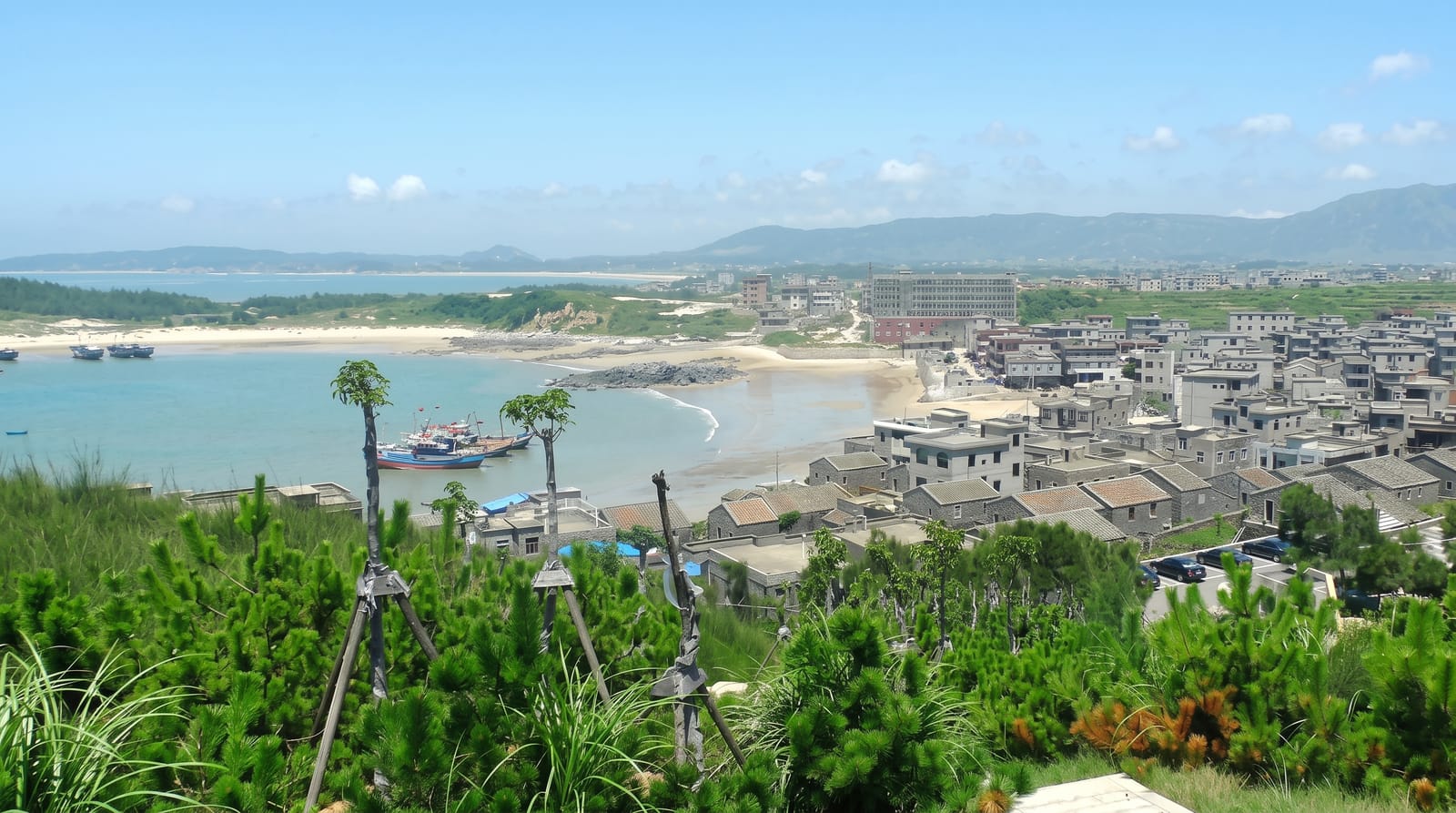
Pingtan is the largest island in Fujian and the closest point in mainland China to Taiwan. Wind dominates it: the strait funnels gales that made the traditional houses low blocks of granite with stone-weighted tiled roofs, built in tight village clusters, and that now drive one of the country's larger wind farms. From around April to June the water sometimes fills with bioluminescent dinoflagellates, and breaking waves and disturbed water glow electric blue at night, a phenomenon called blue tears that draws large numbers of visitors, though it appears irregularly and cannot be predicted more than a day or two ahead.
Highlights
- The blue tears - bioluminescent water glowing where waves break, in spring.
- The stone villages - granite houses with weighted roofs against the wind.
- The wind-scoured coast - beaches, sea stacks and eroded rock.
- The wind farms - turbines exploiting the strait's constant gales.
When to go
April to June for the blue tears, which appear irregularly within that window and depend on water conditions; local social media reports are the practical guide. The rest of the year the island is a windy coastal destination. Typhoons affect summer.
Things to know
Blue tears are unpredictable and many visitors see nothing; commercial trips promise more than they can deliver. Wind on the island is relentless. Accommodation quality varies and prices rise sharply during blue tear reports.
Nearby
Fuzhou lies northwest on the mainland.
Key facts
Source: Wikidata, item Q1569595, read on 18 October 2026.
What to pack for Pingtan Island
Chosen from what this place is for. Tap a kit for the full checklist.
- Reef-safe sunscreen - High SPF that will not bleach the coral you are swimming over. Find on Amazon
- Quick-dry towel - A microfibre towel packs small and dries in minutes. Find on Amazon
- Water shoes - Protect your feet on rocky entries, hot sand and sea-urchin spines. Find on Amazon
- Dry bag - Keeps phone, cash and keys safe while you are in the water. Find on Amazon
Some links on this page are Amazon affiliate links - if you buy through them we may earn a small commission at no extra cost to you.
All packing kitsPlan your trip
Where to start if Pingtan Island is going on the list.
Booking links on this page are affiliate links - if you book through them we may earn a small commission at no extra cost to you. It never changes what we write about a place.
Opening times, ticket prices and seasonal closures change - check the official source before you go: official site.