Taimu Mountain
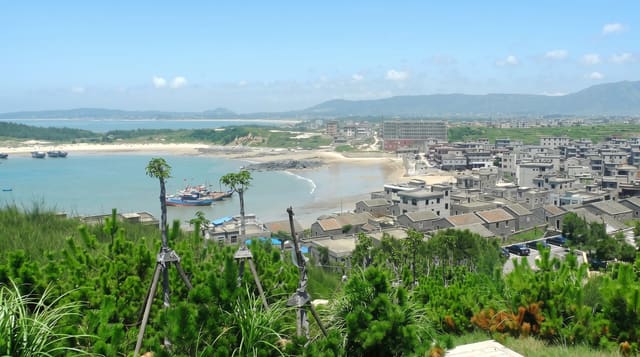
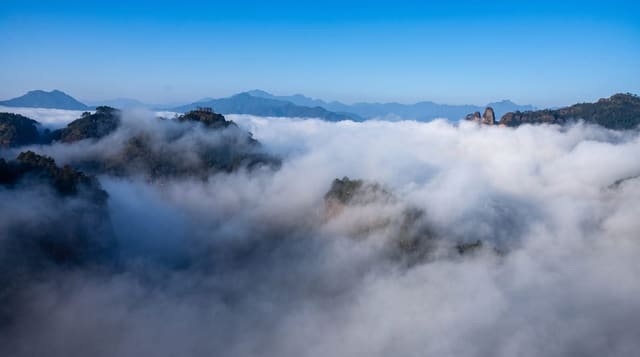
A granite mountain of stacked boulders and cave passages rising directly above the East China Sea.
Updated 4 September 2026
AI illustration
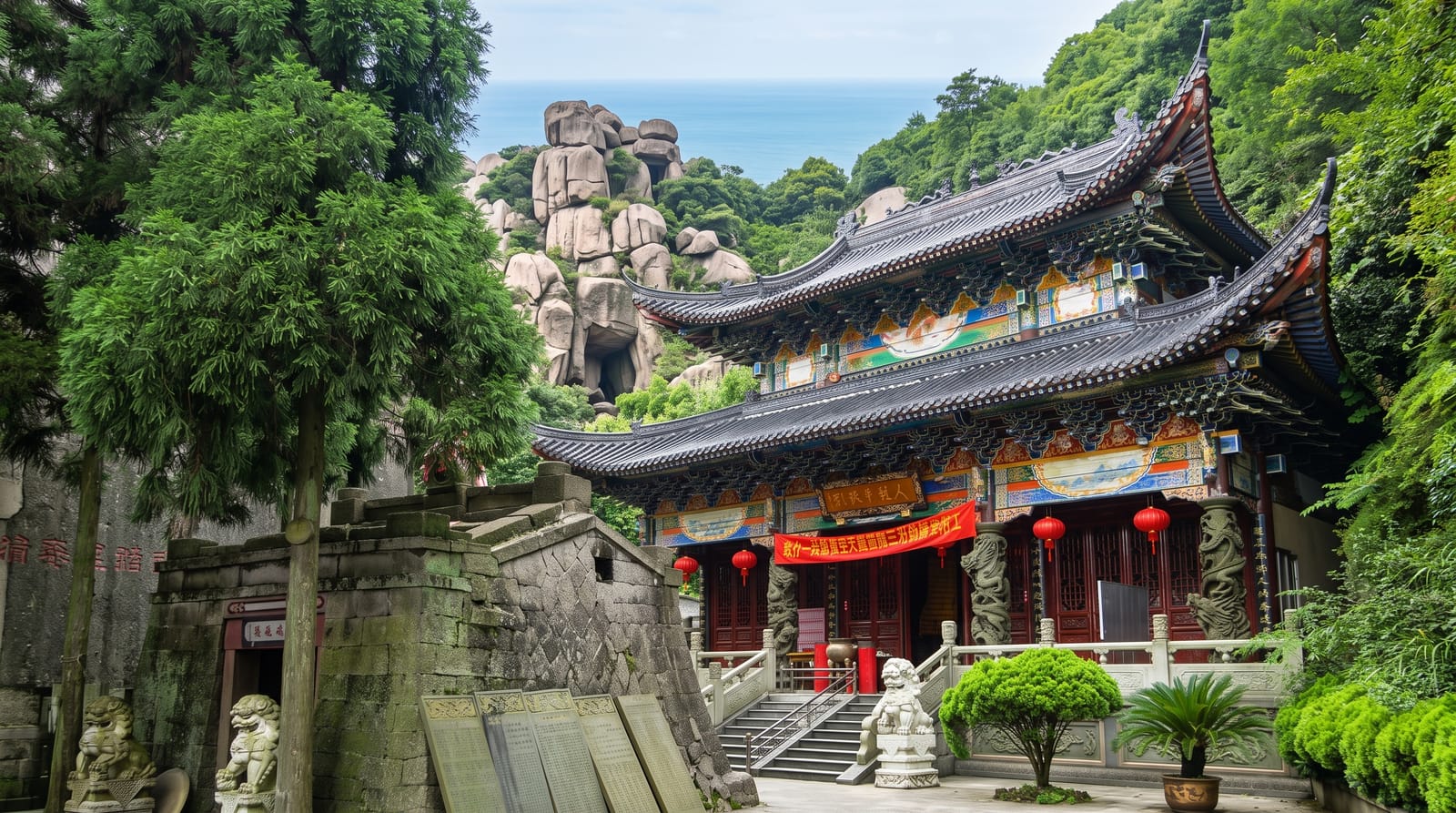
Taimushan rises to about nine hundred metres a few kilometres from the coast, a granite massif weathered into stacked boulders, spires and, most distinctively, a network of passages and caves formed where blocks have piled against one another, creating routes that squeeze between and beneath rock for considerable distances. Walking them involves crouching, sidestepping and climbing ladders in near darkness. Above, viewpoints look over the sea and the mountain's tumbled summits, and temples sit among the rocks. The Fuding area is the source of white tea, and terraces of it cover the lower slopes, with Baihao Yinzhen and Shou Mei among the types produced.
What you'll find
- The boulder caves - passages squeezing between and beneath stacked granite.
- The sea views - the East China Sea from summit viewpoints.
- The rock formations - spires and piles named for their shapes.
- The white tea terraces - Fuding's tea gardens on the lower slopes.
When to go
April to June and September to November; the white tea harvest is in spring. Summer is hot and typhoons hit this coast. The cave routes are slippery after rain and can close.
Before you go
The cave passages are tight, dark and physically demanding, unsuitable for claustrophobia or limited mobility. Shuttle buses are compulsory within the scenic area. Signage in English is minimal.
Nearby
Xiapu lies south; Wenzhou is north across the provincial border.
Key facts
Source: Wikidata, item Q3322129, read on 18 October 2026.
What to pack for Taimu Mountain
Chosen from what this place is for. Tap a kit for the full checklist.
- Broken-in walking shoes or boots - Grip and ankle support matter more than looks; never hike in brand-new boots. Find on Amazon
- Head torch + spare batteries - Hands-free light is essential; caves are truly dark. Find on Amazon
- Modest clothing - Shoulders and knees covered - the single most common requirement. Find on Amazon
- Layers + a waterproof shell - Mountain weather turns fast; a packable rain jacket saves the day. Find on Amazon
Some links on this page are Amazon affiliate links - if you buy through them we may earn a small commission at no extra cost to you.
All packing kitsPlan your trip
Where to start if Taimu Mountain is going on the list.
Booking links on this page are affiliate links - if you book through them we may earn a small commission at no extra cost to you. It never changes what we write about a place.
Opening times, ticket prices and seasonal closures change - check the official source before you go: official site.