Three Lanes and Seven Alleys
A quarter of whitewashed Ming and Qing mansions in Fuzhou that produced an extraordinary number of modern Chinese figures.
Updated 19 October 2026
AI illustration
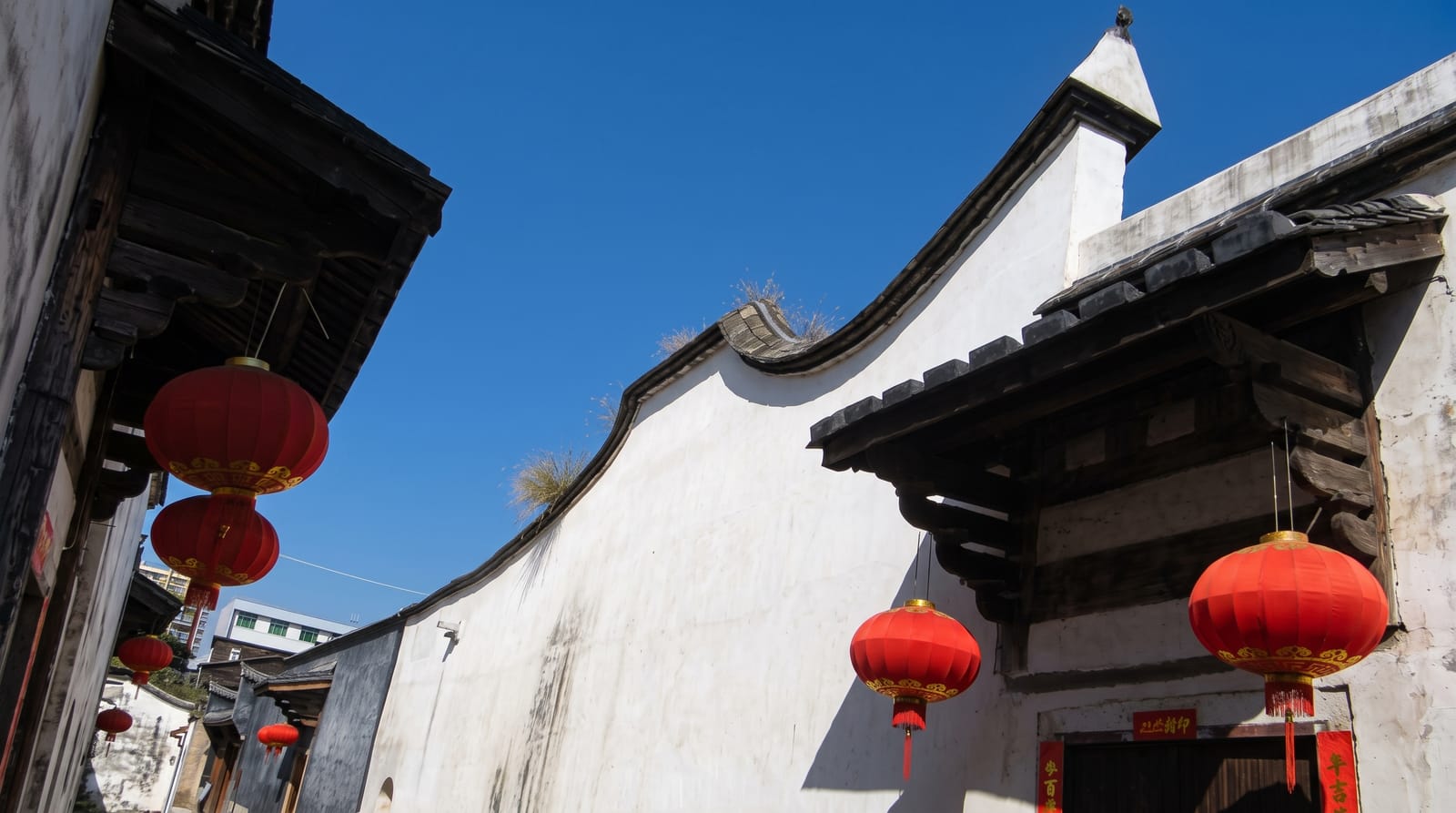
Sanfang Qixiang preserves a street pattern dating to the Tang and Song: a central axis with three lanes on one side and seven alleys on the other, lined with mansions behind whitewashed walls topped by curved horse-head gables in the Fujian manner. Around two hundred historic buildings survive across some forty hectares. The quarter's residents included a remarkable share of nineteenth and twentieth-century figures: Lin Zexu, the official who destroyed opium stocks at Canton; Yan Fu, who translated Huxley and Adam Smith into Chinese; the writer Bing Xin; and naval officers of the Fuzhou shipyard. Several houses are open as museums, and the main axis is now a commercial street.
History
The quarter keeps the walled-ward street plan, the lifang system, that goes back to the Tang dynasty, and its Ming and Qing houses were home over the centuries to some 400 rich and famous residents, which earned it the name Beverly Hills of imperial China. It was placed on UNESCO's tentative list in 2013, named a national historic and cultural street in 2015, and its restoration received an honourable mention in the UNESCO Asia-Pacific Heritage Awards that year (Wikipedia, Sanfang Qixiang).
The main sights
- The lane pattern - the Tang and Song layout of three lanes and seven alleys.
- The mansions - whitewashed walls and curved gables around courtyards.
- The house museums - former homes of Lin Zexu, Yan Fu, Bing Xin and others.
- The commercial axis - the main street of shops and restaurants.
When to go
October to April for the mildest weather; Fuzhou summers are hot and humid. Evenings light the quarter and bring local crowds. Weekends and holidays are busy on the main street.
Things to know
The main axis is heavily commercial with chain shops. Several houses charge individually. English interpretation of the historical figures is limited, and their significance is assumed.
Nearby
Fuzhou's West Lake lies northwest; the Min river is south.
Key facts
Source: Wikidata, item Q6859970, read on 18 October 2026.
What to pack for Three Lanes and Seven Alleys
Chosen from what this place is for. Tap a kit for the full checklist.
- Strong insect repellent - DEET or picaridin; the jungle is where bites and disease risk are highest. Find on Amazon
- Comfortable walking shoes - Sightseeing means kilometres of pavement and cobbles daily. Find on Amazon
- Long, light, quick-dry clothing - Covers skin from insects and sun without cooking you in the humidity. Find on Amazon
- A slim anti-theft daypack - Zips that close properly; keep it in front in crowds and on transit. Find on Amazon
Some links on this page are Amazon affiliate links - if you buy through them we may earn a small commission at no extra cost to you.
All packing kitsPlan your trip
Where to start if Three Lanes and Seven Alleys is going on the list.
Booking links on this page are affiliate links - if you book through them we may earn a small commission at no extra cost to you. It never changes what we write about a place.
Opening times, ticket prices and seasonal closures change - check the official source before you go: official site.