Anafiotika
A cluster of island-style whitewashed houses built into the Acropolis rock by builders from Anafi in the 1840s.
Updated 19 October 2026
AI illustration
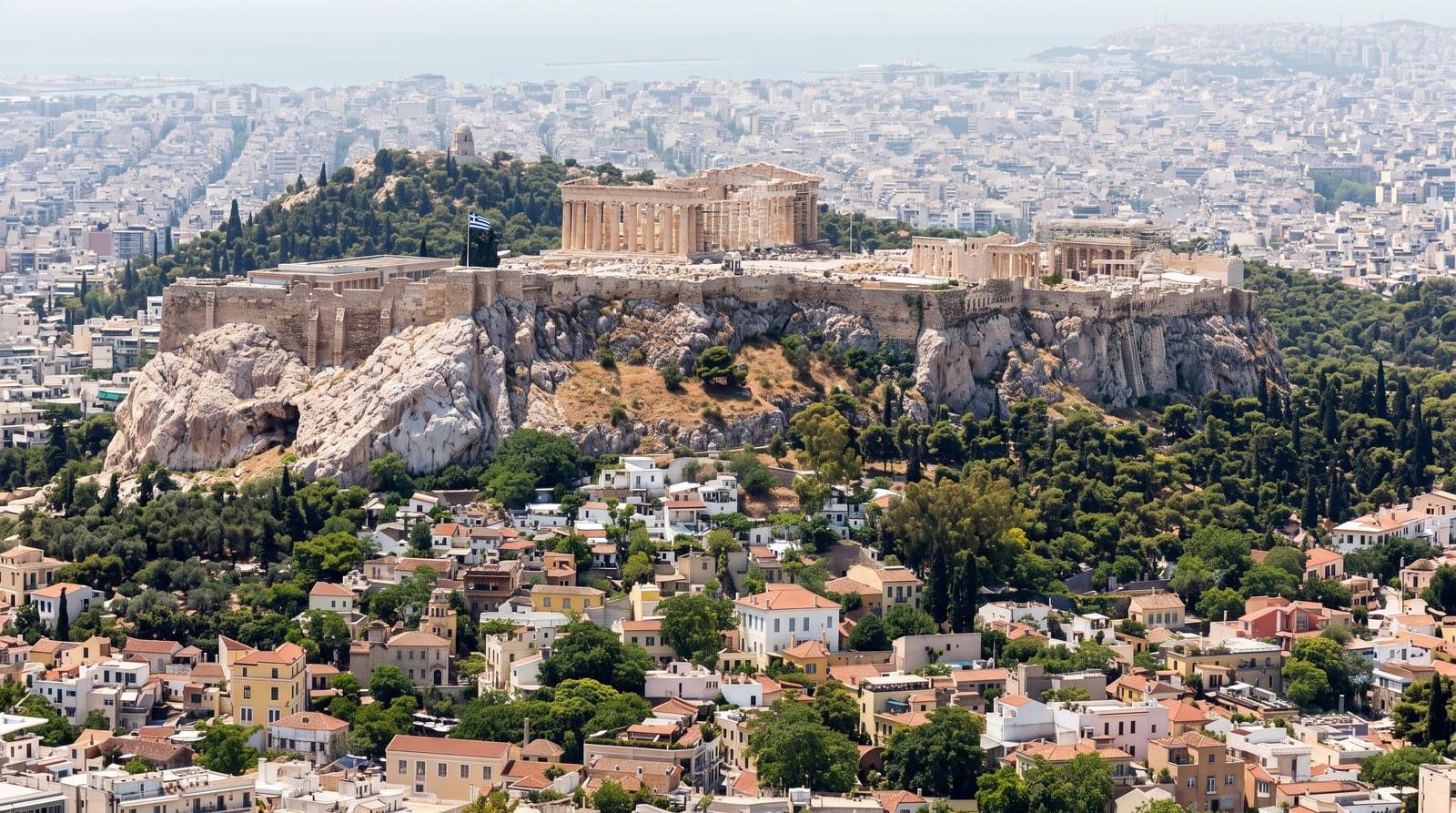
When Athens became the capital of the new Greek state in the 1830s, craftsmen were brought in to build it, and among them came stonemasons from the Cycladic island of Anafi. They settled on the rocky northeastern slope of the Acropolis and built themselves houses in the only style they knew: small whitewashed cubes with blue shutters, flat roofs and bougainvillea, packed along lanes barely a metre wide with stairs cut into the rock. The result is a fragment of a Cycladic village stuck to the side of the Acropolis, a few dozen houses of which perhaps forty survive, mostly still lived in. Cats sleep on the steps, laundry hangs between walls, and the alleys open suddenly onto views over the city.
History
The first houses were built in the time of King Otto, when workers from Anafi came to Athens to build the royal palace; the first two inhabitants were listed as G. Damigos, a carpenter, and M. Sigalas, a builder, and soon carpenters and stone and marble workers from other Cycladic islands followed. Part of the neighbourhood was cleared for archaeological research in 1950, and from 1970 the state began buying the houses; only 45 remain, along lanes from Stratonos street to the Acropolis rock that still have no names (Wikipedia, Anafiotika).
What to look for
- The island houses - whitewashed cubes with blue doors on the rock slope.
- The narrow lanes - stepped alleys a metre wide between the walls.
- The rooftop views - sudden openings over Athens toward Lycabettus.
- The chapels - two small churches, Agios Georgios and Agios Simeon.
When to go
Early morning or late afternoon; the lanes are narrow and crowd easily, and the quarter is at its best when the day-trippers have gone. Spring brings bougainvillea into flower.
Things to know
People live here, and it is a residential quarter rather than an attraction: no shops, no facilities and residents who ask for quiet. The lanes are steep, uneven and slippery in rain. Ten minutes covers the ground, longer if you sit and look.
Nearby
Plaka spreads below; the Acropolis entrance and the Roman Agora are minutes away.
Key facts
Source: Wikidata, item Q483891, read on 18 October 2026.
What to pack for Anafiotika
Chosen from what this place is for. Tap a kit for the full checklist.
- Comfortable walking shoes - Sightseeing means kilometres of pavement and cobbles daily. Find on Amazon
- A slim anti-theft daypack - Zips that close properly; keep it in front in crowds and on transit. Find on Amazon
- A refillable water bottle - Many cities have public fountains; save money and plastic. Find on Amazon
- A light layer + compact umbrella - For museum air-con and a sudden shower. Find on Amazon
Some links on this page are Amazon affiliate links - if you buy through them we may earn a small commission at no extra cost to you.
All packing kitsPlan your trip
Where to start if Anafiotika is going on the list.
Booking links on this page are affiliate links - if you book through them we may earn a small commission at no extra cost to you. It never changes what we write about a place.
Opening times, ticket prices and seasonal closures change - check the official source before you go: official site.