Joshua Tree National Park
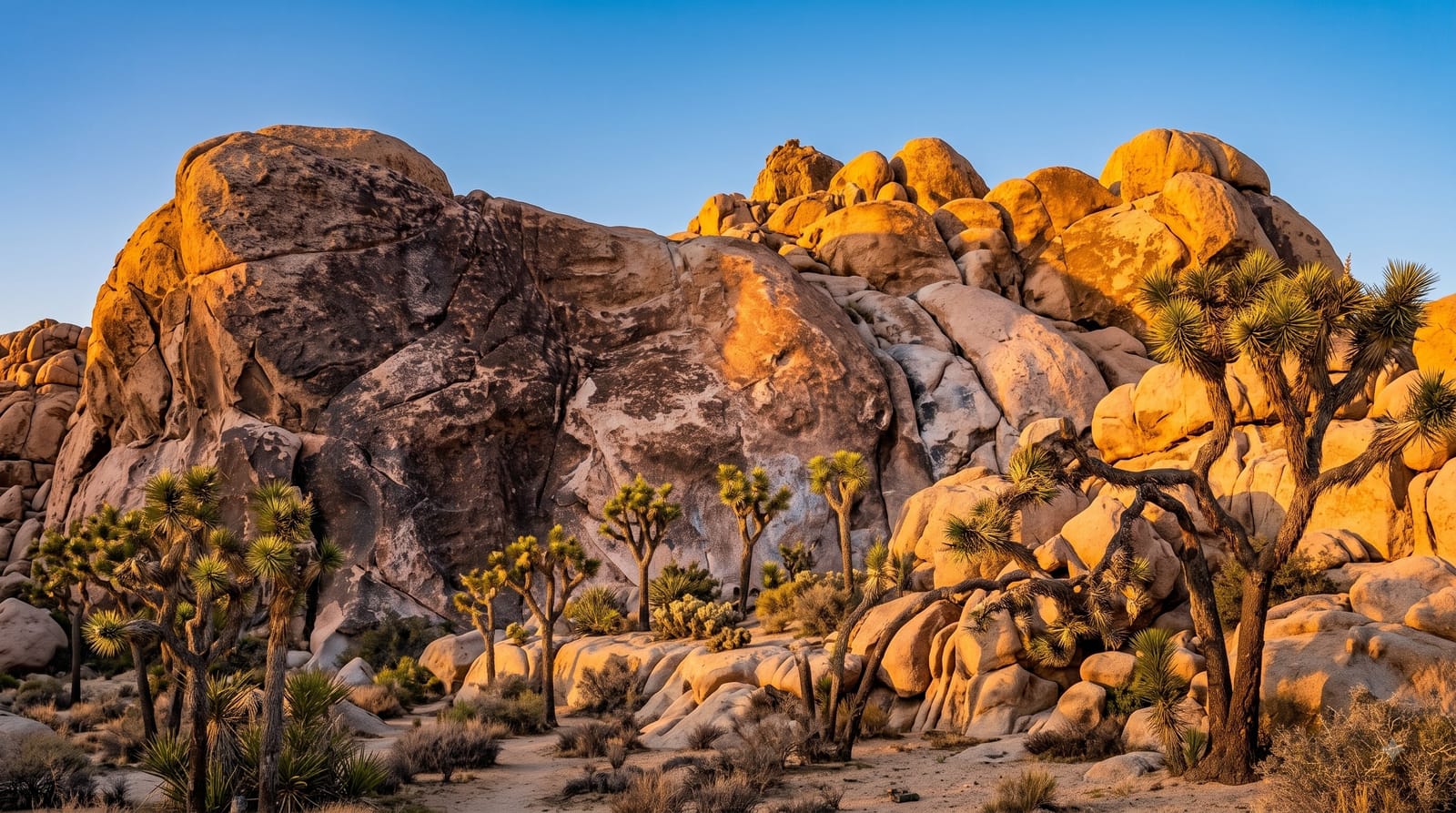
Where two deserts meet - a surreal landscape of spiky Joshua trees and giant rounded boulders, a magnet for climbers, stargazers and dreamers.
Updated 7 August 2026
AI illustration
Real photos (1)
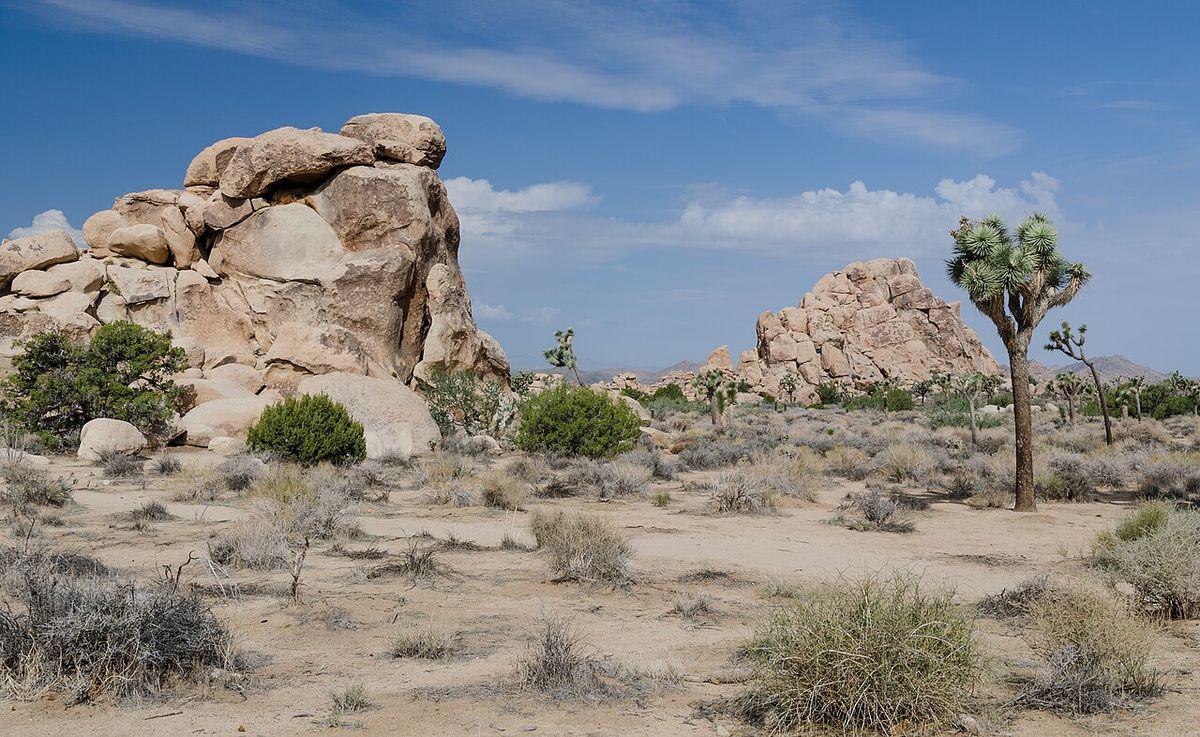
Joshua Tree sits where the high Mojave and low Colorado deserts meet, a surreal landscape of the spiky, twisting Joshua trees that give it its name and great piles of rounded golden boulders. A magnet for rock climbers, stargazers under some of the darkest skies in Southern California, and anyone drawn to the strange beauty of the desert.
What's there
- The Joshua trees - the twisting, spiky yucca trees across the high desert.
- The boulder piles - the giant rounded rock formations, a climbers' playground.
- Keys View - the overlook across the Coachella Valley to the San Andreas Fault.
- The night sky - some of the darkest, most star-filled skies near a big city.
When to go
The cooler months from autumn to spring; spring can bring wildflowers, and summer heat is severe. The dark nights are best for stargazing year-round, but comfortable only outside the heat.
What to expect
Summer is dangerously hot, so it is a cool-season destination. There is no water and little shade in the park, so bring plenty. It has grown very popular, so weekends and the entrance can be busy, and it draws a festival crowd from nearby Coachella in season.
Nearby
Palm Springs and its mid-century modern scene are close; the Salton Sea and Mojave lie beyond.
Key facts
Source: Wikidata, item Q735202, read on 18 October 2026.
What to pack for Joshua Tree National Park
Chosen from what this place is for. Tap a kit for the full checklist.
- Broken-in walking shoes or boots - Grip and ankle support matter more than looks; never hike in brand-new boots. Find on Amazon
- Binoculars - The single best wildlife tool - even a compact pair transforms a sighting. Find on Amazon
- Spare batteries + cards - Cold and long shoots drain power; never run out at the good light. Find on Amazon
- Loose, light, long clothing - Covering up beats bare skin in the desert - and locals dress this way for a reason. Find on Amazon
Some links on this page are Amazon affiliate links - if you buy through them we may earn a small commission at no extra cost to you.
All packing kitsPlan your trip
Where to start if Joshua Tree National Park is going on the list.
Booking links on this page are affiliate links - if you book through them we may earn a small commission at no extra cost to you. It never changes what we write about a place.
Opening times, ticket prices and seasonal closures change - check the official source before you go: official site.