Death Valley National Park
The hottest, driest, lowest place in North America - a vast desert of salt flats, dunes and painted badlands, strangely beautiful and extreme.
Updated 16 October 2026
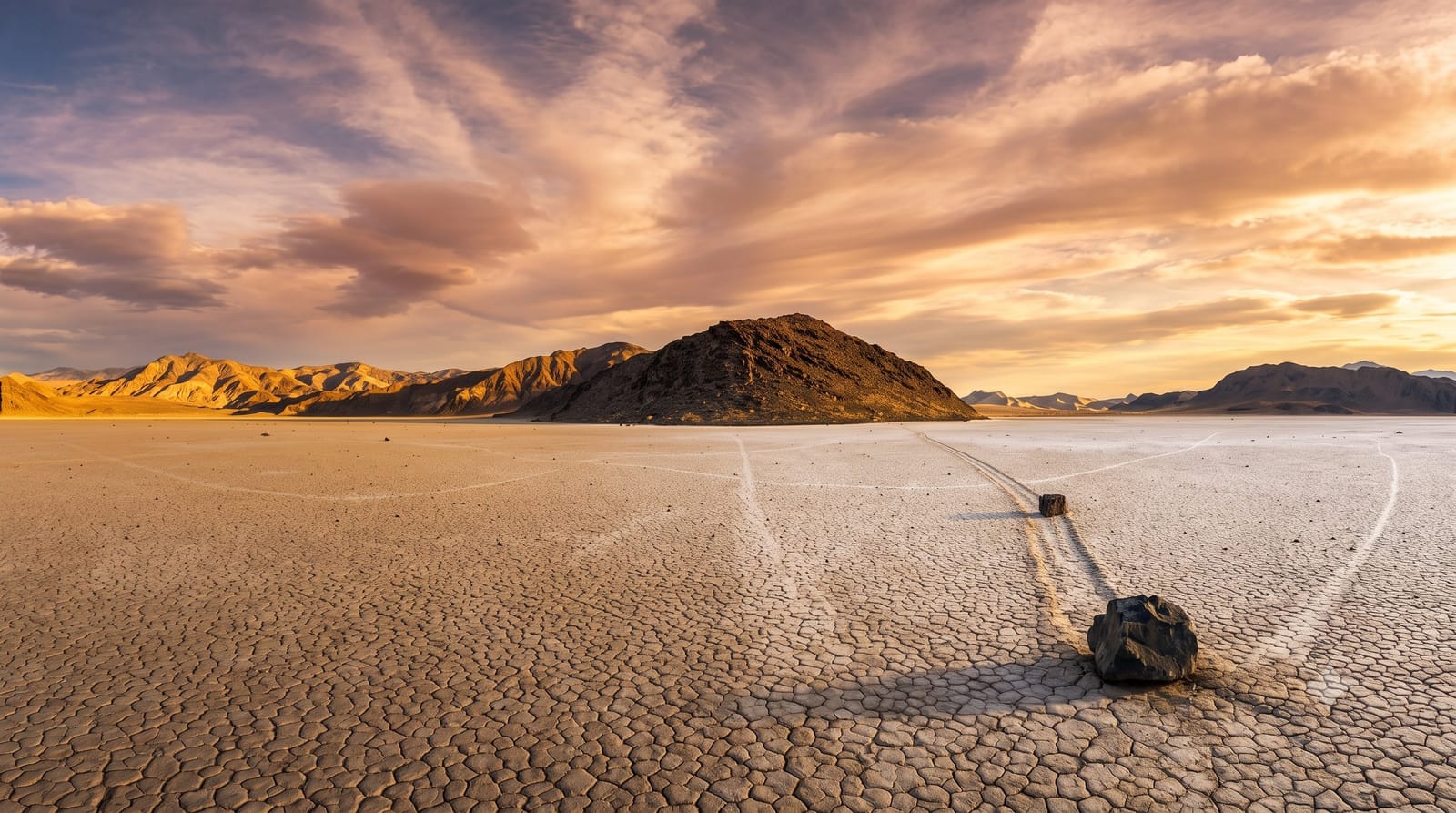
AI illustration
Death Valley is a land of extremes: the hottest place ever reliably recorded on earth, the driest and lowest in North America, at Badwater Basin nearly ninety metres below sea level. Yet it is strangely beautiful, a vast desert of blinding salt flats, sculpted dunes, painted badlands and, after rare rains, sudden carpets of wildflowers.
Background
The park straddles the California-Nevada border east of the Sierra Nevada. Its boundaries take in Death Valley itself, the northern part of Panamint Valley, the southern part of Eureka Valley and most of Saline Valley. No national park in the mainland United States is larger, and more than 93% of it is designated wilderness. People have lived here since about 7000 BC. The latest to settle were the Timbisha, from around 1000 AD, wintering in the valleys and spending summers up in the mountains. Lost emigrants gave the valley its grim name in 1849, though only one of their party died there. Borax, hauled out by twenty-mule teams, was the only ore that paid over the long term.
Source: Wikipedia, "Death Valley National Park"
The landscape
- Badwater Basin - the salt flats at the lowest point in North America.
- Zabriskie Point - the golden eroded badlands, glorious at sunrise.
- Mesquite Flat dunes - the classic sand dunes near Stovepipe Wells.
- Artists Palette - the hills streaked with mineral colours.
When to go
Winter and the cooler months, roughly November to March, the only sensible time; summer heat is genuinely lethal, often over fifty degrees. A rare wet winter can bring a spectacular spring wildflower bloom.
Practical notes
In summer the heat is deadly, so it is a winter destination and even then water and caution are essential. It is vast and remote, with long distances and little shade or services, so fuel up and carry plenty of water. Mobile signal is scarce across the park.
Nearby
Las Vegas is a couple of hours east; the eastern Sierra and Mojave Desert spread around.
Key facts
Source: Wikidata, item Q242111, read on 18 October 2026.
What to pack for Death Valley National Park
Chosen from what this place is for. Tap a kit for the full checklist.
- Broken-in walking shoes or boots - Grip and ankle support matter more than looks; never hike in brand-new boots. Find on Amazon
- Binoculars - The single best wildlife tool - even a compact pair transforms a sighting. Find on Amazon
- Loose, light, long clothing - Covering up beats bare skin in the desert - and locals dress this way for a reason. Find on Amazon
- Layers + a waterproof shell - Mountain weather turns fast; a packable rain jacket saves the day. Find on Amazon
Some links on this page are Amazon affiliate links - if you buy through them we may earn a small commission at no extra cost to you.
All packing kitsPlan your trip
Where to start if Death Valley National Park is going on the list.
Booking links on this page are affiliate links - if you book through them we may earn a small commission at no extra cost to you. It never changes what we write about a place.
Opening times, ticket prices and seasonal closures change - check the official source before you go: official site.