Mount Kaputar National Park
A volcanic summit rising from the northwest plains, with organ-pipe basalt columns and a giant pink slug found nowhere else.
Updated 18 October 2026
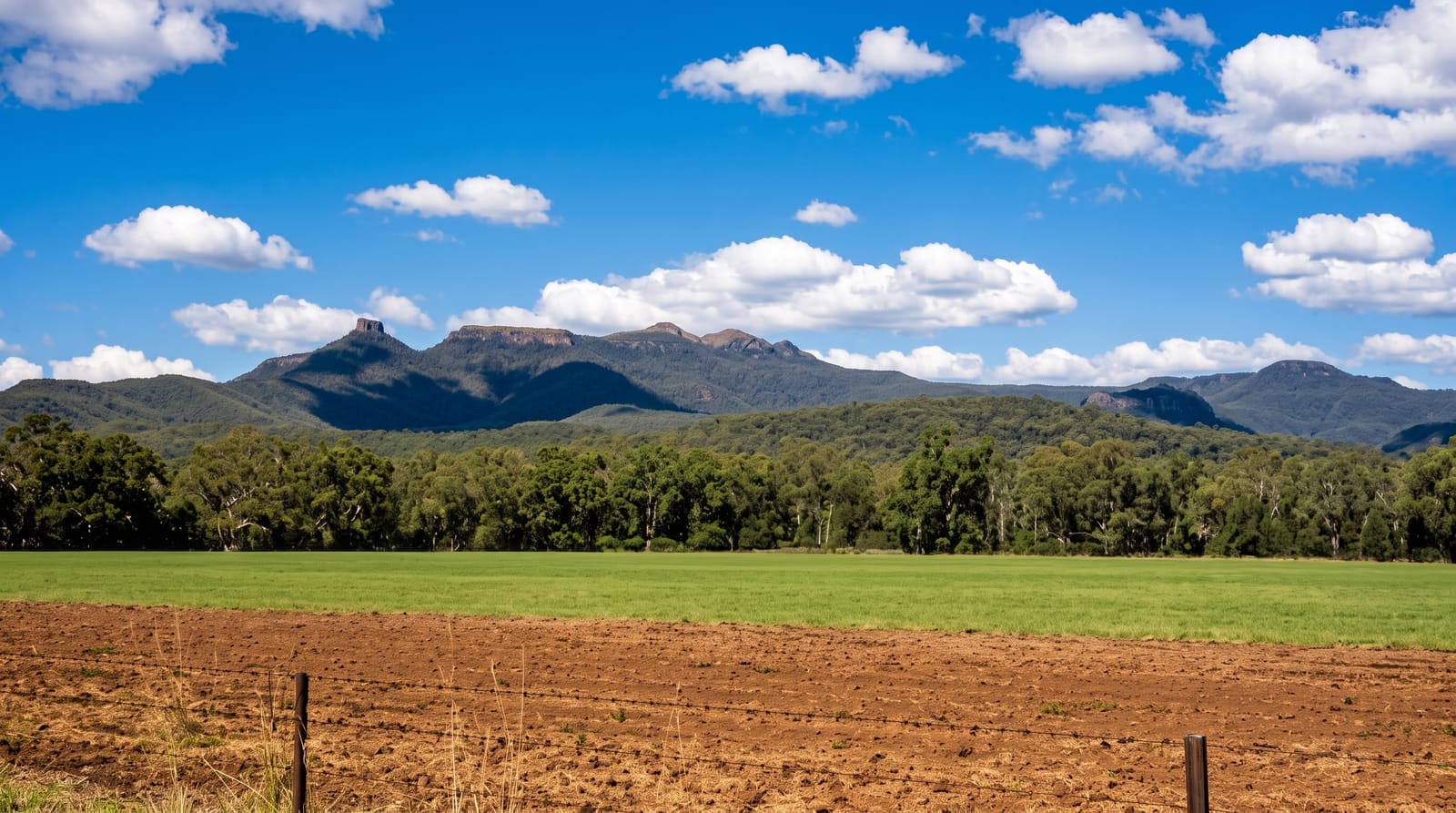
AI illustration
Mount Kaputar reaches 1,510 metres above the flat cotton country of northwest New South Wales, the remnant of a volcano that erupted around twenty million years ago, and from the summit on a clear day the view is said to cover about a tenth of the state. Sawn Rocks, on the northern side, is a wall of hexagonal basalt columns forty metres high, formed by slow cooling and exposed by erosion, reached by a short walk. The mountain's isolation has produced endemic species, including the Kaputar pink slug, a bright pink animal up to twenty centimetres long that lives only on the summit plateau and emerges after rain. Snow falls on the top most winters.
History
Before it became a park the land was mostly grazed, a few pioneering families lived in its harsh conditions, and sheep and cattle grazed the plateau until about the 1950s, their stockmen sometimes seeing no one for months. In 1925 some 775 hectares around the mountain were declared a reserve for public recreation, a trust was formed two years later, the area was enlarged to 14,244 hectares and proclaimed a national park in 1959, and in 1967 it passed to the new National Parks and Wildlife Service (Wikipedia, Mount Kaputar National Park).
What you'll find
- Sawn Rocks - the organ-pipe wall of hexagonal basalt columns.
- The summit view - a vast panorama over the northwest plains.
- The pink slug - the endemic giant slug, active on the plateau after rain.
- The volcanic landscape - domes, bluffs and trachyte outcrops across the park.
When to go
March to November for comfortable walking; the summit is cold and can be snowbound in winter, while the plains below bake in summer. The pink slug is only seen after rain on the plateau, usually in the cooler months.
Before you go
The mountain road is steep, winding and partly unsealed, and is closed to caravans and trailers. Weather at the top differs sharply from Narrabri below. Facilities are limited to campgrounds and cabins that must be booked, and the pink slug is elusive.
Nearby
Narrabri lies west; the Warrumbungles are south near Coonabarabran.
Key facts
Source: Wikidata, item Q1950327, read on 18 October 2026.
What to pack for Mount Kaputar National Park
Chosen from what this place is for. Tap a kit for the full checklist.
- Broken-in walking shoes or boots - Grip and ankle support matter more than looks; never hike in brand-new boots. Find on Amazon
- Binoculars - The single best wildlife tool - even a compact pair transforms a sighting. Find on Amazon
- Warm base layers - Merino or synthetic against the skin - never cotton, which chills when damp. Find on Amazon
- Layers + a waterproof shell - Mountain weather turns fast; a packable rain jacket saves the day. Find on Amazon
Some links on this page are Amazon affiliate links - if you buy through them we may earn a small commission at no extra cost to you.
All packing kitsPlan your trip
Where to start if Mount Kaputar National Park is going on the list.
Booking links on this page are affiliate links - if you book through them we may earn a small commission at no extra cost to you. It never changes what we write about a place.
Opening times, ticket prices and seasonal closures change - check the official source before you go: official site.