Olduvai Gorge
The Cradle of Mankind - a ravine on the edge of the Serengeti where some of the oldest evidence of human ancestors was unearthed, one of the most important prehistoric sites in the world.
Updated 5 August 2026
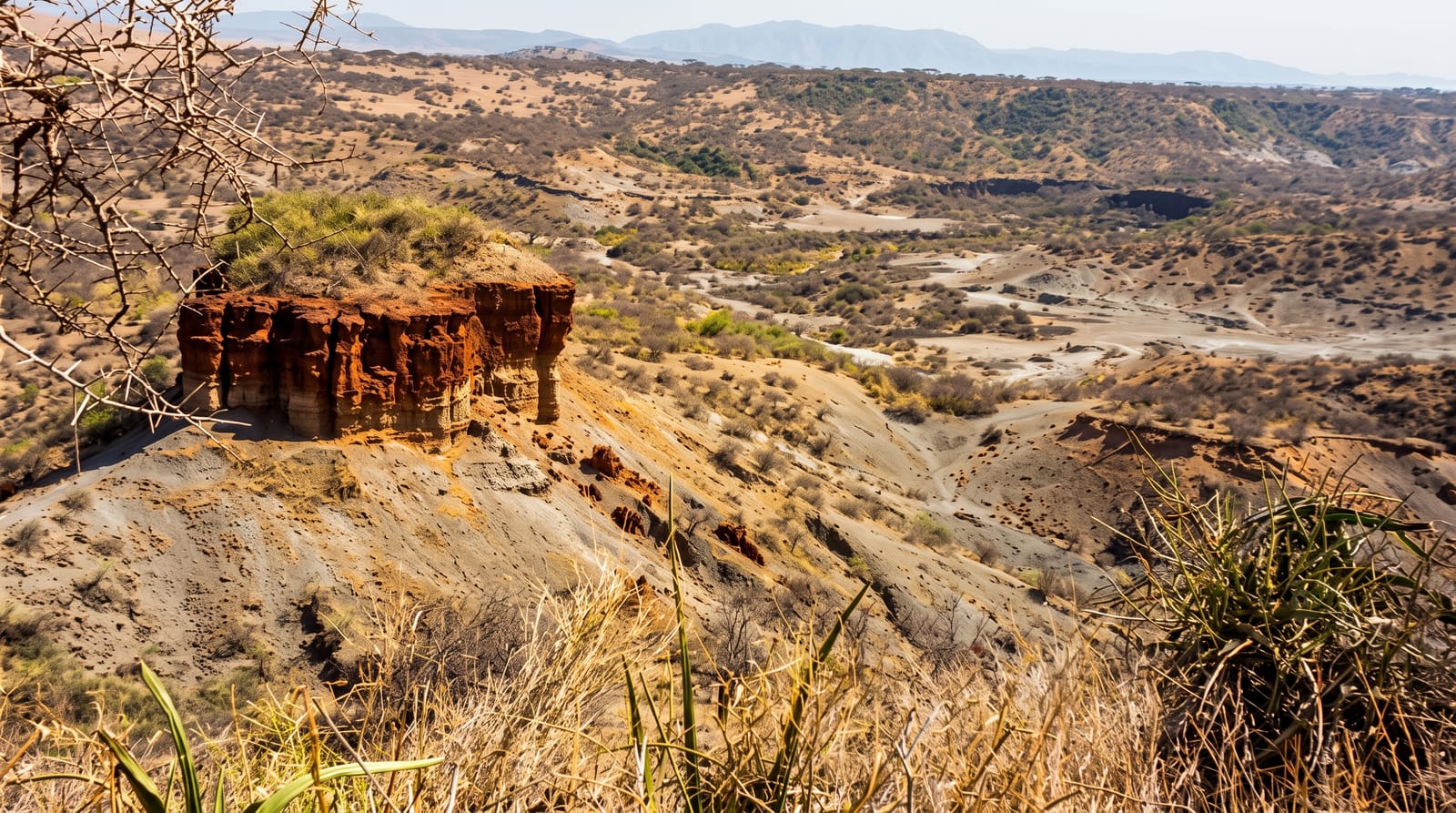
AI illustration
Olduvai Gorge, on the edge of the Serengeti in the Ngorongoro Conservation Area, is one of the most important prehistoric sites on earth, often called the Cradle of Mankind. In this steep ravine, the pioneering Leakey family and others unearthed some of the oldest known stone tools and fossil remains of early human ancestors, dating back nearly two million years, along with the famous Laetoli footprints nearby, transforming our understanding of human evolution.
What to look for
- The gorge - the ravine where the fossils and tools were found.
- The museum - the exhibits on human evolution and the discoveries.
- The story of the Leakeys - the pioneering excavations.
- The Laetoli footprints - the ancient hominin footprints found nearby.
When to go
June to October, the dry season, when the roads are best and it fits naturally into a northern-circuit safari; it lies on the route between the Ngorongoro Crater and the Serengeti, so it is an easy, worthwhile stop.
What to expect
It is a modest site, a viewpoint over the gorge and a small museum, rather than a dramatic dig you can explore, so it is a short, interesting stop rather than a destination in itself. Its significance is scientific and historical rather than visual. It fits perfectly as a break on the drive between the crater and the Serengeti.
Nearby
The Ngorongoro Crater and the Serengeti are on either side.
Key facts
Source: Wikidata, item Q217043, read on 18 October 2026.
What to pack for Olduvai Gorge
Chosen from what this place is for. Tap a kit for the full checklist.
- Binoculars - The single best wildlife tool - even a compact pair transforms a sighting. Find on Amazon
- Comfortable walking shoes - Sightseeing means kilometres of pavement and cobbles daily. Find on Amazon
- A zoom camera or long lens - Animals rarely come close; reach beats megapixels. Find on Amazon
- A slim anti-theft daypack - Zips that close properly; keep it in front in crowds and on transit. Find on Amazon
Some links on this page are Amazon affiliate links - if you buy through them we may earn a small commission at no extra cost to you.
All packing kitsPlan your trip
Where to start if Olduvai Gorge is going on the list.
Booking links on this page are affiliate links - if you book through them we may earn a small commission at no extra cost to you. It never changes what we write about a place.
Opening times, ticket prices and seasonal closures change - check the official source before you go: official site.