The Ngorongoro Crater
A natural amphitheatre of wildlife - the world's largest intact volcanic caldera, a vast green bowl teeming with the Big Five and thousands of animals, a UNESCO wonder in northern Tanzania.
Updated 18 October 2026
AI illustration
UNESCO World Heritage
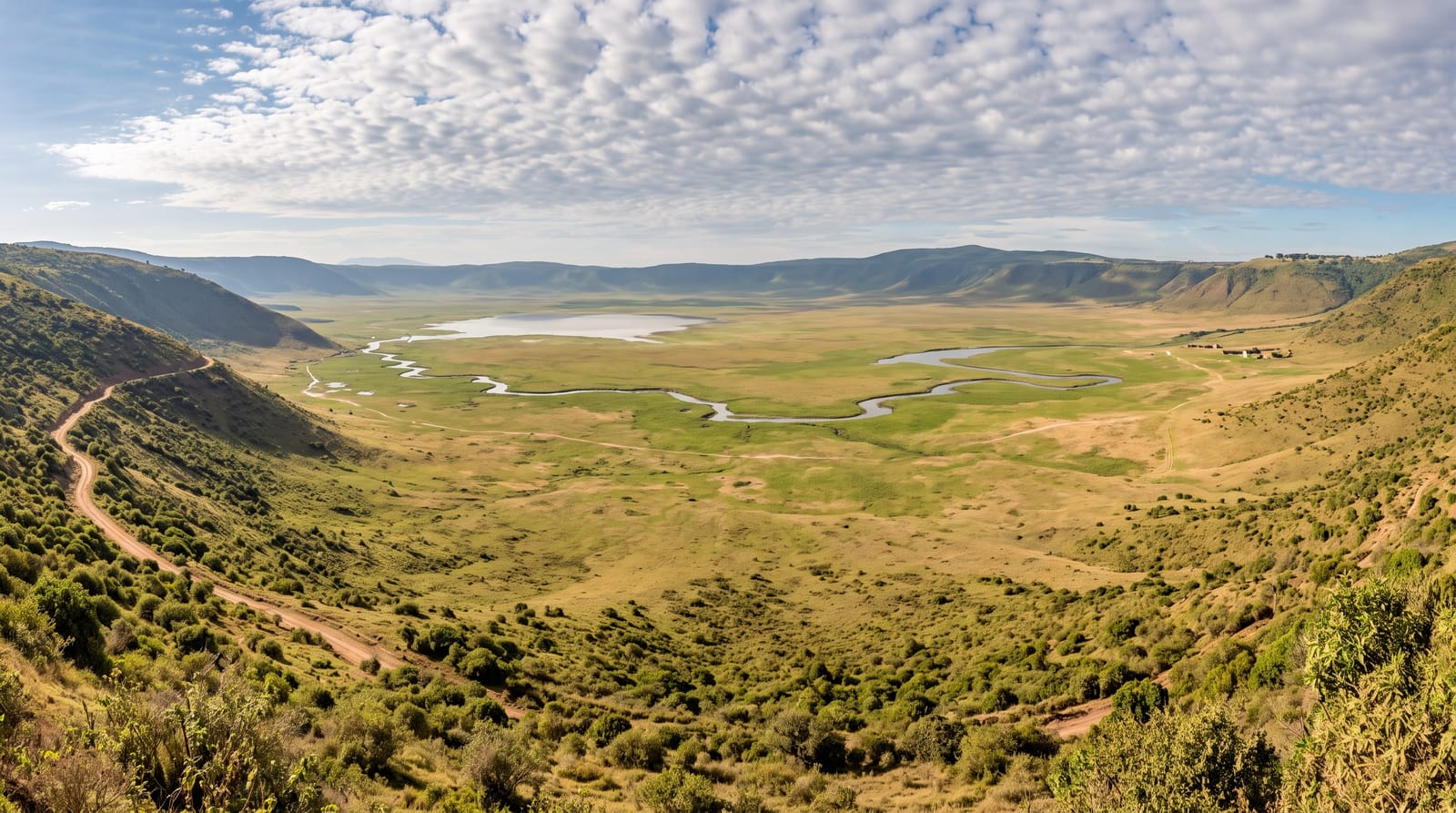
The Ngorongoro Crater is one of the natural wonders of Africa, the largest intact volcanic caldera in the world, a vast green bowl some 600 metres deep and 20 kilometres across, formed when a giant volcano collapsed. Its floor of grassland, forest, lake and swamp is a natural enclosure teeming with an extraordinary density of wildlife, including all of the Big Five and some of the best chances in Africa to see the endangered black rhino, a UNESCO wonder.
History
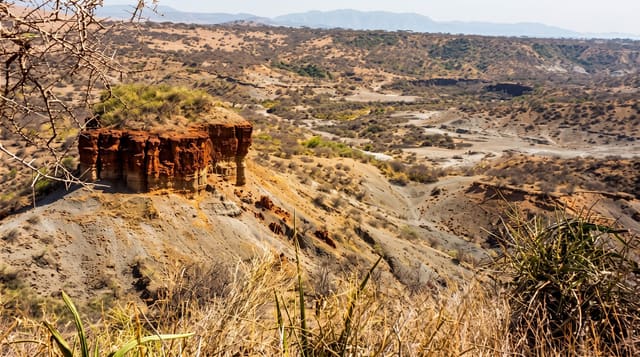
The name imitates the sound of a cowbell, ngoro-ngoro, in the language of the Maasai, and the fossil OH 7 from Olduvai Gorge shows that hominins lived in the area at least 1.75 million years ago. Pastoralists replaced hunter-gatherers a few thousand years ago: the Iraqw came about 2,000 years ago and the Datooga around 1700, and both were driven out by the Maasai in the 1800s. The first known European visitor was Oscar Baumann in 1892, the German brothers Adolph and Friedrich Siedentopf farmed in the crater until the First World War, British game ordinances from 1921 reached the crater by 1930, and in 1959 the Ngorongoro Conservation Area was separated from the Serengeti National Park to secure the land rights of the Maasai (Wikipedia, Ngorongoro Conservation Area).
The landscape
- The crater floor - the wildlife-packed caldera bowl.
- The Big Five - lion, elephant, buffalo, leopard and black rhino.
- The black rhinos - a rare chance to see the endangered rhino.
- The crater rim view - the breathtaking panorama down into the bowl.
When to go
June to October, the dry season, is generally best for wildlife viewing and access; the crater is green and beautiful after the rains, though it can be busy year-round. Mornings are best, descending early before the day-tripper vehicles arrive.
Good to know
Because so much wildlife is concentrated in a small, accessible area, it can get crowded with safari vehicles, especially around good sightings, which detracts from the wilderness feel. Descending into the crater is by permit and vehicle only, and time on the floor is limited. It is cool and can be misty on the rim. The density of wildlife, though, is astonishing.
Nearby
The Serengeti, Olduvai Gorge and Lake Manyara are on the northern circuit.
Key facts
Source: Wikidata, item Q3002224, read on 18 October 2026.
What to pack for The Ngorongoro Crater
Chosen from what this place is for. Tap a kit for the full checklist.
- Broken-in walking shoes or boots - Grip and ankle support matter more than looks; never hike in brand-new boots. Find on Amazon
- Binoculars - The single best wildlife tool - even a compact pair transforms a sighting. Find on Amazon
- Layers + a waterproof shell - Mountain weather turns fast; a packable rain jacket saves the day. Find on Amazon
- A zoom camera or long lens - Animals rarely come close; reach beats megapixels. Find on Amazon
Some links on this page are Amazon affiliate links - if you buy through them we may earn a small commission at no extra cost to you.
All packing kitsPlan your trip
Where to start if The Ngorongoro Crater is going on the list.
Booking links on this page are affiliate links - if you book through them we may earn a small commission at no extra cost to you. It never changes what we write about a place.
Opening times, ticket prices and seasonal closures change - check the official source before you go: official site.