Valencia Cathedral
A cathedral built on a mosque that had been the Visigothic cathedral, holding an agate cup venerated as the Holy Grail.
Updated 20 October 2026
AI illustration
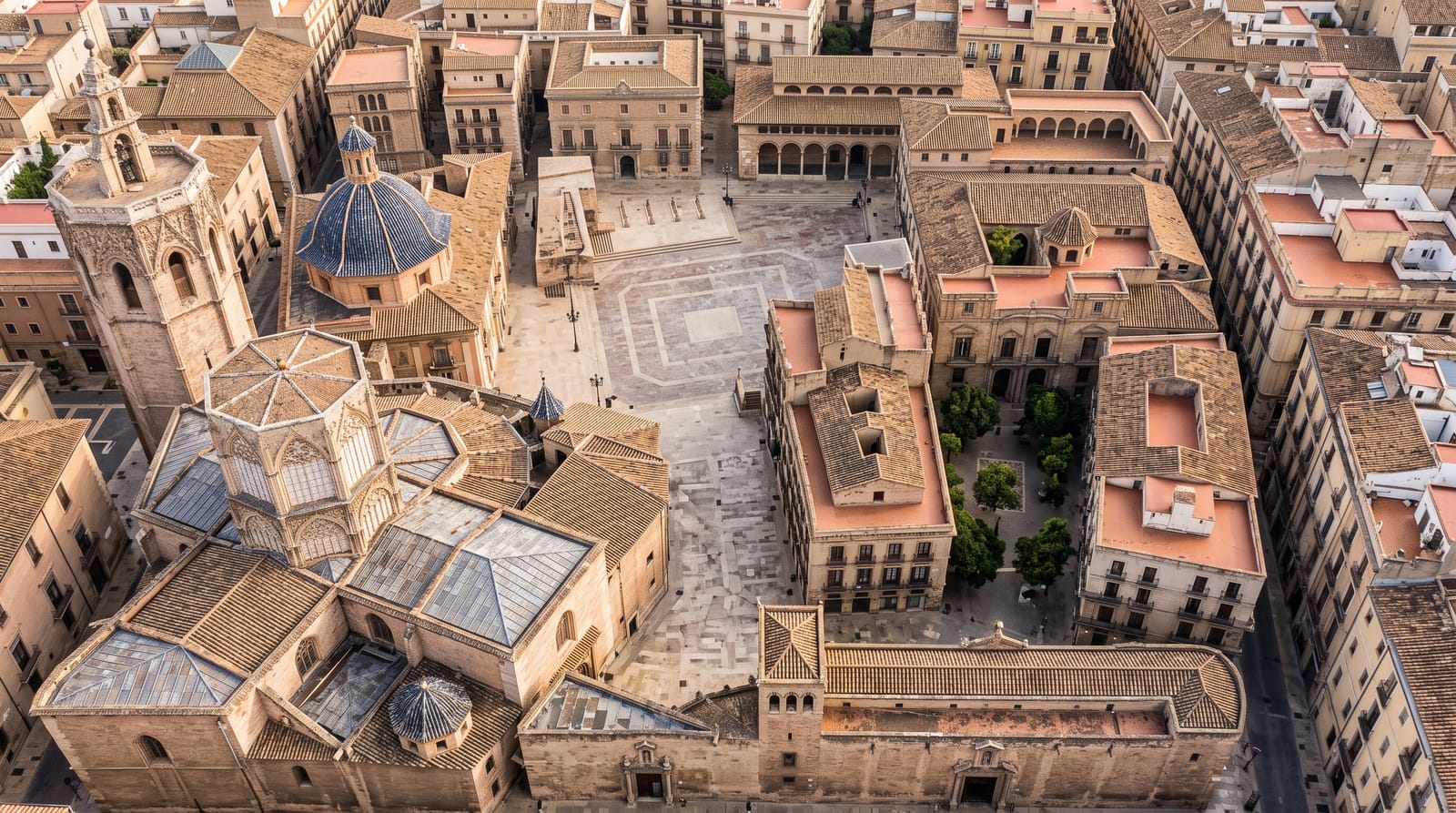
Valencia cathedral was begun in 1262 on the site of the main mosque, itself once the Visigothic cathedral, and the long construction left it a mixture: a Romanesque door, a Gothic body, a baroque main facade and an octagonal bell tower, the Micalet, of 1381 to 1429, climbable by 207 steps. Its most visited object is in a side chapel: an agate cup of the first century BC to first century AD, mounted later in gold, which the Vatican has permitted to be venerated as the Holy Grail and which several popes have used to celebrate mass. Archaeologists agree the cup is ancient and Middle Eastern; the identification beyond that is tradition. The cathedral also holds two Goya paintings in the chapel of San Francisco de Borja.
The main sights
- The Holy Chalice - an ancient agate cup in its own chapel.
- The Micalet tower - an octagonal bell tower of 207 steps.
- The Goya paintings - two works in the Borja chapel.
- The mixed styles - Romanesque, Gothic and baroque in one building.
When to go
Spring and autumn; Valencia is hot in summer and the tower climb is unshaded. The cathedral closes for services and the Micalet keeps separate hours. March brings Las Fallas, when the square outside fills daily.
Practical notes
The Grail identification is religious tradition rather than established fact, which the cathedral presents with some care. The tower climb is a narrow spiral of 207 steps with no lift. Tickets for cathedral and tower are separate.
Nearby
The Plaza de la Virgen and the Llotja silk exchange are minutes away; the Turia gardens ring the old town.
Key facts
Source: Wikidata, item Q1466926, read on 18 October 2026.
What to pack for Valencia Cathedral
Chosen from what this place is for. Tap a kit for the full checklist.
- Comfortable walking shoes - Sightseeing means kilometres of pavement and cobbles daily. Find on Amazon
- Modest clothing - Shoulders and knees covered - the single most common requirement. Find on Amazon
- A slim anti-theft daypack - Zips that close properly; keep it in front in crowds and on transit. Find on Amazon
- A scarf or shawl - To cover the head or shoulders on entry; women especially at mosques. Find on Amazon
Some links on this page are Amazon affiliate links - if you buy through them we may earn a small commission at no extra cost to you.
All packing kitsPlan your trip
Where to start if Valencia Cathedral is going on the list.
Booking links on this page are affiliate links - if you book through them we may earn a small commission at no extra cost to you. It never changes what we write about a place.
Opening times, ticket prices and seasonal closures change - check the official source before you go: official site.