Gloucester Cathedral
A Norman abbey re-skinned in the earliest Perpendicular Gothic, with cloisters that became Hogwarts corridors.
Updated 12 October 2026

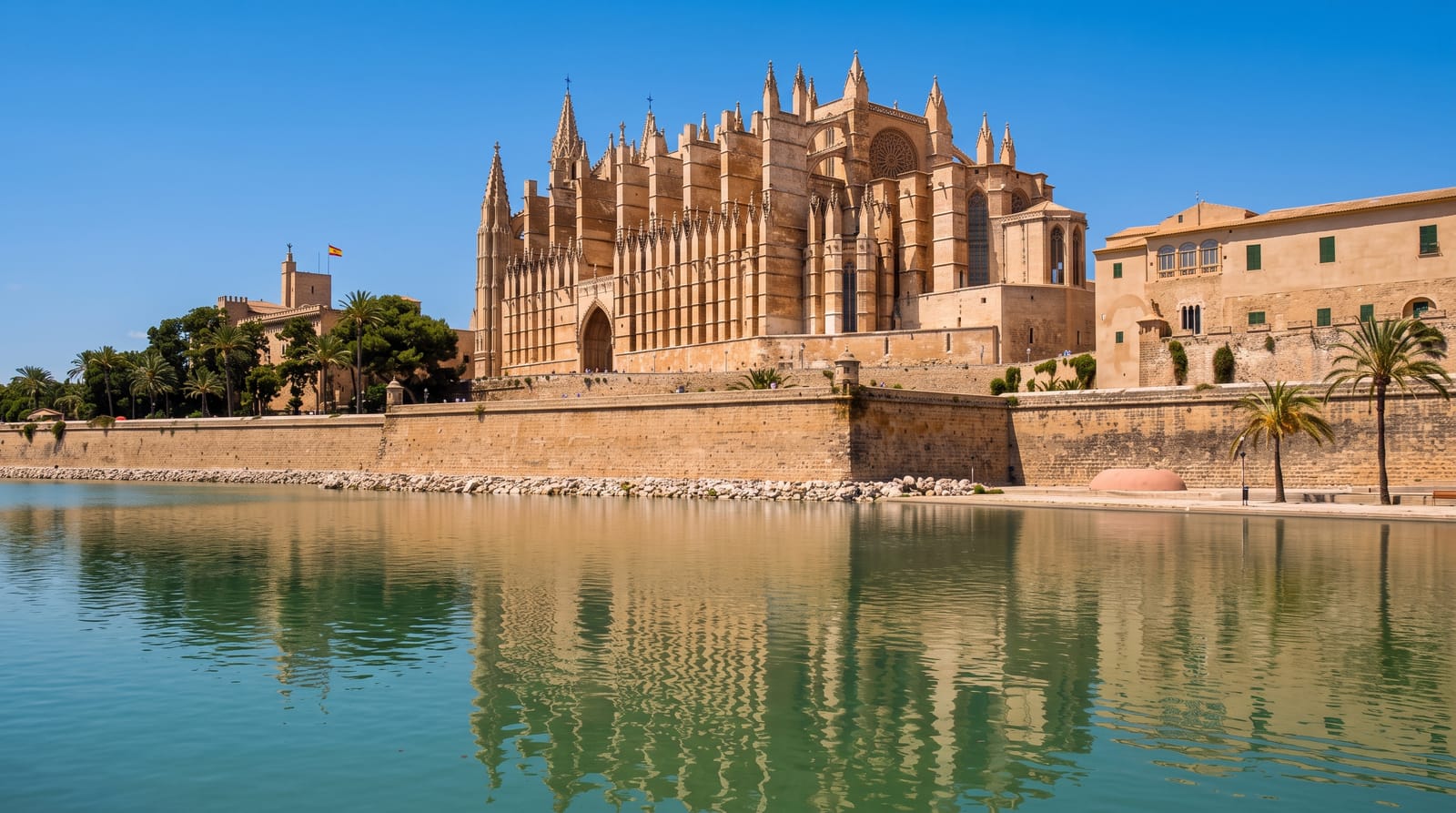
AI illustration
The Norman nave of about 1100 still stands, but the east end was rebuilt in the 1330s and 1340s in a new manner, thin stone tracery laid like a grid over older walls, that became the Perpendicular style and spread across England from here. The money came from pilgrims to the tomb of Edward II, murdered at nearby Berkeley Castle in 1327 and buried here when other houses refused him; the alabaster effigy is still in place. The east window, glazed around 1350, is roughly the size of a tennis court and was the largest in the world when made. The fan-vaulted cloister of the 1350s is the earliest surviving fan vault anywhere, and its lavatorium and corridors were used as Hogwarts in several Harry Potter films.
Highlights
- The fan-vaulted cloister - the earliest fan vaulting in existence, from the 1350s.
- The east window - roughly tennis-court sized, glazed around 1350.
- Edward II's tomb - the alabaster effigy that funded the rebuilding.
- The Norman nave - massive round columns from about 1100 under later work.
When to go
Year-round; the cathedral is free to enter and open daily around services. The Three Choirs Festival rotates here every third year. Tower tours run on limited days and book out.
What to expect
The cloister is popular with film tourists and can be crowded and noisy for what is still a monastic space. Services close sections without much notice. The tower climb is 269 steps on a tight spiral.
Nearby
The Gloucester docks are a short walk; the Forest of Dean and Cotswolds lie either side.
Key facts
Source: Wikidata, item Q262500, read on 18 October 2026.
What to pack for Gloucester Cathedral
Chosen from what this place is for. Tap a kit for the full checklist.
- Comfortable walking shoes - Sightseeing means kilometres of pavement and cobbles daily. Find on Amazon
- Modest clothing - Shoulders and knees covered - the single most common requirement. Find on Amazon
- A slim anti-theft daypack - Zips that close properly; keep it in front in crowds and on transit. Find on Amazon
- A scarf or shawl - To cover the head or shoulders on entry; women especially at mosques. Find on Amazon
Some links on this page are Amazon affiliate links - if you buy through them we may earn a small commission at no extra cost to you.
All packing kitsPlan your trip
Where to start if Gloucester Cathedral is going on the list.
Booking links on this page are affiliate links - if you book through them we may earn a small commission at no extra cost to you. It never changes what we write about a place.
Opening times, ticket prices and seasonal closures change - check the official source before you go: official site.