Baelo Claudia
A Roman town on Bolonia beach that lived on salting fish and making garum, abandoned after earthquakes and raids.
Updated 4 September 2026
AI illustration
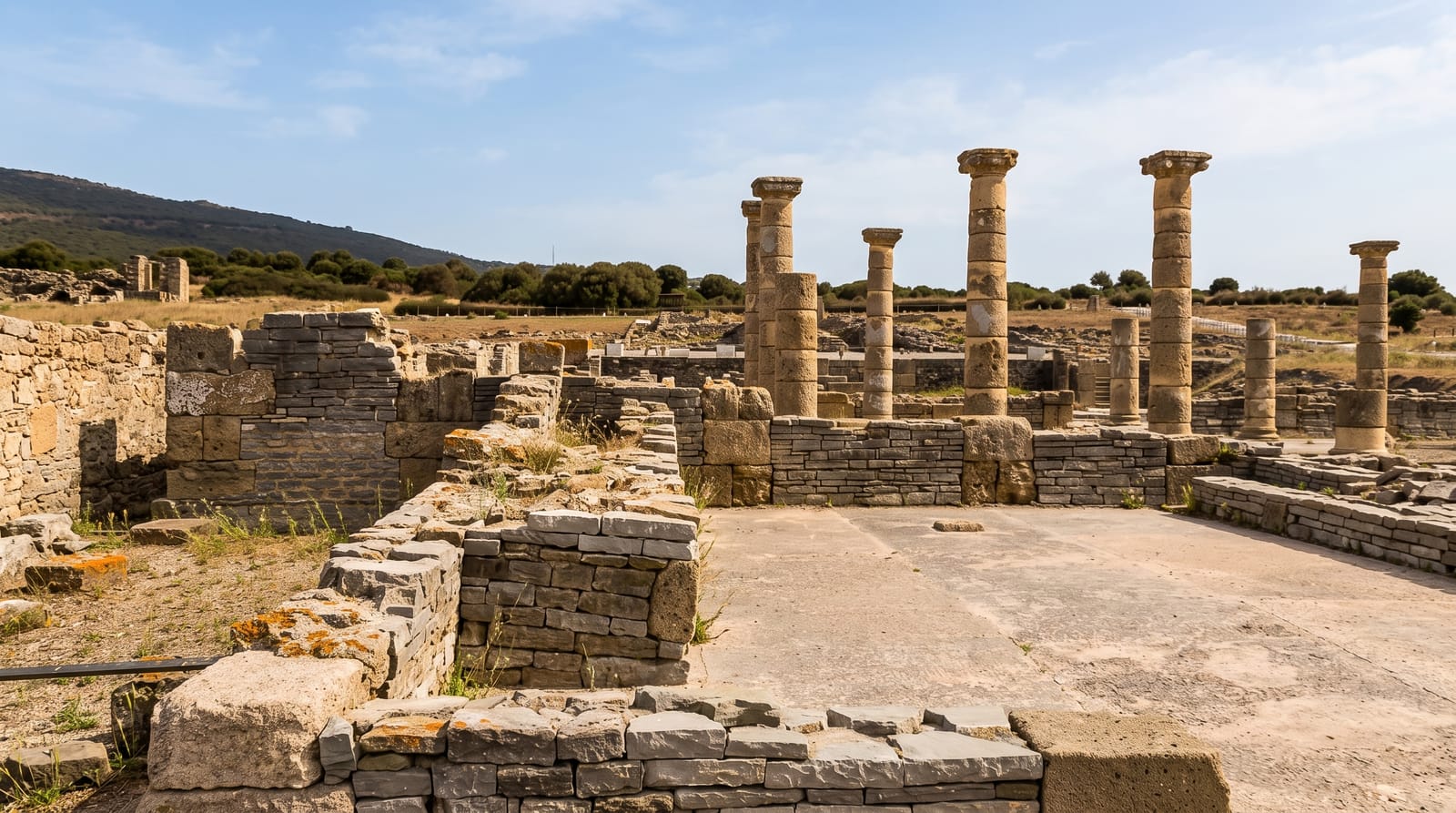
Baelo Claudia was founded in the second century BC and grew under Claudius into a town of a few thousand people whose economy was fish: tuna caught on the migration through the strait were salted in vats along the shore and processed into garum, the fermented fish sauce traded across the empire, and the vats are still there in rows. The forum, basilica, curia, temples to the Capitoline triad and to Isis, a theatre cut into the slope and long stretches of street survive, laid out on a beach with the dune and the sea directly behind and the Moroccan coast visible across the water. Earthquakes in the second century and later raids ended it. A modern museum stands at the entrance.
The main sights
- The garum vats - rows of salting tanks along the shore.
- The forum and basilica - the civic centre with standing columns.
- The theatre - a Roman theatre cut into the hillside.
- The beach setting - ruins directly behind the sand with Africa in view.
When to go
Spring and autumn; summer is hot with almost no shade on the site, and the levante wind can drive sand across it. The site closes on Mondays and shuts earlier in summer afternoons.
What to expect
There is no shade anywhere on the site, and the wind at Bolonia is frequently strong enough to be uncomfortable. Parking at the beach fills completely in summer. Opening hours are shorter than most visitors expect.
Nearby
Bolonia beach and its dune are immediately alongside; Tarifa lies twenty-two kilometres south.
Key facts
Source: Wikidata, item Q43174653, read on 18 October 2026.
What to pack for Baelo Claudia
Chosen from what this place is for. Tap a kit for the full checklist.
- Loose, light, long clothing - Covering up beats bare skin in the desert - and locals dress this way for a reason. Find on Amazon
- Comfortable walking shoes - Sightseeing means kilometres of pavement and cobbles daily. Find on Amazon
- Modest clothing - Shoulders and knees covered - the single most common requirement. Find on Amazon
- A wide-brim hat + sunglasses - Shade for your face and eyes where there is none overhead. Find on Amazon
Some links on this page are Amazon affiliate links - if you buy through them we may earn a small commission at no extra cost to you.
All packing kitsPlan your trip
Where to start if Baelo Claudia is going on the list.
Booking links on this page are affiliate links - if you book through them we may earn a small commission at no extra cost to you. It never changes what we write about a place.
Opening times, ticket prices and seasonal closures change - check the official source before you go: official site.