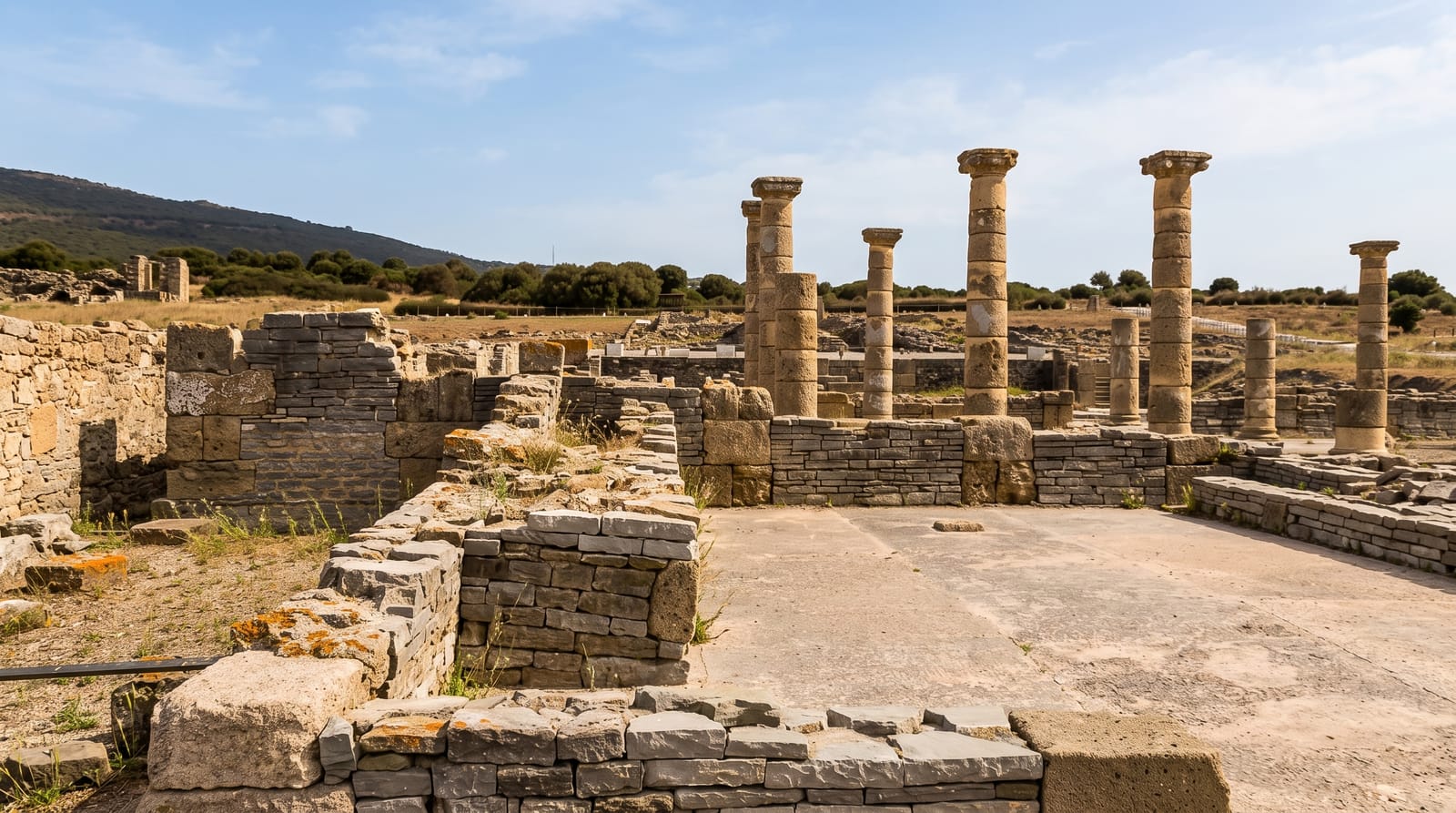
Cotta Roman Ruins
A Roman fish-salting factory near Cap Spartel, where the vats that made garum are still cut into the ground.
Updated 29 August 2026
Cotta was an industrial site rather than a town: a factory of the second and third centuries producing salted fish and garum, the fermented fish sauce that was a staple of Roman cooking across the empire and was made in bulk on the Atlantic coasts of Mauretania and Baetica. What survives is the plant - rows of rectangular vats lined with waterproof mortar cut into the ground, in which fish and salt were layered and left to break down, along with the remains of a bath complex, a small temple and the walls of the associated buildings. The vats are the thing to look at, because they explain what the site was for immediately in a way that most Roman ruins do not. It sits a few hundred metres from the Atlantic near Cap Spartel and the Caves of Hercules, unfenced and unstaffed, with a track down to it and no interpretation.
Highlights
- Garum vats - rows of mortar-lined tanks cut into the ground for salting fish.
- An industrial site - a factory of the second and third centuries, not a town.
- Bath and temple remains - the buildings that served the works.
- No interpretation - unfenced, unstaffed and unsigned near the Atlantic.
When to go
Spring and autumn. An hour, combined with Cap Spartel.
What to expect
There is no signage, ticket office or staff - the site is open ground. Without knowing what the vats are they read as empty tanks. Access is by a rough track. It is a short visit alongside the caves and the cape.
Nearby
The Caves of Hercules and Cap Spartel are a few minutes away.
What to pack for Cotta Roman Ruins
Chosen from what this place is for. Tap a kit for the full checklist.
- Head torch + spare batteries - Hands-free light is essential; caves are truly dark. Find on Amazon
- Comfortable walking shoes - Sightseeing means kilometres of pavement and cobbles daily. Find on Amazon
- Modest clothing - Shoulders and knees covered - the single most common requirement. Find on Amazon
- Grippy closed shoes - Cave floors are wet, muddy and slick with formations. Find on Amazon
Some links on this page are Amazon affiliate links - if you buy through them we may earn a small commission at no extra cost to you.
All packing kitsPlan your trip
Where to start if Cotta Roman Ruins is going on the list.
Booking links on this page are affiliate links - if you book through them we may earn a small commission at no extra cost to you. It never changes what we write about a place.
Opening times, ticket prices and seasonal closures change - check the official source before you go: official site.