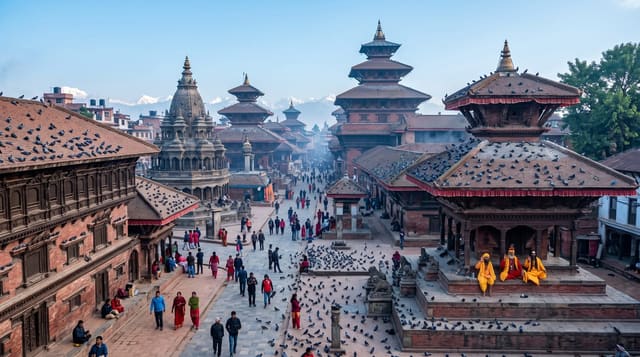
Plaza Uta el-Hammam
The main square of Chefchaouen, under the kasbah walls and the mosque's unusual octagonal minaret.
Updated 29 August 2026
Uta el-Hammam is the open space the blue town organises itself around - an irregular square under the walls of the kasbah, with the Grand Mosque on one side and cafes with terraces filling the rest. Two things on it are worth looking at properly rather than past. The kasbah, built in the fifteenth century by Moulay Ali ben Rachid who founded the town, is a walled compound with a garden, towers to climb for a view over the roofs, an ethnographic museum and the old prison cells; and the mosque's minaret is octagonal, which is unusual in Morocco where square minarets are the norm, and reflects the Andalusian origins of the population who settled here after expulsion from Spain. The square is where everyone eats and where the town's evening happens, and it is also where the pricing for visitors is highest in Chefchaouen.
What's there
- The kasbah - a fifteenth-century walled compound with towers, garden and museum.
- An octagonal minaret - unusual in Morocco, reflecting the town's Andalusian founders.
- Cafe terraces - the square's edge given over to eating and watching.
- The town's evening - where Chefchaouen gathers after dark.
When to go
Spring and autumn; evening for the square in use. An hour or two.
Before you go
Prices on the square are the highest in town - the side lanes are cheaper and often better. It is crowded through the middle of the day with day trippers. Cannabis is offered openly to visitors here and buying it is illegal. The kasbah charges separately.
Nearby
Ras el-Maa spring is uphill; the Spanish Mosque viewpoint is above the town.
What to pack for Plaza Uta el-Hammam
Chosen from what this place is for. Tap a kit for the full checklist.
- Comfortable walking shoes - Sightseeing means kilometres of pavement and cobbles daily. Find on Amazon
- Modest clothing - Shoulders and knees covered - the single most common requirement. Find on Amazon
- A slim anti-theft daypack - Zips that close properly; keep it in front in crowds and on transit. Find on Amazon
- A scarf or shawl - To cover the head or shoulders on entry; women especially at mosques. Find on Amazon
Some links on this page are Amazon affiliate links - if you buy through them we may earn a small commission at no extra cost to you.
All packing kitsPlan your trip
Where to start if Plaza Uta el-Hammam is going on the list.
Booking links on this page are affiliate links - if you book through them we may earn a small commission at no extra cost to you. It never changes what we write about a place.
Opening times, ticket prices and seasonal closures change - check the official source before you go: official site.