Royal Walls of Ceuta
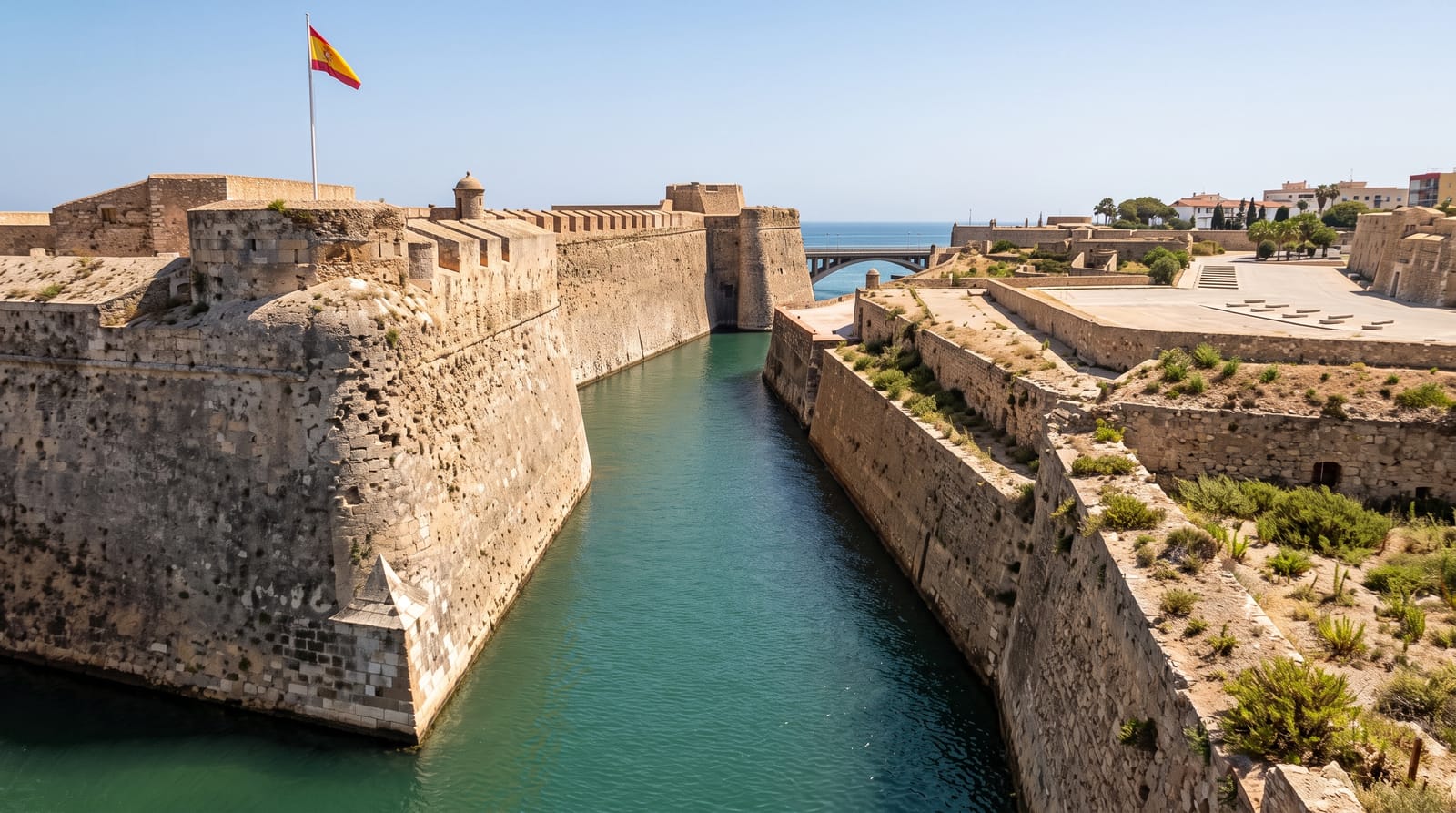
Renaissance sea walls across the neck of the Ceuta isthmus, with a moat deep enough for ships to pass through.
Updated 20 October 2026
AI illustration
Ceuta sits on a narrow isthmus on the African side of the Strait of Gibraltar, and the Murallas Reales cut across it: fortifications whose oldest part dates to 962, rebuilt by the Portuguese from the 1540s and later strengthened in the bastioned Renaissance manner, with a navigable moat, the Foso de San Felipe, cut right through the isthmus from one sea to the other, deep and wide enough for vessels, which is very unusual. Drawbridges cross it. The walls held out through the sieges by Moulay Ismail that began in 1694 and went on, with interruptions, for decades. Parts of the interior now hold exhibition spaces. Ceuta is a Spanish city bordering Morocco and its history is layered accordingly.
What's there
- The navigable moat - a sea-to-sea channel cut through the isthmus.
- The bastioned walls - Renaissance fortifications with drawbridges.
- The siege history - defences that held through decades of blockade.
- The exhibition spaces - galleries inside the restored bastions.
When to go
April to June and September to November; Ceuta is hot in summer. Ferries from Algeciras run frequently and take about an hour, and a passport is needed since the city is outside the Schengen customs area in practice.
Practical notes
Ceuta is a Spanish enclave on the African coast with a border situation that is politically sensitive and heavily policed. It is a working port city rather than a resort. Ferry crossings can be delayed in wind.
Nearby
Monte Hacho and its fort rise east; the Moroccan border is a few kilometres south.
Key facts
Source: Wikidata, item Q4997137, read on 18 October 2026.
What to pack for Royal Walls of Ceuta
Chosen from what this place is for. Tap a kit for the full checklist.
- Comfortable walking shoes - Sightseeing means kilometres of pavement and cobbles daily. Find on Amazon
- A slim anti-theft daypack - Zips that close properly; keep it in front in crowds and on transit. Find on Amazon
- A refillable water bottle - Many cities have public fountains; save money and plastic. Find on Amazon
- A light layer + compact umbrella - For museum air-con and a sudden shower. Find on Amazon
Some links on this page are Amazon affiliate links - if you buy through them we may earn a small commission at no extra cost to you.
All packing kitsPlan your trip
Where to start if Royal Walls of Ceuta is going on the list.
Booking links on this page are affiliate links - if you book through them we may earn a small commission at no extra cost to you. It never changes what we write about a place.
Opening times, ticket prices and seasonal closures change - check the official source before you go: official site.