Astorga Episcopal Palace
A Gaudi palace built for a bishop on the Camino, never used as a residence and now a museum of the pilgrim routes.
Updated 21 October 2026
AI illustration
UNESCO World Heritage
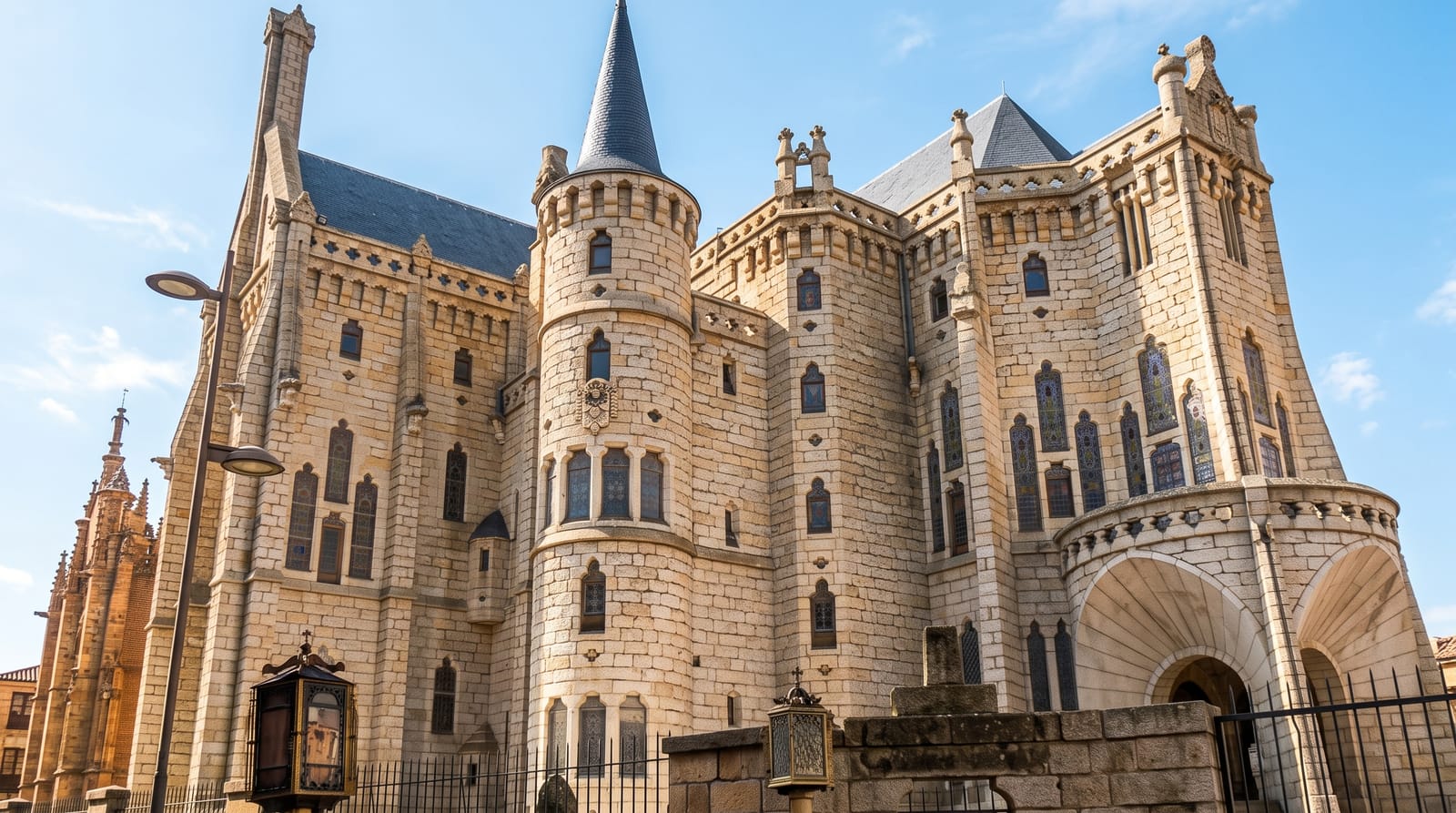
Astorga's bishop, Joan Baptista Grau, was Catalan and a friend of Gaudi, and after fire destroyed the episcopal palace in 1886 he commissioned him to rebuild it. Gaudi worked from photographs and drawings sent from Astorga, producing a white granite building with pointed arches, corner turrets and a moat-like ditch, closer to a small castle than a residence. Grau died in 1893 and, at odds with the chapter, Gaudi resigned that same year and never returned, and the building was completed by others in 1913. No bishop ever lived in it. It now holds the Museo de los Caminos, covering the pilgrim routes to Santiago, and stands beside the cathedral in a town that was a Roman provincial capital.
History
When fire destroyed the old episcopal palace, Bishop Juan Bautista Grau gave the new one to his friend Antoni Gaudí, whom he had known since Tarragona; Gaudí, still busy on the Palau Güell in Barcelona, designed it from photographs sent by the bishop, the plans were approved in February 1889 and the first stone laid in June 1890. After Grau died in 1893 Gaudí resigned over disagreements with the chapter, Ricardo García Guereta finished the building, and after a restoration begun in 1956 it became the Museo de los Caminos, a museum of religious art on the Way of St James (Wikipedia, Episcopal Palace, Astorga).
Highlights
- The white granite palace - pointed arches, turrets and a surrounding ditch.
- The Museo de los Caminos - exhibitions on the Santiago pilgrim routes.
- The chapel interior - ribbed vaults and stained glass by Gaudi's design.
- The cathedral alongside - Astorga's Gothic and baroque cathedral next door.
When to go
April to June and September to November; Astorga sits high on the meseta and winters are cold. The palace closes on Mondays in low season and keeps a midday break.
Before you go
Gaudi abandoned the project and much of the building was completed by others, so it is only partly his. The interior is a museum rather than restored rooms. Astorga is a small town and the visit takes half a day.
Nearby
Astorga cathedral and the Roman remains are alongside; Ponferrada and Las Medulas lie west.
Key facts
Source: Wikidata, item Q507390, read on 18 October 2026.
What to pack for Astorga Episcopal Palace
Chosen from what this place is for. Tap a kit for the full checklist.
- Comfortable walking shoes - Sightseeing means kilometres of pavement and cobbles daily. Find on Amazon
- Modest clothing - Shoulders and knees covered - the single most common requirement. Find on Amazon
- A slim anti-theft daypack - Zips that close properly; keep it in front in crowds and on transit. Find on Amazon
- A scarf or shawl - To cover the head or shoulders on entry; women especially at mosques. Find on Amazon
Some links on this page are Amazon affiliate links - if you buy through them we may earn a small commission at no extra cost to you.
All packing kitsPlan your trip
Where to start if Astorga Episcopal Palace is going on the list.
Booking links on this page are affiliate links - if you book through them we may earn a small commission at no extra cost to you. It never changes what we write about a place.
Opening times, ticket prices and seasonal closures change - check the official source before you go: official site.