Lixus Ruins
A Phoenician and Roman city on a hill above the Loukkos estuary, with fish-salting vats, a theatre and no visitors.
Updated 29 August 2026
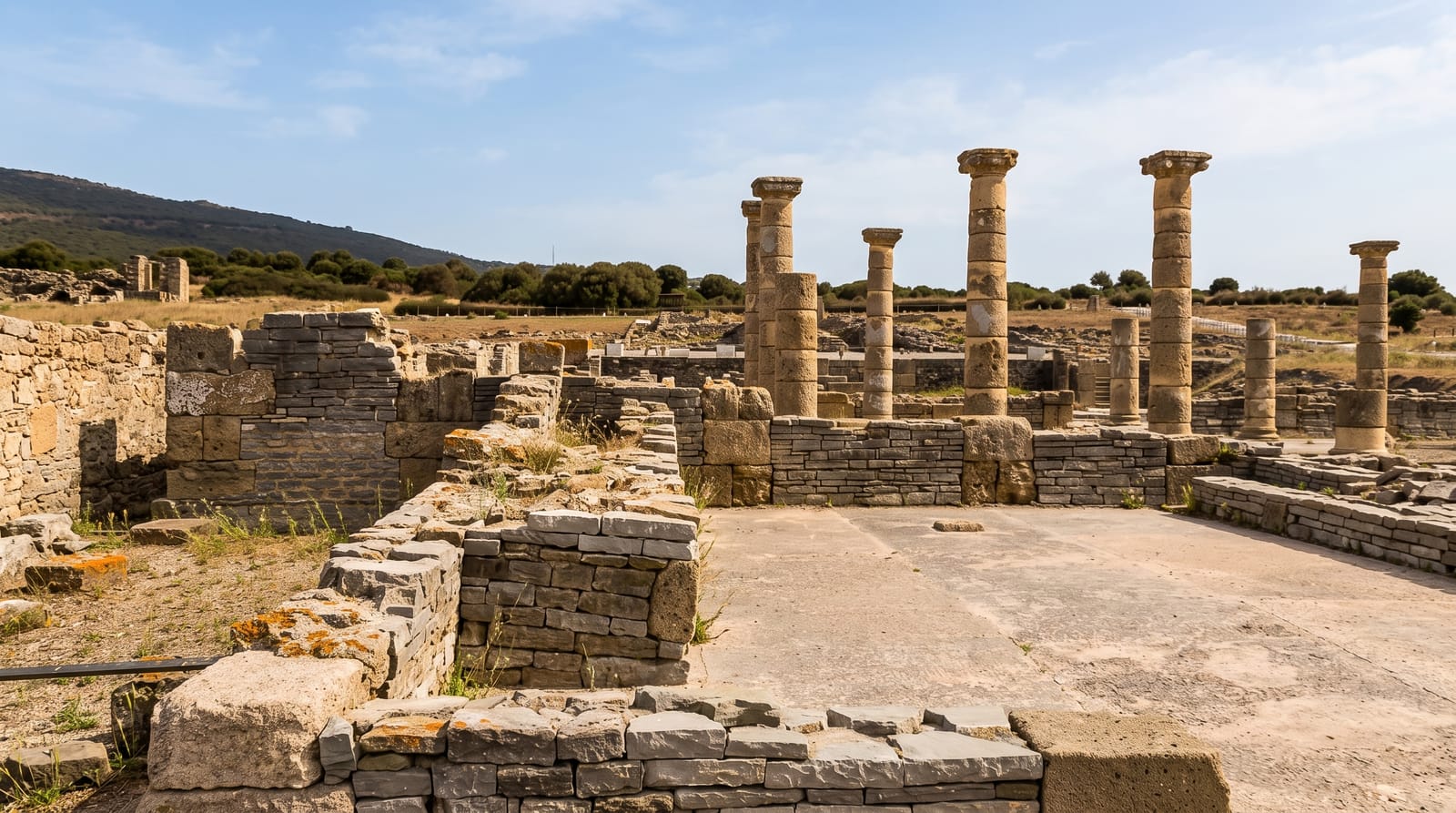
Lixus stands on a hill above the Loukkos river where it meets the Atlantic, and it is one of the oldest urban sites in Morocco - Phoenician occupation from around the seventh century BC, then Mauretanian, then Roman from the first century AD, then Islamic before it was abandoned. The classical writers placed the Garden of the Hesperides here, which is a claim several sites make. What survives across the slope is substantial and almost entirely unvisited: a large complex of fish-salting vats at the bottom, among the biggest known in the western Mediterranean, an amphitheatre and theatre combined in one structure, baths with a mosaic of Oceanus, an acropolis with temples at the top, and a defensive circuit. Interpretation is minimal and the site is often unstaffed, with sheep grazing among the walls. The view over the estuary and the salt pans is part of it.
What to look for
- Seventh-century BC beginnings - one of the oldest urban sites in the country.
- Industrial salting vats - among the largest such complexes in the western Mediterranean.
- A theatre and amphitheatre - combined in one structure on the slope.
- An unvisited hill - walls, temples and baths with sheep grazing among them.
When to go
Spring and autumn. Two hours. Morning light over the estuary.
What to expect
Staffing is irregular and the site is often simply open with nobody there. There is almost no signage. The ground is uneven and overgrown in places. The mosaic is exposed to weather and has deteriorated.
Nearby
Larache is south across the river; the Atlantic beaches are west.
What to pack for Lixus Ruins
Chosen from what this place is for. Tap a kit for the full checklist.
- Reef-safe sunscreen - High SPF that will not bleach the coral you are swimming over. Find on Amazon
- Comfortable walking shoes - Sightseeing means kilometres of pavement and cobbles daily. Find on Amazon
- Modest clothing - Shoulders and knees covered - the single most common requirement. Find on Amazon
- Quick-dry towel - A microfibre towel packs small and dries in minutes. Find on Amazon
Some links on this page are Amazon affiliate links - if you buy through them we may earn a small commission at no extra cost to you.
All packing kitsPlan your trip
Where to start if Lixus Ruins is going on the list.
Booking links on this page are affiliate links - if you book through them we may earn a small commission at no extra cost to you. It never changes what we write about a place.
Opening times, ticket prices and seasonal closures change - check the official source before you go: official site.