Juma Masjid Mosque
Long described as the largest mosque in the southern hemisphere, wrapped in the arcades and traders of Durban's Indian quarter.
Updated 22 October 2026
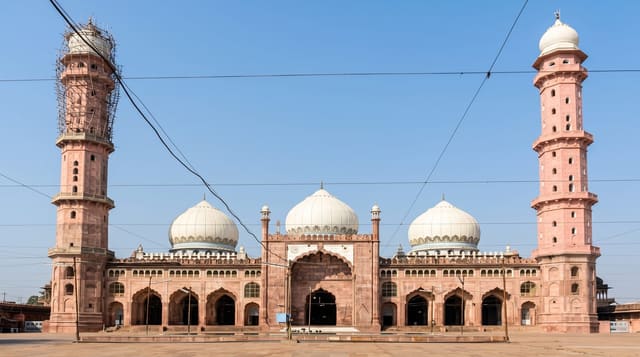
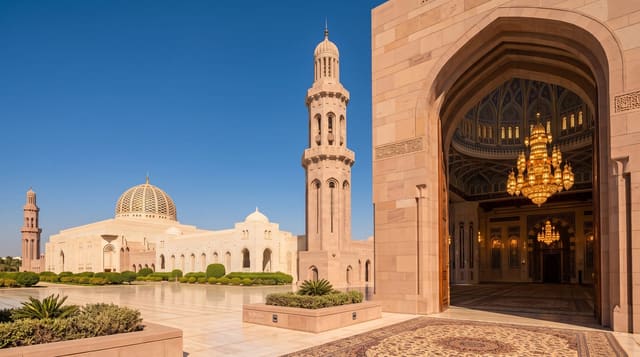
Built in 1881 and extended several times, the Grey Street mosque holds several thousand worshippers and was long described as the largest mosque in the southern hemisphere by capacity - a different claim from Nizamiye's, which rests on floor area and scale. It sits at the heart of Durban's historic Indian trading district, and the building is wrapped on its street sides by shops whose rents support it: the arcade of fabric sellers, spice merchants and jewellers is part of the same structure. Gold-domed minarets rise over the corner. The Victoria Street Market is next door. Guided visits are offered by local organisations, which is the sensible way to see both the mosque and the quarter, and modest dress and prayer-time awareness apply.
History
In August 1881 Aboobaker Amod Jhaveri and Hajee Mohamed bought a site in Grey Street for £115 and turned a small brick building on it into a mosque. More land was added in 1884 and 1889, the first minaret and two shops to fund the upkeep were built in 1904, and the mosque was rebuilt in 1927 to designs by Payne & Payne and extended again in 1943 (Wikipedia, Juma Mosque, Durban).
Highlights
- The 1881 mosque - long described as the largest mosque in the southern hemisphere.
- The shop arcade - traders built into the mosque's street frontage, funding its upkeep.
- The Indian quarter - the historic trading district around Grey Street.
- The minarets - gold domes rising over the Grey Street corner.
When to go
April to September for Durban's cooler months, outside prayer times. One hour.
Before you go
An active mosque - modest dress, shoes off, women directed to a separate area, and visits paused around prayers. The surrounding streets are crowded and busy; watch belongings. Guided visits are the easiest way in.
Nearby
Victoria Street Market is next door; the beachfront is east.
Key facts
Source: Wikidata, item Q17006922, read on 18 October 2026.
What to pack for Juma Masjid Mosque
Chosen from what this place is for. Tap a kit for the full checklist.
- Comfortable walking shoes - Sightseeing means kilometres of pavement and cobbles daily. Find on Amazon
- Modest clothing - Shoulders and knees covered - the single most common requirement. Find on Amazon
- A slim anti-theft daypack - Zips that close properly; keep it in front in crowds and on transit. Find on Amazon
- A scarf or shawl - To cover the head or shoulders on entry; women especially at mosques. Find on Amazon
Some links on this page are Amazon affiliate links - if you buy through them we may earn a small commission at no extra cost to you.
All packing kitsPlan your trip
Where to start if Juma Masjid Mosque is going on the list.
Booking links on this page are affiliate links - if you book through them we may earn a small commission at no extra cost to you. It never changes what we write about a place.
Opening times, ticket prices and seasonal closures change - check the official source before you go: official site.