Great Mosque of Xi'an
A mosque built entirely as a Chinese courtyard complex, with a minaret shaped like a pagoda.
Updated 19 October 2026
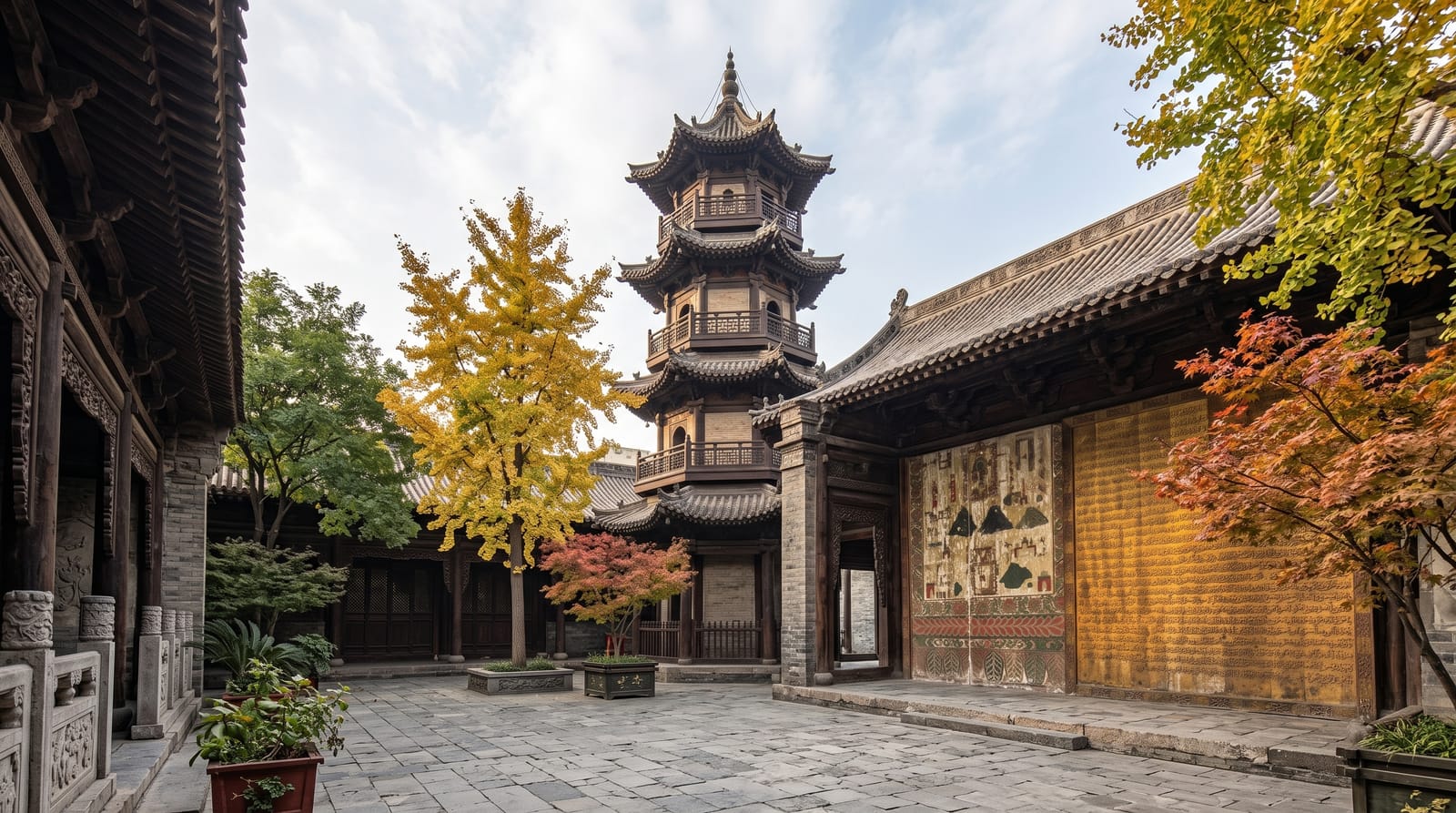
AI illustration
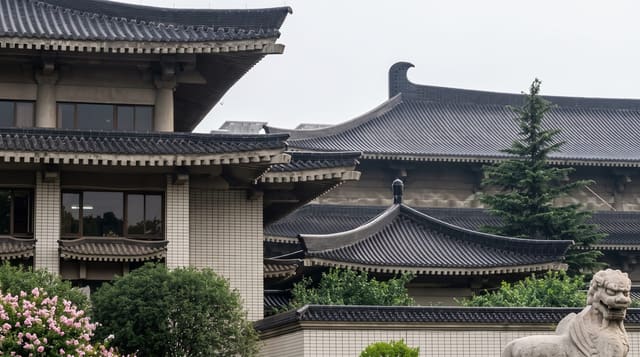
Xi'an's Muslim community goes back to the Silk Road trade, and its principal mosque, founded in the Tang and largely rebuilt from the Ming onward, is built in Chinese architectural language throughout: four successive courtyards on an axis, timber halls with tiled roofs and upturned eaves, memorial archways, stone stelae and gardens, with the minaret taking the form of a three-storey pagoda. The orientation to Mecca is achieved by the plan running east to west rather than the usual north to south. Arabic calligraphy appears with Chinese inscriptions throughout. It remains an active mosque, with the prayer hall closed to non-Muslims.
History
Around 742 the Tang emperor Xuanzong decreed that a place of worship be built for the Muslim merchants and artisans of Chang'an, then the cosmopolitan capital. Little of the Tang building survived; around the 1260s the Yuan government rebuilt the decaying mosque as Huihui Wanshansi, and under the Ming Hongwu Emperor it took its present form, largely built in 1392, with the gate, paifang and other parts added under the Qing, whose plaque of 1768 joined a Ming plaque of 1606 recording the rebuilding (Wikipedia, Great Mosque of Xi'an).
The main sights
- The courtyard sequence - four linked courtyards on an east-west axis.
- The pagoda minaret - the Chinese-form tower used for the call to prayer.
- The stelae and archways - stone inscriptions in Arabic and Chinese.
- The gardens - planted courtyards between the halls.
When to go
April to June and September to October; the mosque is quieter outside prayer times, and Friday midday is busy with worshippers. The surrounding Muslim quarter is liveliest in the evening.
Things to know
The prayer hall interior is closed to non-Muslims. Entry is charged. Modest dress is expected. The approach lane is a dense souvenir market that many find intrusive.
Nearby
The Drum and Bell Towers lie east; the Muslim quarter food streets surround it.
Key facts
Source: Wikidata, item Q820842, read on 18 October 2026.
What to pack for Great Mosque of Xi'an
Chosen from what this place is for. Tap a kit for the full checklist.
- Comfortable walking shoes - Sightseeing means kilometres of pavement and cobbles daily. Find on Amazon
- Modest clothing - Shoulders and knees covered - the single most common requirement. Find on Amazon
- A slim anti-theft daypack - Zips that close properly; keep it in front in crowds and on transit. Find on Amazon
- A scarf or shawl - To cover the head or shoulders on entry; women especially at mosques. Find on Amazon
Some links on this page are Amazon affiliate links - if you buy through them we may earn a small commission at no extra cost to you.
All packing kitsPlan your trip
Where to start if Great Mosque of Xi'an is going on the list.
Booking links on this page are affiliate links - if you book through them we may earn a small commission at no extra cost to you. It never changes what we write about a place.
Opening times, ticket prices and seasonal closures change - check the official source before you go: official site.