Durban Botanic Gardens
One of Africa's oldest surviving botanical gardens, founded in 1849, holding a cycad that is extinct in the wild.
Updated 22 October 2026
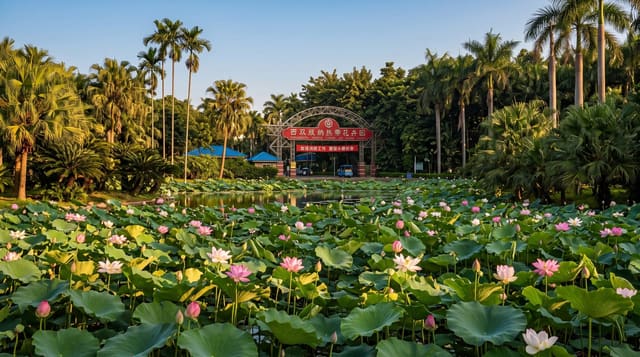
Established in 1849 as a trial ground for crops that might grow in the colony, the Durban gardens are among the oldest botanical institutions in Africa still operating. About fifteen hectares of subtropical planting includes a large orchid house, a palm collection, a sunken garden and an old fig avenue. The specimen with the most weight is a cycad, Encephalartos woodii, planted here from material collected in 1903 - the species is extinct in the wild and every known plant is male, propagated by offsets from that one original stem, so it cannot reproduce and has been called the loneliest plant in the world. The garden also holds one of the older cycad collections anywhere. Entry is free, the lawns are used by the city, and there is a tea garden. It is an urban park as much as a scientific collection.
History
Dr Charles Johnston laid out the first garden in December 1849, as part of Kew's network of botanic gardens for useful plants. The self-taught botanist John Medley Wood was curator from 1882 to 1913 and founded the Natal Government Herbarium in 1882, and the gardens now cover 15 hectares (Wikipedia, Durban Botanic Gardens).
The landscape
- The Wood's cycad - a species extinct in the wild, every plant a male clone of one stem.
- The 1849 foundation - one of Africa's oldest surviving botanical gardens.
- The orchid house - a substantial collection under glass.
- The free entry - a working city park as well as a scientific garden.
When to go
All year - subtropical, so something is always flowering. Two hours.
Before you go
It is in a city and feels like it - traffic noise, urban surroundings. The Wood's cycad is a single unremarkable-looking plant unless you know the story. Durban summers are hot and very humid. Take normal city precautions with belongings.
Nearby
Durban's beachfront and the Berea are close; the Moses Mabhida stadium is north.
Key facts
Source: Wikidata, item Q5316277, read on 18 October 2026.
What to pack for Durban Botanic Gardens
Chosen from what this place is for. Tap a kit for the full checklist.
- Strong insect repellent - DEET or picaridin; the jungle is where bites and disease risk are highest. Find on Amazon
- Comfortable walking shoes - Sightseeing means kilometres of pavement and cobbles daily. Find on Amazon
- Long, light, quick-dry clothing - Covers skin from insects and sun without cooking you in the humidity. Find on Amazon
- A slim anti-theft daypack - Zips that close properly; keep it in front in crowds and on transit. Find on Amazon
Some links on this page are Amazon affiliate links - if you buy through them we may earn a small commission at no extra cost to you.
All packing kitsPlan your trip
Where to start if Durban Botanic Gardens is going on the list.
Booking links on this page are affiliate links - if you book through them we may earn a small commission at no extra cost to you. It never changes what we write about a place.
Opening times, ticket prices and seasonal closures change - check the official source before you go: official site.