Fort Amsterdam
The Dutch fort of 1631 - ramparts on the Great Bay headland, pelican colonies now holding the garrison.
Updated 22 October 2026
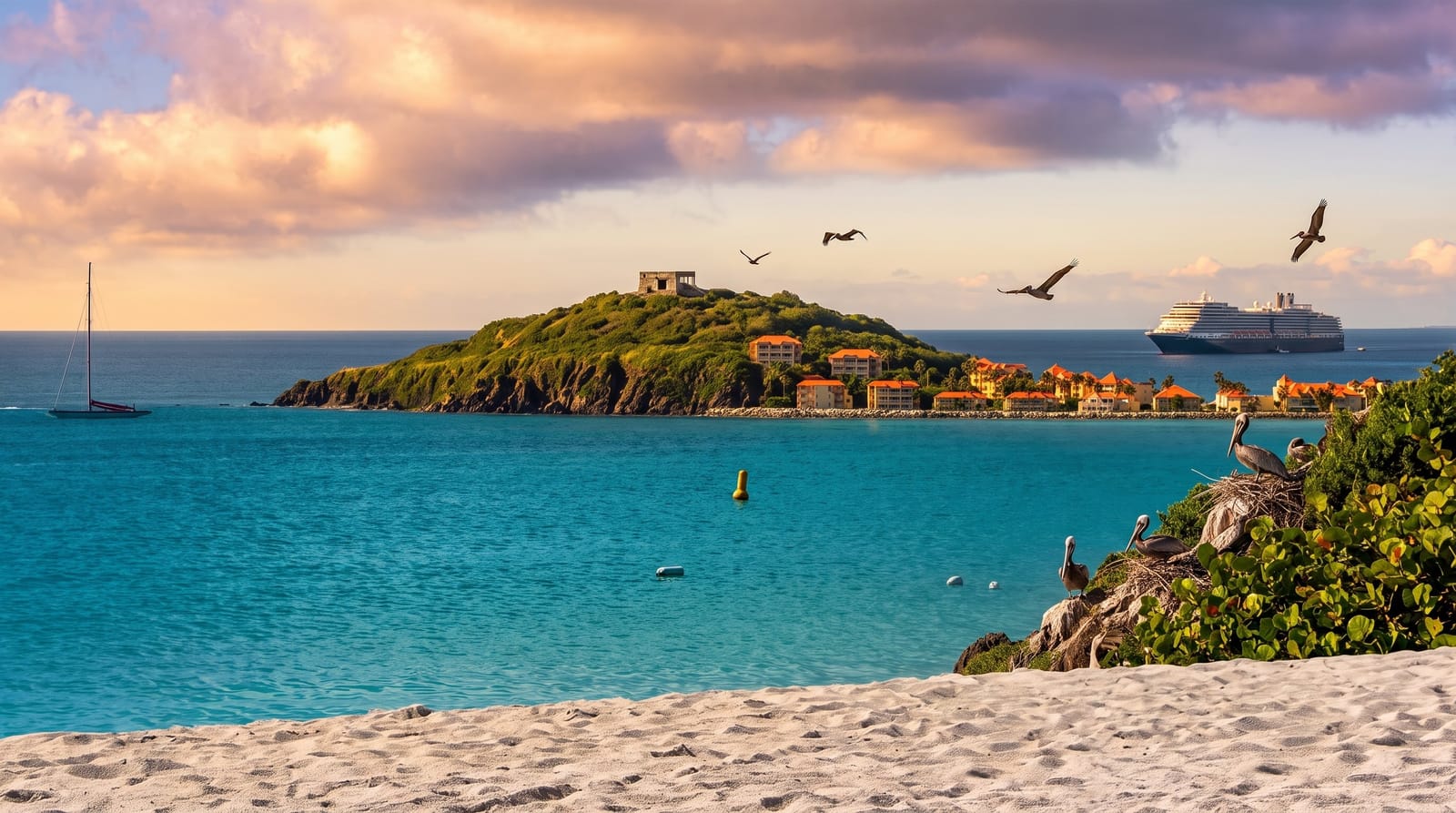
AI illustration
The headland between Great Bay and Little Bay carries the island's Dutch founding stones: Fort Amsterdam, raised in 1631 to defend the Dutch outpost and seaport, taken by Spain two years later and contested in the island's early tug-of-years, and now standing in low rampart ruins that the resident brown pelican colony has requisitioned - the birds nesting in the sea grapes and gliding the headland's updrafts in squadron style. The walk out passes the resort's edge to the point's double panorama - Philipsburg's cruise bay one side, Little Bay's coves the other - with interpretation panels carrying the history the pelicans ignore.
History
The Dutch built the triangular stone fort in 1631 to defend their outpost and seaport; the Spanish held it from two years later until 1648, and the island later changed hands several times before remaining mainly Dutch. Several 19th-century cannons still stand on the walls (Wikipedia, Fort Amsterdam (Sint Maarten)).
What's there
- The 1631 ramparts - the fort the Dutch built for their outpost.
- The pelican garrison - the colony holding the headland.
- The double panorama - Great Bay and Little Bay from the point.
- The history panels - the contested founding told in place.
When to go
December to May with the season; mornings give the pelicans' fishing shows and the light on Great Bay. Nesting months ask extra distance from the colony.
Good to know
Ruins are modest - the setting, birds and history share the billing; access threads a resort's edge politely, and edges are unfenced.
Nearby
Philipsburg's boardwalk, Little Bay and the Divi headland.
Key facts
Source: Wikidata, item Q5470723, read on 18 October 2026.
What to pack for Fort Amsterdam
Chosen from what this place is for. Tap a kit for the full checklist.
- Travel rod + reel - A packable multi-piece rod fits in a case and covers most holiday fishing. Find on Amazon
- Comfortable walking shoes - Sightseeing means kilometres of pavement and cobbles daily. Find on Amazon
- A small tackle selection - Hooks, weights, line and a few lures or flies suited to local waters. Find on Amazon
- A slim anti-theft daypack - Zips that close properly; keep it in front in crowds and on transit. Find on Amazon
Some links on this page are Amazon affiliate links - if you buy through them we may earn a small commission at no extra cost to you.
All packing kitsPlan your trip
Where to start if Fort Amsterdam is going on the list.
Booking links on this page are affiliate links - if you book through them we may earn a small commission at no extra cost to you. It never changes what we write about a place.
Opening times, ticket prices and seasonal closures change - check the official source before you go: official site.