Pancit Habhab of Lucban
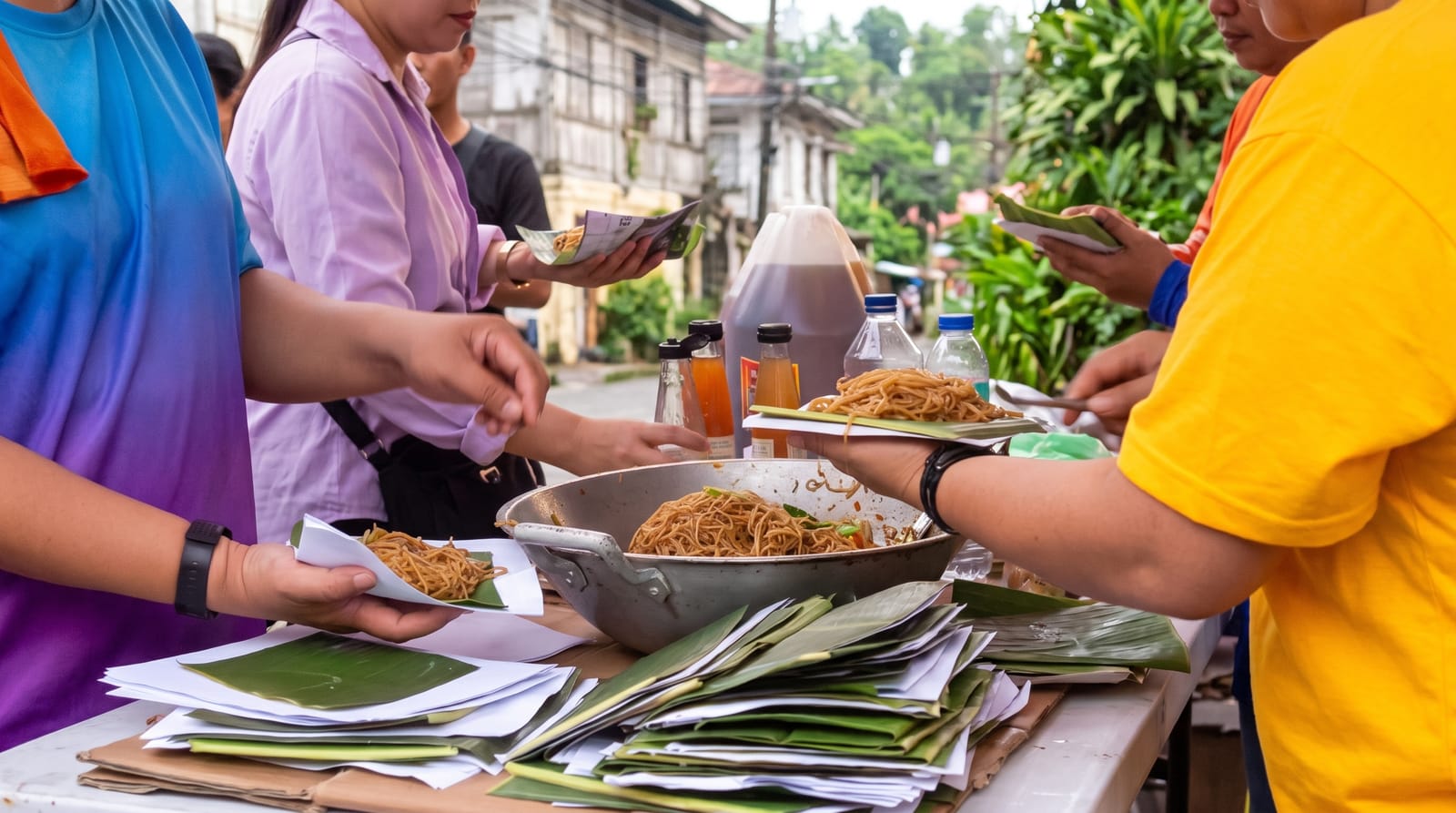
Noodles served on a square of banana leaf and eaten straight from it without cutlery, in the Quezon town that invented the habit.
Updated 25 August 2026
AI illustration
Pancit habhab is a noodle dish from Lucban in Quezon, made with miki - a fresh egg noodle produced locally - stir-fried with pork, liver, chayote, carrot and a broth-based sauce, and served not on a plate but on a rectangle of banana leaf. Habhab describes how it is eaten: the leaf is folded into a chute, held up to the mouth, and the noodles pushed in directly without fork or spoon, which takes a little practice and produces a certain amount of laughter at the expense of first-timers. Vinegar is splashed on before eating. Servings are small and cheap by design, so people eat two or three, and it is standard street and market food in Lucban rather than a restaurant dish. During Pahiyas on 15 May the stalls around the plaza sell nothing else, along with Lucban longganisa, the garlicky local sausage that is the town's other export.
What you'll find
- The banana leaf - the noodles served on a folded square.
- The eating method - pushed straight into the mouth, no cutlery.
- The Lucban miki - the fresh local egg noodle.
- The vinegar - splashed on before eating.
When to go
Year-round from the stalls around Lucban's plaza and market. 15 May during Pahiyas is when the whole town is selling it.
Things to know
Eating it properly is messy and takes a couple of attempts. Servings are small - order more than one. Ask for a fork if you would rather, though the stallholder will find it funny.
Nearby
Kamay ni Hesus is minutes away; Tayabas basilica and Mount Banahaw are close.
What to pack for Pancit Habhab of Lucban
Chosen from what this place is for. Tap a kit for the full checklist.
- A reusable bag or container - For market produce and cutting down on packaging. Find on Amazon
- Modest clothing - Shoulders and knees covered - the single most common requirement. Find on Amazon
- Wet wipes + hand sanitiser - Street food and washbasins do not always go together. Find on Amazon
- A scarf or shawl - To cover the head or shoulders on entry; women especially at mosques. Find on Amazon
Some links on this page are Amazon affiliate links - if you buy through them we may earn a small commission at no extra cost to you.
All packing kitsPlan your trip
Where to start if Pancit Habhab of Lucban is going on the list.
Booking links on this page are affiliate links - if you book through them we may earn a small commission at no extra cost to you. It never changes what we write about a place.
Opening times, ticket prices and seasonal closures change - check the official source before you go: official site.