The Biomuseo
Frank Gehry's only building in Latin America, a collision of coloured metal roofs telling the story of how the isthmus changed the world.
Updated 21 October 2026
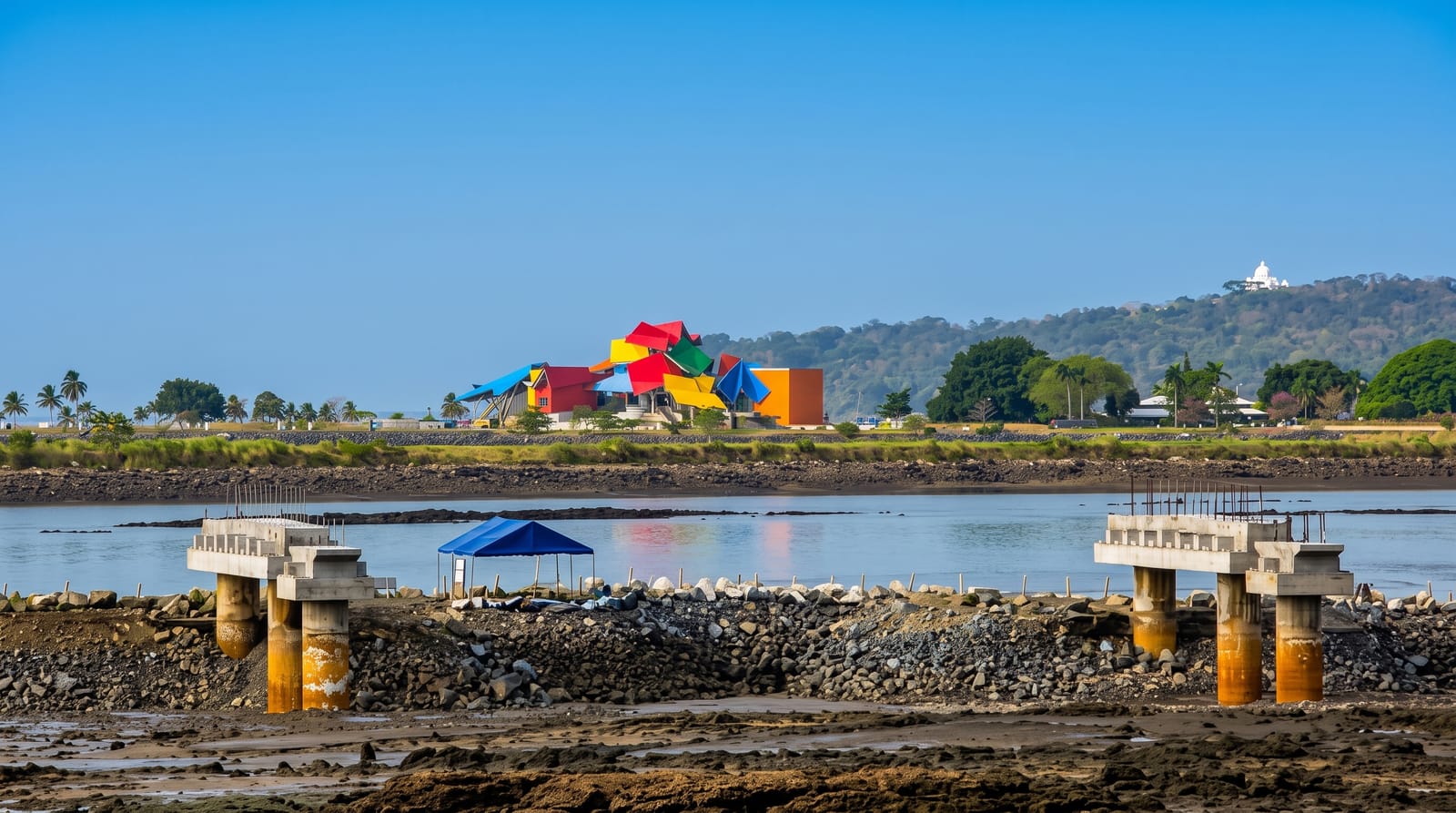
AI illustration
The Biomuseo opened in 2014 after a long and troubled construction, and it is Frank Gehry's only building in Latin America, a heap of folded metal roofs in red, yellow and blue at the entrance to the causeway, designed with his Panamanian wife's country in mind. The subject is specific: around three million years ago the isthmus closed, joining two continents that had been separate for tens of millions of years, splitting one ocean into two and triggering an exchange of animals in both directions that reshaped the biology of both Americas and altered global ocean currents and climate. Eight galleries make that case, including the Panamarama, a three-level projection space with ten screens.
The main sights
- The Gehry roofs - folded coloured metal, his only Latin American building.
- The Great American Interchange - the animal exchange when the isthmus closed.
- Panamarama - a three-level projection room with ten screens.
- The biodiversity gallery - what the closure produced in both directions.
When to go
Year-round; closed on Mondays. Mornings are quietest. The building itself is worth seeing from the outside at any hour and is best in strong light, which suits the colours.
Practical notes
It is small for the price and several planned galleries were never completed as originally intended; the visit takes about two hours. The content is aimed at a general audience and specialists will find it thin. It is a taxi ride from the city with no easy walking route.
Nearby
The Amador Causeway starts here; Casco Viejo is fifteen minutes.
Key facts
Source: Wikidata, item Q6034184, read on 18 October 2026.
What to pack for The Biomuseo
Chosen from what this place is for. Tap a kit for the full checklist.
- Comfortable walking shoes - Sightseeing means kilometres of pavement and cobbles daily. Find on Amazon
- A slim anti-theft daypack - Zips that close properly; keep it in front in crowds and on transit. Find on Amazon
- A refillable water bottle - Many cities have public fountains; save money and plastic. Find on Amazon
- A light layer + compact umbrella - For museum air-con and a sudden shower. Find on Amazon
Some links on this page are Amazon affiliate links - if you buy through them we may earn a small commission at no extra cost to you.
All packing kitsPlan your trip
Where to start if The Biomuseo is going on the list.
Booking links on this page are affiliate links - if you book through them we may earn a small commission at no extra cost to you. It never changes what we write about a place.
Opening times, ticket prices and seasonal closures change - check the official source before you go: official site.